
Erik Hanberg Books in Order
Browse Erik Hanberg books in order, from science fiction and mysteries to nonprofit guides, with summaries, series background, and where to start.
Last updated:
As an Amazon Associate, we earn from qualifying purchases (at no extra cost to you).
Erik Hanberg books in publication order
10 books

The Saints Go Dying
by Erik Hanberg
2010
A former hacker turned detective hunts a serial killer targeting unusually good people while a sensational reality show tears apart public trust in the police. When he bends the rules to keep up, he becomes a target inside his own department.
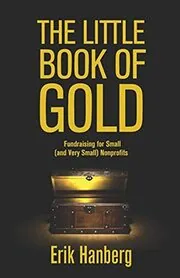
The Little Book of Gold
by Erik Hanberg
2011
This fundraising guide is built for small nonprofits that need useful advice they can act on right away. Hanberg covers donor relationships, board giving, events, and the habits that make fundraising steadier and more sustainable.

The Marinara Murders
by Erik Hanberg
2011
Disgraced detective Arthur Beautyman is living in his mother's basement when she volunteers him to solve a friend's family mystery. A drowned young man, missing for three years, pulls mother and son into a funny, tangled case.
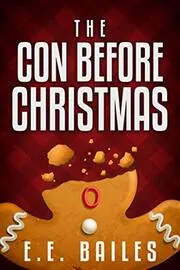
The Con Before Christmas
by Erik Hanberg
2012
When a stranger returns Ruth's lost wallet at a crowded mall, Arthur and his mother make the mistake of inviting her home for the night. By morning Ruth's identity and savings are gone, and the pair must chase a dangerous con.
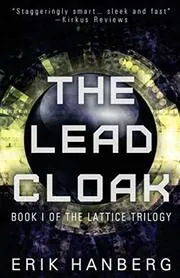
The Lead Cloak
by Erik Hanberg
2013
In 2081, Byron Shaw helps guard the Lattice, a system that has erased privacy by exposing memories and thoughts. After a brutal attack nearly destroys it, he hunts the culprits and starts doubting the machine he serves.
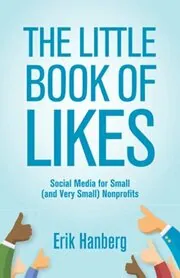
The Little Book of Likes
by Erik Hanberg
2013
A practical social media guide for small nonprofits with limited time and staff. Hanberg focuses on simple strategy, sustainable habits, and ways to build an audience without chasing every shiny new platform.
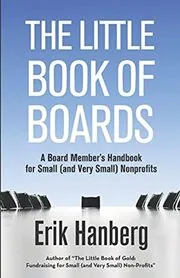
The Little Book of Boards
by Erik Hanberg
2014
A clear handbook for board members at small nonprofits who need practical help, not theory. Hanberg explains roles, meetings, governance, and the everyday working relationship between a board and an executive director.
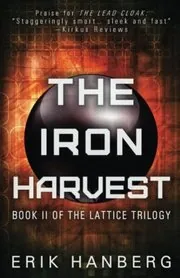
The Iron Harvest
by Erik Hanberg
2016
The Lattice is down, the world is unraveling, and Byron Shaw is the target of a global manhunt. Crossing broken continents to reach his wife, he must decide whether the system should be rebuilt or buried for good.
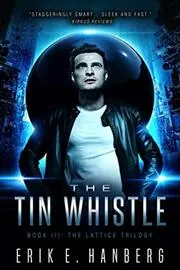
The Tin Whistle
by Erik Hanberg
2018
With his family held hostage in orbit and rival factions closing in, Byron Shaw faces the most dangerous version of the Lattice yet. The finale turns questions of privacy, power, and loyalty into a deeply personal fight.

Semi/Human
by Erik Hanberg
2020
After losing her internship to a robot, teen coder Pen Davis plans a high-tech heist to steal millions from her former boss. Then she accidentally gives a self-driving truck a mind of its own, and the job gets a lot stranger.
Where to start with Erik Hanberg
If you want big-idea science fiction: The Lead Cloak → The Iron Harvest → The Tin Whistle
If you want a fast standalone caper: Semi/Human
If you want mystery with family banter: The Saints Go Dying → The Marinara Murders → The Con Before Christmas
If you serve on a nonprofit board: The Little Book of Boards
If fundraising and outreach are your focus: The Little Book of Gold → The Little Book of Likes
Erik Hanberg sub-series and character series
Beautyman & Beautyman Mysteries books in order
Explore this seriesBeautyman & Beautyman Mysteries books in chronological order
The Lattice Trilogy books in order
Explore this seriesThe Lattice Trilogy books in chronological order
Erik Hanberg collections, short stories, and related book types
Non-Fiction
Standalone Erik Hanberg books
Author bio
Erik Hanberg was born in Tacoma, Washington, and he grew up there. That hometown thread still runs through a lot of his work and public life. He has spent years writing books, helping nonprofits, working in media, and serving in local office, all while staying closely tied to Tacoma.
Writing started early. In a 2026 post on his own site, Hanberg said the story really begins in sixth grade, when he wrote eighty pages and thought he had finished a novel.
He kept at it.
Before many readers found him through his fiction or nonprofit books, Hanberg had already built a career in community work. He worked in nonprofit leadership and fundraising, helped run media and arts projects, and later served more than twelve years as a commissioner with Parks Tacoma. That practical experience gave him a lot of material, and it also shaped his voice: direct, curious, and interested in how people work inside larger systems.
That background feeds straight into books like The Little Book of Gold, The Little Book of Likes, and The Little Book of Boards. They are written for small nonprofits, especially the kind where one person seems to be doing six jobs at once. Readers tend to like them because they skip the foggy jargon and get to the point, whether the topic is fundraising, social media, or board governance.
Then there is the fiction.
In The Lead Cloak, The Iron Harvest, and The Tin Whistle, Hanberg builds the Lattice, a future technology that makes privacy almost impossible. These books ask big questions about surveillance, memory, power, and whether a useful tool can become too dangerous to keep. People who enjoy idea-driven science fiction usually come away talking about the worldbuilding, but the books also move like thrillers.
He shifts gears neatly in his mysteries. The Saints Go Dying begins with a hacker turned detective chasing a serial killer in Los Angeles. The Marinara Murders and The Con Before Christmas open the door to a more offbeat mother-and-son mystery partnership, mixing crime, family friction, and humor. Later, Semi/Human takes his interest in technology in a different direction, following a teen coder, a runaway self-driving truck, and a heist in a world where automation has pushed people aside.
A lot of Hanberg's work comes back to the same question: what happens when institutions, tools, and ordinary human mess collide?
That shows up whether he is writing about a nonprofit board, a police investigation, or a society held together by a machine that knows too much. He seems especially interested in systems people rely on every day, and in the way those systems can help, trap, or expose them. Even when the setup is high concept, the appeal is usually pretty human. People are trying to do good work, clean up a mistake, save a relationship, or simply get through the day.
Today, Hanberg still wears a few different hats. He works at KNKX Public Radio as Director of Marketing, Communications, and Government Relations, and he has co-founded local podcast and media projects along the way. He lives in Tacoma with his wife Mary and their two children, which makes him one of those writers whose books and day job both seem to grow out of the same place: community life.





Edited by
Software engineer whose passion for tracking book recommendations from podcasts inspired the creation of MRB.
Lead investor at 3one4 Capital whose startup expertise and love for books helped shape MRB and its growth.
Comments
Did we miss something? Have feedback?
Help us improve this page by sharing your thoughts