
Emily Bronte Books in Order
Browse Emily Bronte books in order, with short summaries of Wuthering Heights and her poems, plus background and clear guidance on where to start.
Last updated:
As an Amazon Associate, we earn from qualifying purchases (at no extra cost to you).
Emily Bronte books in publication order
7 books
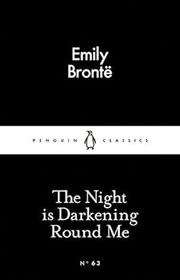
The Night is Darkening Round Me
by Emily Bronte
1846
This brief lyric puts a speaker in cold wind, snow, and gathering dark, yet the poem refuses surrender. Its power comes from the clash between harsh weather outside and unbending will within.
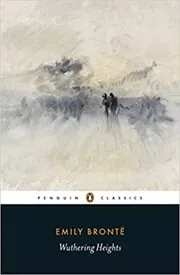
Wuthering Heights
by Emily Bronte
1847
On the Yorkshire moors, the bond between Heathcliff and Catherine Earnshaw hardens into obsession, cruelty, and revenge. Bronte's only novel follows the damage across two generations, with a stormy atmosphere that still feels raw.
Recommended by
2 people Jordan Peterson recommended this book
Jordan Peterson
Recommended on Jordan Peterson's website.
Jordan Peterson's recommendation of this book  Chloë Grace Moretz recommended this book
Chloë Grace Moretz
"I have read it at least 10 times since I was 14. In my opinion, the romance in it is scarcely found in books today." - Chloë Grace Moretz
Chloë Grace Moretz's recommendation of this book
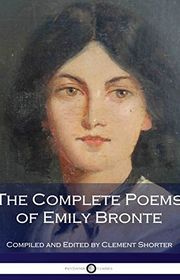
The Complete Poems of Emily Bronte
by Emily Bronte
1941
This collection brings together Bronte's full poetic range, from Gondal pieces to stark lyrics about freedom, grief, faith, and the moors. It is the best choice if you want the broadest view of her writing beyond Wuthering Heights.
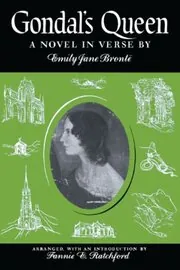
Gondal's Queen
by Emily Bronte
1973
This volume arranges Bronte's Gondal poems into a connected tragic sequence around Augusta Geraldine Almeda, the queen of her imagined kingdom. It offers a way into the private fantasy world that fed so much of her early writing.
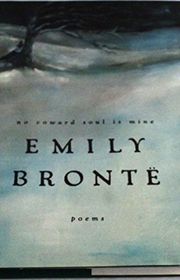
No Coward Soul Is Mine
by Emily Bronte
1993
In one of Bronte's best-known poems, the speaker declares a fearless faith that leaves no room for doubt or death. It is short, direct, and full of the inward strength that makes her poetry linger.
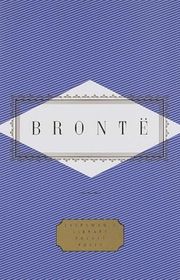
Emily Bronte: Poems
by Emily Bronte
1996
This selected edition offers a clean introduction to Bronte's poetry, mixing solitude, wild landscape, spiritual struggle, and fierce independence. It is a good starting point if you want her lyric voice without committing to a complete collection.
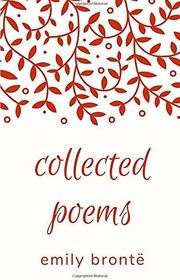
Collected Poems
by Emily Bronte
2019
Reading these poems together shows how often Bronte returned to loneliness, inner freedom, memory, faith, and harsh weather. The collection is a strong reminder that her imagination was much larger than the single novel she published.
Where to start with Emily Bronte
If you want her defining novel: Wuthering Heights
If you want a quick taste of her poetry: No Coward Soul Is Mine → The Night is Darkening Round Me
If you want a broader poetry sampler: Emily Bronte: Poems → Collected Poems
If you want the deepest dive into her poetic world: The Complete Poems of Emily Bronte → Gondal's Queen
Emily Bronte collections, short stories, and related book types
Collections
Standalone Emily Bronte books
Author bio
Emily Bronte remains oddly hard to pin down, partly because the hard facts of her life are fairly few. She was born on July 30, 1818, in Thornton, Yorkshire, the fifth of six children of Patrick Bronte and Maria Branwell Bronte. In 1820 the family moved to Haworth, and that home, with the moors behind it, shaped much of what she wrote.
Her mother died when Emily was still very young. A brief spell at Cowan Bridge School ended in tragedy after her older sisters Maria and Elizabeth died following illness, and Emily returned home to the parsonage. There the children read widely from their father's library and invented stories together. With Charlotte, Anne, and Branwell, she built whole imaginary kingdoms. The one most closely linked to Emily's mature work was Gondal, a private world she developed especially with Anne, full of rulers, exile, longing, and war.
From early on, writing seems to have been less a career plan than a way of living.
She did spend brief periods trying the sort of work open to a clergyman's daughter. In 1838 she took a teaching post at Law Hill School near Halifax, but the long hours and separation from home wore her down, and she left within months. In 1842 she traveled to Brussels with Charlotte to study at the Pensionnat Heger, hoping to improve their prospects as teachers. Emily learned, wrote in French, and then came back to Haworth later that year, staying there for the rest of her life.
Public life never seems to have suited her much.
What did suit her was sustained, private work. In 1846, after Charlotte discovered Emily's poems, the three sisters published Poems by Currer, Ellis, and Acton Bell. Emily wrote as Ellis Bell. The book barely sold, but it matters because it brought some of her strongest poems into print, including No Coward Soul Is Mine. That poem is direct, fearless, and spiritually intense. The Night is Darkening Round Me shows another side of her gift, a hard, compressed lyric voice that can turn weather into inner drama almost instantly.
Then came Wuthering Heights, published in 1847 under the same pseudonym. It was her only novel, and it still feels unlike almost anything beside it. Starting with Heathcliff and Catherine Earnshaw, the book turns love, humiliation, and class tension into obsession and revenge that spill into the next generation. Readers remember the wild setting, but also the strange structure, the clashing narrators, and the refusal to make anyone simple.
Her poetry matters just as much if you want the full picture. More than two hundred poems survive, and they circle solitude, endurance, freedom, memory, death, and an inward kind of faith. Some grow out of Gondal, while others feel stark and private. Readers curious about that invented kingdom often meet it through reconstructions such as Gondal's Queen or fuller editions like The Complete Poems of Emily Bronte.
The last year of Emily's life was brutal. Her brother Branwell died in September 1848, and Emily herself fell ill soon after. She refused medical treatment and died of tuberculosis on December 19, 1848, at the age of thirty. She was buried at Haworth a few days later.
She published only one novel in her lifetime, and yet her body of work feels larger than that fact suggests. People still come to Emily Bronte for the same reasons: the weather, the loneliness, the stubborn inner life, and the sense that her writing never flinches.





Edited by
Software engineer whose passion for tracking book recommendations from podcasts inspired the creation of MRB.
Lead investor at 3one4 Capital whose startup expertise and love for books helped shape MRB and its growth.
Comments
Did we miss something? Have feedback?
Help us improve this page by sharing your thoughts