
Charlotte Bronte Books in Order
See Charlotte Bronte's books in order, with concise summaries, notes on her life and juvenilia, and simple guidance on the best place to start reading.
Last updated:
As an Amazon Associate, we earn from qualifying purchases (at no extra cost to you).
Charlotte Bronte books in publication order
18 books

My Angria And The Angrians
by Charlotte Bronte
1830
This novella plunges readers into Angria, the fantastical kingdom Charlotte Bronte built with her brother, where ducal plots, lovelorn ladies, and shifting alliances drive a turbulent civil war and introduce many of the recurring figures in her later Angrian tales.

Tales of the Islanders
by Charlotte Bronte
1830
Written when she was a child, these linked tales follow the toy-soldier heroes known as the Twelve through shipwrecks, haunted castles, and courtly intrigues on a magical island, offering an early, exuberant glimpse of the Bronte children's shared storytelling.

The Foundling
by Charlotte Bronte
1830
Set in the city of Verdopolis, this novella follows orphan Edward Sydney, raised by a benefactor as his own son, who discovers clues to his true birth and journeys into high society, romance, and danger before claiming his inheritance and future.

The Green Dwarf
by Charlotte Bronte
1830
In the fantastical city of Verdopolis, Lady Emily Charlesworth loves the modest artist Leslie, while the ruthless Colonel Percy schemes to claim her for himself, drawing them into war, disguises, and the eerie legend of the mysterious Green Dwarf.

The Secret & Lily Hart
by Charlotte Bronte
1830
Gathering two early stories, this volume pairs The Secret, a Verdopolis romance of blackmail, hidden parentage, and a threatened marriage, with Lily Hart, a fairy-tale courtship that begins when a mother and daughter shelter a wounded stranger.

The Spell
by Charlotte Bronte
1830
In the Angrian kingdoms of Wellingtonsland and Angria, the heir is reported dead and King Zamorna falls gravely ill, igniting jealousy, ambition, and political plotting as courtiers try to uncover what the king and his allies are hiding.

Mina Laury
by Charlotte Bronte
1838
In the Angrian cycle, Mina Laury is the capable daughter of a disgraced soldier who becomes housekeeper, confidante, and devoted mistress to the charismatic Duke of Zamorna, balancing fierce loyalty with a stubborn sense of independence as political storms gather.

Tales of Angria
by Charlotte Bronte
1839
This collection of five Angrian novelettes, narrated by gossiping court insider Charles Townshend, traces the scandals, duels, affairs, and shifting loyalties of Zamorna, Northangerland, Mary Percy, and their circle in a volatile fantasy kingdom that foreshadows Bronte's mature fiction.
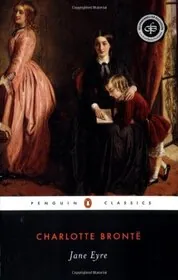
Jane Eyre
by Charlotte Bronte
1847
Orphaned and mistreated, plain but fiercely self-respecting Jane Eyre grows up in a harsh charity school before becoming governess at Thornfield Hall, where her deepening love for the enigmatic Mr Rochester collides with class, conscience, and a dangerous secret.
Recommended by
3 people Gretchen Rubin recommended this book
Gretchen Rubin
"Has started drifting into YA." - Gretchen Rubin
Gretchen Rubin's recommendation of this book  Alice Walker recommended this book
Alice Walker
"My feeling of kinship with [this book] has never waned." - Alice Walker
Alice Walker's recommendation of this book  Shonda Rhimes recommended this book
Shonda Rhimes
"One of those that when you read it, kinda changes you." - Shonda Rhimes
Shonda Rhimes's recommendation of this book
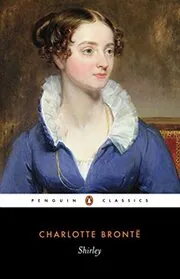
Shirley
by Charlotte Bronte
1849
Set amid industrial unrest in Yorkshire, Shirley follows mill owner Robert Moore, his sensitive cousin Caroline Helstone, and the wealthy heiress Shirley Keeldar as machine-breaking riots, economic hardship, and expectations about marriage test their loyalties and ideas of independence.
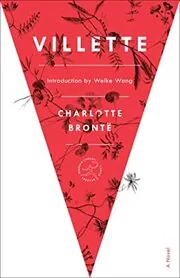
Villette
by Charlotte Bronte
1853
After a family catastrophe, quiet Englishwoman Lucy Snowe travels alone to the Continental city of Villette and takes work at a girls' school, navigating religious tensions, ghostly rumors, unrequited love, and a hard-won sense of independence.
The Professor
by Charlotte Bronte
1857
William Crimsworth escapes a humiliating clerkship in England for a teaching post in Brussels, where he struggles to define himself, resists manipulation by his employers, and slowly builds an equal partnership with the gifted young teacher he loves.

Emma
by Charlotte Bronte
1860
At a small girls' school, the headmistress welcomes a rich new pupil whose guardian and background swiftly prove suspicious, raising unsettling questions about class, money, and identity. Charlotte Bronte left the story unfinished, and later editions complete the mystery.

The Complete Poems of Charlotte Bronte
by Charlotte Bronte
1923
Bringing together Charlotte Bronte's verse from across her life, this collection ranges from youthful meditations to mature reflections on faith, grief, imagination, and the Yorkshire landscape, illuminating another side of a writer best known for her novels.

Legends of Angria
by Charlotte Bronte
1933
Compiled from Charlotte Bronte's earliest Angrian manuscripts, Legends of Angria gathers longer episodes of war, exile, and court conspiracy around Zamorna and his rivals, offering a darker, more sprawling view of the imaginary empire that obsessed her youth.

Stancliffe's Hotel
by Charlotte Bronte
2003
These linked sketches, set in the decadent world of Stancliffe's Hotel, follow Angrian aristocrats, courtesans, and the brooding Zamorna through flirtations, debts, and duels, giving a lively, often comic window into Bronte's experimentations with style and character.

The Secret
by Charlotte Bronte
2006
In Verdopolis, Arthur, Marquis of Douro, and his adored wife Marion see their apparently perfect life upended when Marion's former governess returns, triggering blackmail, impostors, and revelations about Marion's birth that test trust, loyalty, and the strength of their marriage.
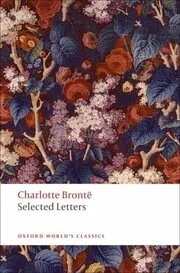
Selected Letters
by Charlotte Bronte
2007
Drawn from hundreds of surviving letters, this collection follows Charlotte Bronte from Haworth parsonage to Brussels and London, capturing her sharp observations, family grief, passionate attachments, and the everyday experiences that later fed into her fiction.
Where to start with Charlotte Bronte
If you're new to Charlotte Bronte: Jane Eyre → Villette.
If you want the full run of her novels: Jane Eyre → Shirley → Villette → The Professor → Emma.
If you enjoy rich fictional worlds and juvenilia: The Green Dwarf → Tales of the Islanders → Tales of Angria → Legends of Angria.
If you like letters and poetry alongside the fiction: Selected Letters → The Complete Poems of Charlotte Bronte.
Charlotte Bronte collections, short stories, and related book types
Short Stories/Novellas
Non-Fiction
Poetry Collections
Women Writers of the World
Modern Library Torchbearers
Standalone Charlotte Bronte books
Author bio
Charlotte Bronte was born on 21 April 1816 in the village of Thornton in Yorkshire and grew up in the parsonage at Haworth, looking out over the moors. She was one of six children of Maria and Patrick Bronte, and loss marked her early years.
Her mother died when Charlotte was five, leaving the children in the care of their aunt and a small circle of servants. A few years later she was sent with three sisters to the Clergy Daughters' School at Cowan Bridge, where harsh conditions and illness contributed to the deaths of the two eldest girls, Maria and Elizabeth. Those memories reappeared, thinly disguised, in the brutal charity school of Lowood in Jane Eyre.
Back at Haworth, Charlotte, Branwell, Emily, and Anne educated themselves with books, newspapers, and long walks. A box of toy soldiers sparked the creation of their shared worlds of Glass Town and Angria, for which they wrote tiny, densely written books packed with battles, scandals, and imagined politics. That private world became her apprenticeship as a storyteller.
As a teenager Charlotte spent a year as a pupil at Roe Head School, then returned there as a teacher. She made close, lifelong friends in Ellen Nussey and Mary Taylor, but she found classroom discipline, low pay, and the expectations placed on a clergyman's daughter wearing. Later posts as a governess brought financial independence yet also reinforced her sense of how isolated and powerless a solitary young woman could feel in someone else's house.
In 1842 she and Emily left Yorkshire for Brussels to study languages at a boarding school run by Constantin and Claire Heger. In exchange for tuition Charlotte taught English, sharpening both her French and her observational skills. Her intense, unreturned attachment to Monsieur Heger, and the loneliness of her second stay in Brussels, fed directly into The Professor and, more powerfully, Villette.
Back in Haworth, Charlotte urged her sisters to publish, and in 1846 their joint volume Poems appeared under the pseudonyms Currer, Ellis, and Acton Bell. Her first novel, The Professor, could not find a publisher, but the same firm that rejected it invited more work from Currer Bell. The manuscript she sent next, Jane Eyre, was published in 1847 and quickly became a sensation, praised for its direct voice and attacked for its passionate, questioning heroine.
She wrote Shirley against a backdrop of grief. Within eight months in 1848 and 1849 she lost her brother Branwell and her sisters Emily and Anne to illness, returning from funerals to a house that felt, in her letters, almost empty. Shirley and her last completed novel, Villette, widen the canvas beyond one household to explore industrial unrest, friendship between women, religious conflict, and the costs of intense self-control. After her death, the earlier Professor and the fragment Emma were also brought into print.
Although she preferred the quiet routines of Haworth, Charlotte made several visits to London, where she met other writers and cautiously adjusted to being known as the mind behind Currer Bell. In 1854 she married Arthur Bell Nicholls, her father's curate, after a long period of hesitation from both herself and her father. Their marriage was brief but appears to have been steady and affectionate. Pregnant and very ill, she died in Haworth on 31 March 1855, aged thirty-eight.
Readers still turn to her work for its fierce inner life, plain-spoken moral struggle, and stubborn belief that an ordinary woman’s feelings matter. The Angrian tales, the surviving letters, and the poems sit beside Jane Eyre, Shirley, Villette, and The Professor to show a writer who tested her imagination in private long before the world knew her name.





Edited by
Software engineer whose passion for tracking book recommendations from podcasts inspired the creation of MRB.
Lead investor at 3one4 Capital whose startup expertise and love for books helped shape MRB and its growth.
Comments
Did we miss something? Have feedback?
Help us improve this page by sharing your thoughts