
David Wallace Wells Books in Order
Explore David Wallace-Wells books in order, with short summaries, background on his climate writing, reading guidance, and a simple place to start.
Last updated:
As an Amazon Associate, we earn from qualifying purchases (at no extra cost to you).
David Wallace Wells books in publication order
1 book
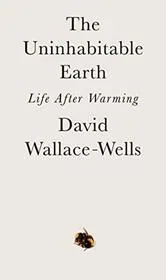
The Uninhabitable Earth
by David Wallace Wells
2019
Wallace-Wells maps the human fallout of climate change in clear, urgent terms, from deadly heat and food stress to migration and political upheaval. It is a big-picture look at how warming could reshape everyday life within this century.
Where to start with David Wallace Wells
If you want his core climate book: The Uninhabitable Earth
If you want the clearest place to begin: The Uninhabitable Earth
If you want the big-picture overview first: The Uninhabitable Earth
David Wallace Wells collections, short stories, and related book types
Non-Fiction
Author bio
David Wallace-Wells was born in New York City in 1982, in Manhattan, and spent much of his later childhood and teen years in Riverdale. He often describes himself as a lifelong New Yorker, and that city-centered outlook shows up in his work. He is less interested in treating climate change as an abstract environmental topic than in asking what it does to neighborhoods, politics, infrastructure, and everyday life.
He studied history, first at the University of Chicago and then at Brown, where he graduated in 2004. Before climate writing became the thing most readers knew him for, he built a career in editing and literary journalism. He worked as books editor at The New York Sun, spent years at The Paris Review, and later became a deputy editor at New York magazine.
Then came the turn toward climate.
Wallace-Wells has said that 2016 changed how he saw the subject. As he read more of the science, he felt that the public conversation was softening three things at once: how fast warming was moving, how wide its effects would be, and how severe the human consequences could become. For a journalist, that gap between the research and the public story was too important to ignore.
In 2017 he published the magazine essay "The Uninhabitable Earth." It became the most-read story in the magazine's history and sparked arguments almost immediately. Some scientists and writers thought the piece pushed too hard on worst-case outcomes. Others felt its bluntness was exactly the point. Either way, it made a huge number of readers look at climate change less as a distant problem and more as something unfolding inside their own lifetimes.
He expanded that essay into The Uninhabitable Earth: Life After Warming in 2019. The book moves past the familiar focus on sea-level rise and looks at heat, food stress, wildfire, disease, migration, conflict, economic strain, and the political choices tied to all of them. It is both a warning and a map of interlocking systems, which helps explain why it reached so many readers outside the usual climate-policy audience. People who connect with Wallace-Wells tend to like the same things: the clear structure, the plainspoken urgency, and the way he turns big data into consequences that feel human and close at hand.
He is not a climate scientist, and he does not really write like one.
His strength is synthesis. He reads widely, talks to experts, and tries to translate complicated research into language that general readers can actually carry around in their heads. Across his essays, columns, and The Uninhabitable Earth, he keeps returning to a few big concerns: who absorbs the worst damage first, how warming reshapes economics and culture as much as weather, and how politics determines whether future harm gets worse or less bad. He is especially good at showing that climate is not one topic alongside health, migration, economics, and technology. It runs through all of them.
In recent years he has written opinion columns, a climate newsletter, and longer magazine pieces at The New York Times, after earlier years at New York magazine and The Paris Review. He has also been a national fellow at New America. He lives in New York City with his family, which feels fitting for a writer so focused on how global systems crash into ordinary, lived space.
What makes his work stand out is not just the alarm. It is the insistence that climate change is already part of the story of modern life, and that readers do not need a science degree to see why it matters.







Edited by
Software engineer whose passion for tracking book recommendations from podcasts inspired the creation of MRB.
Lead investor at 3one4 Capital whose startup expertise and love for books helped shape MRB and its growth.
Comments
Did we miss something? Have feedback?
Help us improve this page by sharing your thoughts