
D Nolan Clark Books in Order
Explore D Nolan Clark's books in order, with quick summaries of The Silence trilogy, background on the series, and a clear guide to where to start.
Last updated:
As an Amazon Associate, we earn from qualifying purchases (at no extra cost to you).
D Nolan Clark books in publication order
3 books
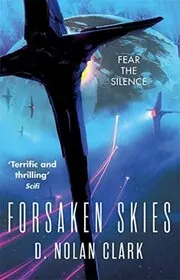
Forsaken Skies
by D Nolan Clark
2016
War hero Aleister Lanoe gathers a battered crew of pilots when the remote colony of Niraya comes under attack from a mysterious alien armada. It is a rescue mission, a first-contact shock, and the start of a much larger war.
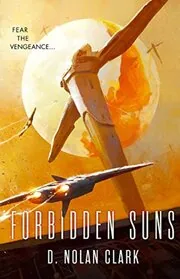
Forbidden Suns
by D Nolan Clark
2017
Aleister Lanoe's long war reaches its breaking point as he takes the fight to the alien force that has wiped out sentient life across the stars. The finale turns vengeance into a last, high-stakes mission for humanity's survival.
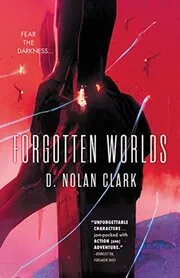
Forgotten Worlds
by D Nolan Clark
2017
After the victory at Niraya, Aleister Lanoe wants revenge on the alien armada, but Earth's future depends on outrunning corporate enemies and finding the truth behind the war. The scale grows, but the story stays tied to Lanoe's stubborn drive.
Where to start with D Nolan Clark
If you want the full story: Forsaken Skies → Forgotten Worlds → Forbidden Suns
If you want the best entry point: Forsaken Skies
If you like military space opera that keeps widening its stakes: Forsaken Skies → Forgotten Worlds → Forbidden Suns
D Nolan Clark sub-series and character series
Author bio
D. Nolan Clark is the science fiction pen name of David Wellington, an American novelist born in Pittsburgh, Pennsylvania, in 1971. Readers who find him under this name are seeing the part of his work that leans hardest into space opera, alien mystery, and big-galaxy adventure. Behind the pen name is a writer who has spent years moving between horror, fantasy, thrillers, comics, and games.
He has said that seeing Star Wars as a child was one of the moments that made him want to write fiction in the first place. That love of space stories never really went away, even when his published career first took shape in darker corners of the shelf.
His path into publishing was unusually online for the early 2000s.
In 2003 he began serializing Monster Island on the web, posting chapters several times a week and building the book in public. Over five months he wrote fast, reacted to reader comments in real time, and turned the project into the manuscript that became his first published novel in 2005. It was an energetic beginning, and it still feels like a clue to how he writes: high-pressure stories that move quickly and trust readers to keep up.
Under the David Wellington name, he went on to write a long run of horror fiction, including Monster Island, 13 Bullets, and Frostbite. Readers often come for the monsters, but they stay for the pace, the practical detail, and the way his characters keep making decisions while the situation gets steadily worse. He also built the Laura Caxton vampire series and a werewolf duology, and both show how much he likes putting capable people into systems that are already breaking down.
He did not stay in one lane for long. Under the name David Chandler he wrote the fantasy trilogy that begins with Den of Thieves, and under his own name he wrote the Jim Chapel spy thrillers, including Chimera and The Hydra Protocol. By the time he returned to horror with Positive in 2015, he had already shown that he could slide from undead chaos to sword-and-sorcery to military suspense without losing his sense of momentum.
Science fiction was never a side project, it was waiting for the right opening.
That opening came in 2016, when he launched The Silence trilogy as D. Nolan Clark with Forsaken Skies, then followed it with Forgotten Worlds and Forbidden Suns. Those books pull together a lot of the things he does well: worn-down veterans, old loyalties, large systems under stress, and danger arriving faster than institutions can respond to it. They also let him play directly with first-contact ideas and the unsettling question of why the universe has seemed so quiet for so long.
Later books made that blend even clearer. The Last Astronaut brought first-contact dread into near-future space travel and was shortlisted for the Arthur C. Clarke Award. Paradise-1 pushed deeper into space horror, mixing expedition adventure, isolation, and AI trouble in a way that feels connected to both sides of his career.
His background helps explain some of that mix. He studied at Syracuse University, earned an MFA in creative writing from Penn State, later took a master's degree in library science from Pratt Institute, and now lives in New York City. He has also written short fiction, worked in comics and video games, and built a body of work that is bigger than any one label.
What ties the different names together is pretty simple. Whether he is writing zombies, vampires, spies, or damaged crews in deep space, Wellington likes pressure, strange systems, and characters who have to keep going after the safe option is gone.






Edited by
Software engineer whose passion for tracking book recommendations from podcasts inspired the creation of MRB.
Lead investor at 3one4 Capital whose startup expertise and love for books helped shape MRB and its growth.
Comments
Did we miss something? Have feedback?
Help us improve this page by sharing your thoughts