
David Roberts Books in Order
Browse David Roberts books in order, with quick summaries, series background, and where to start with the Lord Edward Corinth and Verity Browne mysteries.
Last updated:
As an Amazon Associate, we earn from qualifying purchases (at no extra cost to you).
David Roberts books in publication order
17 books
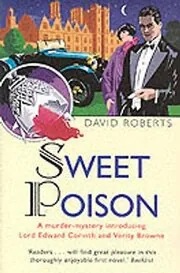
Sweet Poison
by David Roberts
2001
At the Duke of Mersham's 1935 country-house party, a decorated general dies after drinking poisoned port. Late arrivals Lord Edward Corinth and journalist Verity Browne, uneasy allies from opposite worlds, start asking who wanted him dead.
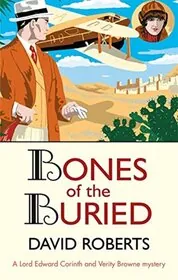
Bones of the Buried
by David Roberts
2002
In 1936, Verity drags Edward to Madrid to clear her lover, David Griffiths-Jones, of murder as Spain edges toward civil war. What begins as a rescue mission grows into a wider case that follows them back to London.
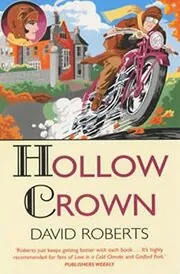
Hollow Crown
by David Roberts
2002
During the Abdication Crisis, Edward is asked to recover letters stolen from Wallis Simpson. At a country-house gathering tied to politicians and old loyalties, a seemingly simple errand turns into murder, and Verity is drawn into the fallout.
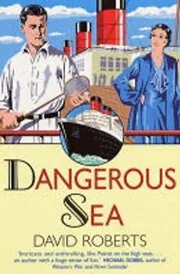
Dangerous Sea
by David Roberts
2003
Aboard the *Queen Mary* in 1937, Edward is asked to keep watch over Lord Benyon on a delicate mission to America. When a racist senator is murdered, suspects multiply fast, and Verity has her own political business on board.
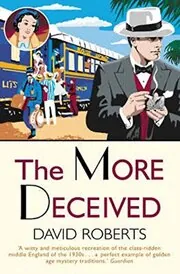
The More Deceived
by David Roberts
2004
Churchill receives leaked secrets about Britain's shaky rearmament plans, and Edward is drawn into a Foreign Office murder inquiry. The trail leads to Spain, where Verity is reporting on the civil war and danger is moving toward Guernica.
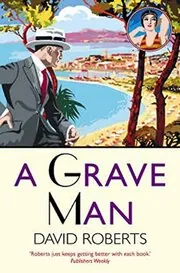
A Grave Man
by David Roberts
2005
At a memorial service in Westminster Abbey, an archaeologist is found stabbed with an Assyrian dagger. Verity follows the case to Swifts Hill, where money, eugenics, private misery, and a second murder make the truth even uglier.
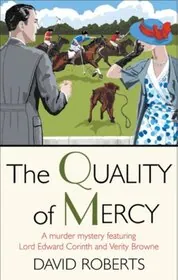
The Quality of Mercy
by David Roberts
2006
When the Nazis seize Austria in 1938, Verity is expelled from Vienna after helping a young Jewish refugee escape. In England, Edward investigates a suspicious death at Broadlands, and the two cases open onto a far darker world.
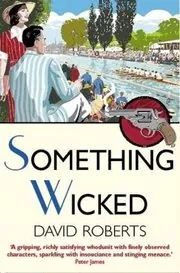
Something Wicked
by David Roberts
2007
Verity returns from Prague ill and is sent to a Henley clinic to rest. Edward, meanwhile, investigates his dentist's murder and a string of strange deaths linked by an unsettling insect theme.
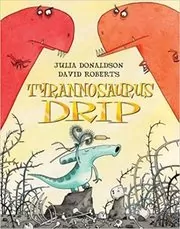
Tyrannosaurus Drip
by Julia Donaldson & David Roberts
2007
A duckbill dinosaur hatches in a tyrannosaurus nest and is branded Drip by his fierce new family. When danger reaches the duckbills, the small vegetarian must show that being different does not mean being weak.
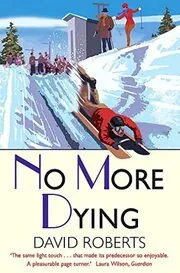
No More Dying
by David Roberts
2008
MI5 learns that Winston Churchill may be marked for assassination in early 1939, and Edward is sent to Cliveden to find the killer. Verity, there on party business, recognizes a murdered journalist and joins the hunt.
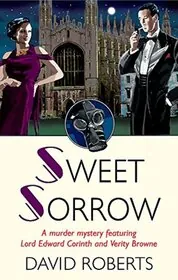
Sweet Sorrow
by David Roberts
2009
In August 1939, newly married Edward and Verity hope for a quiet spell in Sussex before war begins. Instead, a poet is brutally killed after the village fete, and another death at Broadcasting House pulls them into one last case.
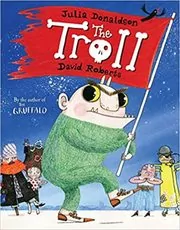
The Troll
by Julia Donaldson & David Roberts
2009
A hungry troll longs for a goat instead of his usual fish supper, while Hank Chief and his pirate crew search for buried treasure. Their separate misadventures bring them together in a comic picture-book adventure.
Tyrannosaurus Drip
by David Roberts & Julia Donaldson
2009
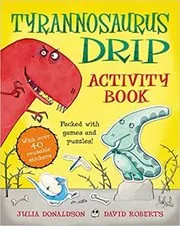
An activity companion to Tyrannosaurus Drip, this book extends the dinosaur story through games, puzzles, coloring pages, join-the-dots, and word activities. It also includes a sticker scene with reusable stickers for creating further dinosaur adventures.
Jack and the Flumflum Tree
by Julia Donaldson & David Roberts
2011
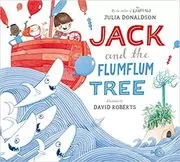
When Jack’s granny develops the moozles, the only cure is fruit from the faraway flumflum tree. Jack and three companions sail to the Isle of Blowyernose, relying on Granny’s unusual packed supplies to face hazards on the way.
The Flying Bath
by Julia Donaldson & David Roberts
2014
After the family leaves for the day, bath toys take off in a magical flying bathtub to help animals in trouble. Whether washing a muddy piglet or tackling an emergency, they make sure to return home in time for the children’s bath.
The Cook and the King
by Julia Donaldson & David Roberts
2018
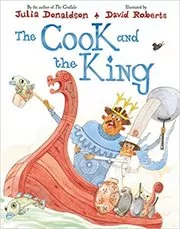
A hungry king hires Wobbly Bob to cook fish and chips, but Bob is frightened by nearly every step of the job. As they travel to gather ingredients, the king helps his anxious new cook face each challenge.
Alone on the Ice
by David Roberts
David Roberts reconstructs Douglas Mawson's Antarctic expedition and the desperate solo journey that followed disaster in 1913. Drawing on expedition records, he examines the extreme weather, isolation, and physical dangers faced by the Australian explorer.
Where to start with David Roberts
If you want the full Edward and Verity story: Sweet Poison → Bones of the Buried → Hollow Crown
If you want the political edge first: The More Deceived → A Grave Man → The Quality of Mercy
If you prefer the later, darker books: Something Wicked → No More Dying → Sweet Sorrow
If you just want one to sample: Sweet Poison
David Roberts sub-series and character series
Lord Edward Corinth and Verity Browne books in order
Explore this seriesLord Edward Corinth and Verity Browne books in chronological order
Standalone David Roberts books


by David Roberts
Publication date unknownThe Greatest Survival Story in the History of Exploration
Author bio
David Roberts spent much of his career making other people's books before he started writing his own. Born in 1944, he became known first as an editor and publishing executive, and only later as the creator of the Lord Edward Corinth and Verity Browne mysteries.
He learned the trade from the inside. Roberts began at Chatto & Windus under Norah Smallwood, later worked at Rainbird, became editorial director at Weidenfeld & Nicolson, and was eventually a partner at Michael O'Mara Books. He edited writers such as Iris Murdoch, Dirk Bogarde, and Laurens van der Post, and he also worked on political biographies and illustrated history projects, including material connected with Lord Mountbatten's archive.
He came to fiction late.
When he became a full-time writer in 2000, he chose a setting that let him use both his love of classic detective stories and his fascination with political history. The late 1930s gave him country houses, newspapers, diplomats, private loyalties, and the growing fear that Europe was drifting toward disaster. He once said the research was one of the pleasures of the work, and he dug through diaries, memoirs, and novels of the period to catch the voices, manners, and blind spots of the age.
That method shows from the first book, Sweet Poison. Roberts brings together Lord Edward Corinth, an upper-class amateur investigator, and Verity Browne, a sharp, left-wing journalist, then drops them into cases that brush up against real events. In Bones of the Buried the action reaches Madrid on the edge of civil war. Hollow Crown moves through the Abdication Crisis. Dangerous Sea sends the story across the Atlantic on the Queen Mary. The puzzles are neat, but the real pleasure is watching history tighten around the characters.
He did not keep the series light for long. Roberts later said he had first imagined the books as breezier, even comic, but as both the fictional calendar and the real one moved on, the mood darkened. That change gives later novels such as The More Deceived, A Grave Man, and The Quality of Mercy much of their force. The murders still matter, but so do appeasement, fascism, refugees, and the question of what decent people owe one another.
The shadows get longer.
Readers who warm to Roberts usually do so for the balance he strikes. He writes in the tradition of classic British mystery, with careful clues, strong secondary characters, and elegant settings, but he does not pretend the 1930s were tidy or charming. Edward and Verity disagree about class, politics, and the future, and that friction gives the books their pulse. By the time of Something Wicked, No More Dying, and Sweet Sorrow, their relationship has deepened, but the world around them has become harder and more dangerous.
Roberts also carried pieces of his own life into the work. He wrote that he drew on his memory of Lord Mountbatten when creating scenes at Broadlands in The Quality of Mercy, because he had actually met him in the last years of his life. That kind of detail helps explain why the novels feel lived-in instead of merely researched. Even when famous people like Winston Churchill or Wallis Simpson appear, they tend to feel like part of the furniture of the age, not guest stars dropped in for effect.
He was married and divided his time between London and Wiltshire. Roberts died in December 2025. His fiction still feels lively because it remembers that history is made up of rooms, conversations, private fears, and people who may or may not do the decent thing when it counts.







Edited by
Software engineer whose passion for tracking book recommendations from podcasts inspired the creation of MRB.
Lead investor at 3one4 Capital whose startup expertise and love for books helped shape MRB and its growth.
Comments
Did we miss something? Have feedback?
Help us improve this page by sharing your thoughts