
Dark Nest Books in Order
Part ofLeanna Renee Hieber Books in OrderSee the Dark Nest books in order by Leanna Renee Hieber, with short summaries, series background, reading order, and tips on where to begin.
Last updated: 1 new book added
As an Amazon Associate, we earn from qualifying purchases (at no extra cost to you).
Dark Nest books in publication order
3 books

Dark Nest
by Leanna Renee Hieber
2008
Chief Counsel Ariadne Corinth learns her former lover has died just as tensions between the Light Nest and the Dark Nest turn dangerous. To save her people from betrayal and possible genocide, she must uncover the truth fast.
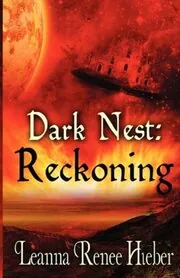
Reckoning
by Leanna Renee Hieber
2011
Captain Temesia Elysse survives one disaster only to face a larger one. With her psychic people marked for genocide, she must hold her crew together, rescue the living, and decide how far justice should go.
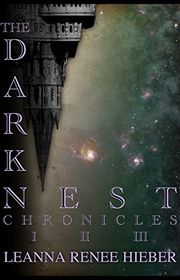
The Dark Nest Chronicles
by Leanna Renee Hieber
2015
Psychically gifted humans aboard two space colonies face betrayal and a planned genocide by their homeworld. Three interconnected tales follow lovers and leaders trying to unite their people, uncover hidden abilities, and survive attacks in space and back home.
Dark Nest books in chronological order
Series background & context
The Dark Nest books are where Leanna Renee Hieber first brought together romance, psychic powers, and high-stakes speculative fiction. Instead of Victorian streets and haunted mansions, this series heads into deep space, but it still carries the same interest in emotion, danger, and people cornered by forces larger than themselves.
At the center of the story are newly evolved humans whose psychic gifts have made them useful, feared, and tightly controlled. They have been sent out by the Homeworld aboard separate vessels, the Light Nest and the Dark Nest, and the whole arrangement feels uneasy from the start. These are not carefree exploration missions. They are political projects, and the people on board know it.
That pressure gives the series its shape.
In Dark Nest, the first major point-of-view character is Ariadne Corinth, a Chief Counsel who learns that her longtime lover, Kristov Haydn, has died. What begins as grief quickly turns into suspicion. Something is wrong in the relationship between the two Nests, and Ariadne has only hours to figure out whether the fracture is accidental, engineered, or part of something far worse. Hieber keeps the scope large, with ships, councils, and social control, but the emotional engine is personal. Ariadne is not trying to solve an abstract problem. She is trying to understand a loss while keeping her people alive.
Reckoning shifts the focus to Captain Temesia Elysse and widens the crisis. The psychically gifted are no longer merely watched or manipulated. They are targets. The Homeworld has moved toward open persecution and genocide, and survival is no longer enough. Rescue, resistance, and justice all become urgent at once. Temesia has to lead under pressure, manage grief, and keep anger from becoming self-destruction.
Nobody in these books gets the luxury of a slow decision.
What makes Dark Nest stand out is the way it blends intimate, relationship-driven storytelling with a much larger fight over power and identity. These are short books, but they do not feel small. Lovers are separated, alliances crack, secret plans are set in motion, and characters discover that the abilities they were taught to fear may be the key to survival. Hieber is interested in what control does to a community, and in what happens when that community finally begins to understand its own strength.
The tone is tense, fast, and often claustrophobic. Even in space, the story feels close to the skin. Commands matter. Trust matters. A single mistake can cost hundreds of lives. If you like science fiction that leans hard into psychic ability, emotional stakes, and the politics of survival, this series delivers that in a compact form.
It is a space opera, yes, but a very personal one. Behind the ships and councils, Dark Nest is really about people who have been denied freedom, denied truth, and denied the full use of their own minds, and what happens when they begin to push back.
















Edited by
Software engineer whose passion for tracking book recommendations from podcasts inspired the creation of MRB.
Lead investor at 3one4 Capital whose startup expertise and love for books helped shape MRB and its growth.
Comments
Did we miss something? Have feedback?
Help us improve this page by sharing your thoughts