
Daniel Quinn Books in Order
Browse Daniel Quinn's books in order, with quick summaries, Ishmael series background, and simple advice on where to start with his fiction and nonfiction.
Last updated:
As an Amazon Associate, we earn from qualifying purchases (at no extra cost to you).
Daniel Quinn books in publication order
18 books

The Book of the Damned
by Daniel Quinn
1982
This compact early work shows Quinn wrestling with the ideas that would later flower in Ishmael. Fragmentary, fierce, and more apocalyptic in tone, it offers a raw first look at his critique of culture, history, and humanity's direction.
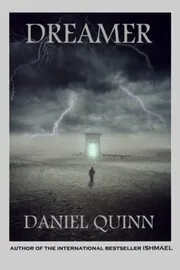
Dreamer
by Daniel Quinn
1988
Greg Donner falls for the mysterious Ginny Winters, but his dreams begin bleeding into another life, another self, and another version of her. Quinn uses a love story and a psychological nightmare to blur the line between waking and dreaming.
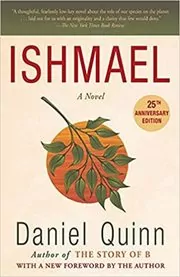
Ishmael
by Daniel Quinn
1992
A drifting man answers a newspaper ad from a teacher who wants a pupil ready to save the world, and finds a gorilla named Ishmael instead. Their long conversations turn into a searching, accessible challenge to the myths of modern civilization.
Recommended by
2 people Sahil Lavingia recommended this book
Sahil Lavingia
Sahil Lavingia recommended this book on Notion.
Sahil Lavingia's recommendation of this book  Jack Dorsey recommended this book
Jack Dorsey
"Incredible." - Jack Dorsey
Jack Dorsey's recommendation of this book
Providence
by Daniel Quinn
1994
In this memoir, Quinn traces the spiritual and intellectual path that led to Ishmael, from childhood visions in Omaha to years of searching, doubt, and self-examination. It's the personal map behind his fiction and the questions that drove it.
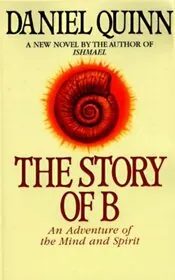
The Story of B
by Daniel Quinn
1996
Father Jared Osborne is sent to investigate a charismatic preacher known only as B, whose teachings threaten more than church doctrine. As Jared digs deeper, Quinn turns the novel into a tense challenge to history, religion, and cultural myth.
Recommended by
1 person- Jack Dorsey recommended this book
Jack Dorsey
"Incredible." - Jack Dorsey
Jack Dorsey's recommendation of this book
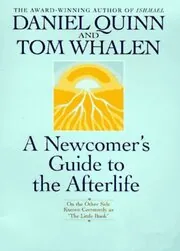
A Newcomer's Guide to the Afterlife
by Daniel Quinn
1997
Framed as a handbook for the recently dead, this oddball collaboration imagines the afterlife as a place with rules, rumors, and plenty of confusion. It's comic, irreverent, and sneaks real questions about belief and human behavior into the fun.
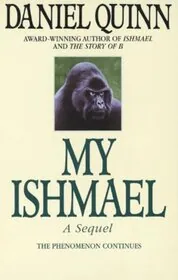
My Ishmael
by Daniel Quinn
1997
When twelve-year-old Julie Gerchak answers Ishmael's ad for a pupil, the telepathic gorilla gets a student unlike any he expected. Their conversations revisit Quinn's big ideas through a younger, sharper, and often more stubborn point of view.

Beyond Civilization
by Daniel Quinn
1999
Quinn shifts from fiction to direct argument, asking what might come after the civilizational habits he spent years critiquing. The book explores tribal lifeways, social change, and how people might build workable communities without waiting for a grand rescue plan.

After Dachau
by Daniel Quinn
2001
After a minor crash, Mallory Hastings wakes in a hospital unable to trust her name, her past, or the world around her. What follows is an unsettling alternate-history thriller about reincarnation, identity, and a society built on erased memory.

The Man Who Grew Young
by Daniel Quinn
2001
In a universe running backward, Adam Taylor moves against the current on an impossible journey toward the beginning of life itself. This illustrated graphic novel turns cosmic speculation into a strange, funny, and unexpectedly moving quest.

The Holy
by Daniel Quinn
2002
After eerie childhood encounters, David Kennesey is drawn into a baffling search that pulls in his family, an aging scholar, and a reluctant detective. Quinn turns ancient gods and modern discontent into a strange, suspenseful metaphysical thriller.

Tales of Adam
by Daniel Quinn
2005
In seven short, fable-like tales, Quinn imagines a world where humans live as participants in the community of life rather than rulers over it. The stories are simple on the surface but carry the spiritual and philosophical roots of Ishmael.
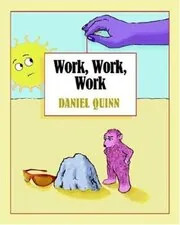
Work, Work, Work
by Daniel Quinn
2006
An industrious gopher spends every day tunneling beneath an enchanted world he never gets to see. Above him, the landscape grows stranger by the minute, turning this picture book into a playful invitation to notice wonder and imagine more than one way of living.
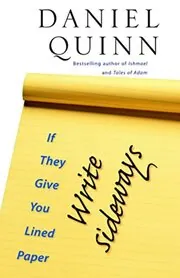
If They Give You Lined Paper, Write Sideways.
by Daniel Quinn
2007
Quinn turns inward to answer a question readers kept asking: how does he think the way he does? Part memoir, part practical guide, it shows the habits of mind behind Ishmael and invites readers to question inherited assumptions for themselves.

At Woomeroo
by Daniel Quinn
2012
This collection gathers stories Quinn wrote during the years he was wrestling Ishmael into existence. They're stranger, looser, and more overtly magical than his best-known work, full of mystery, hidden layers of reality, and characters brushing up against wonder.

The Invisibility of Success
by Daniel Quinn
2014
This volume collects thirteen essays and speeches, giving Quinn's ideas a more direct, conversational form. Topics range across culture, education, religion, ecology, and the future, making it a useful doorway for readers who want the arguments without the novel framework.

The Teachings That Came Before and After Ishmael
by Daniel Quinn
2014
Quinn assembled this sampler for readers who loved Ishmael but never moved on to the rest of his work. It gathers substantial selections from the books around it, tracing the ideas that led up to Ishmael and the ones it opened afterward.

Sleepwalking Thru a Marriage
by Daniel Quinn
2020
A brief, late-published short story from Quinn, centered on the numb routines and blind spots that can settle over married life. It's a small, intimate entry in his bibliography, quieter than his major books but still tuned to the stories people live by.
Where to start with Daniel Quinn
If you want the core Ishmael experience: Ishmael → The Story of B → My Ishmael
If you want Daniel Quinn explaining his own ideas: Providence → Beyond Civilization → If They Give You Lined Paper, Write Sideways.
If you prefer speculative thrillers: After Dachau → The Holy → Dreamer
If you want shorter, more fable-like work: Tales of Adam → Work, Work, Work → At Woomeroo
Daniel Quinn sub-series and character series
Daniel Quinn collections, short stories, and related book types
Short Stories/Novellas
Collections
Graphic Novels
Picture Books
Non-Fiction
Standalone Daniel Quinn books
Author bio
Daniel Quinn was born in Omaha, Nebraska, in 1935 and grew up there during the Depression and World War II years. A vivid childhood dream stayed with him for decades and later became central to both his memoir and his fiction. He went on to study at St. Louis University, the University of Vienna, and Loyola University Chicago, earning an English degree in 1957.
Before he became known as a novelist, he spent about two decades in educational and consumer publishing in Chicago. His jobs ranged from encyclopedia editing to senior editorial roles in educational publishing, and he also helped run the Stateville Penitentiary Writers' Workshop from 1969 to 1971. It was practical, demanding work, the kind that teaches precision and patience.
Writing took the long way around.
Quinn also spent time as a postulant at the Abbey of Our Lady of Gethsemani in Kentucky, where Thomas Merton was his spiritual director. He later moved away from Catholicism, but not away from the questions that had drawn him there in the first place. That long spiritual search eventually fed into Providence, the memoir that explains the personal road behind his ideas.
For years he worked on early versions of the book that would become Ishmael. When the manuscript finally won the Turner Tomorrow Fellowship in 1991, it brought him a huge readership and a prize of $500,000, and the novel was published the following year. The setup is famously odd, a man answering a newspaper ad and meeting a telepathic gorilla, but the book's real power lies in how calmly it asks readers to rethink the story modern culture tells about human beings. It later appeared in more than 25 languages and found a steady life in classrooms as well as among general readers.
That strange premise was the point.
Quinn kept building on those ideas in The Story of B, My Ishmael, and Beyond Civilization. Readers tend to come to him for the big questions, why our systems feel broken, what captivity looks like when it feels normal, and whether humans can live as members of the wider community of life instead of rulers over it. Even when he wrote thrillers like After Dachau or the eerie The Holy, those questions were still humming underneath.
He also liked changing form whenever it suited the idea. There is the illustrated fable Tales of Adam, the playful children's book Work, Work, Work, the essay collection If They Give You Lined Paper, Write Sideways., and the darkly comic A Newcomer's Guide to the Afterlife. Across genres, he liked books that nudged readers sideways, away from accepted scripts and toward a different way of seeing.
His later life moved west and south. He and his wife, Rennie MacKay Quinn, left Chicago for New Mexico in 1979, later lived in Austin and Houston, and even started a weekly newspaper in the small town of Madrid, New Mexico. He died in Houston in 2018, but his work still travels the old-fashioned way, passed from reader to reader by people who want someone else to wrestle with the same hard questions.




Edited by
Software engineer whose passion for tracking book recommendations from podcasts inspired the creation of MRB.
Lead investor at 3one4 Capital whose startup expertise and love for books helped shape MRB and its growth.
Comments
Did we miss something? Have feedback?
Help us improve this page by sharing your thoughts