
CP Snow Books in Order
Explore C. P. Snow’s books in order, with summaries of his novels and nonfiction, series background, and clear guidance on where to start.
Last updated:
As an Amazon Associate, we earn from qualifying purchases (at no extra cost to you).
CP Snow books in publication order
25 books
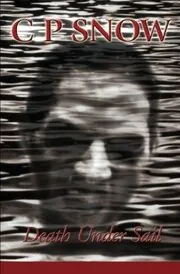
Death Under Sail
by CP Snow
1932
A sailing holiday on the Norfolk Broads turns deadly when the host is found shot at the helm of his yacht. With only a small group of friends aboard, every guest has reason to fear suspicion.
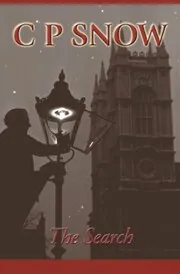
The Search
by CP Snow
1932
A young scientist gives his early life to research, convinced that discovery will make everything worthwhile. As professional setbacks and personal needs close in, he must decide what kind of success can actually satisfy him.
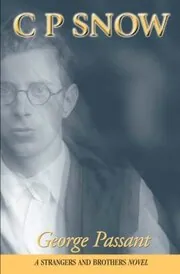
George Passant
by CP Snow
1940
In a provincial English town, young Lewis Eliot comes under the influence of George Passant, an idealistic solicitor’s clerk. Passant’s courage and stubborn principles inspire loyalty, but they also drive him toward a painful fall.
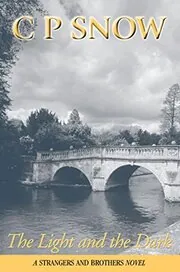
The Light and the Dark
by CP Snow
1947
Lewis Eliot becomes close to Roy Calvert, a brilliant Cambridge academic whose promise is shadowed by severe depression. Set before and during the war, the novel explores friendship, mental illness, marriage, and responsibility.
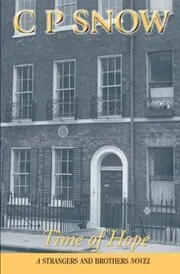
Time of Hope
by CP Snow
1949
Lewis Eliot recalls his childhood and youth in an English provincial town, then his first steps toward a legal career in London. It is the chronological opening of his long journey through class, work, friendship, and ambition.
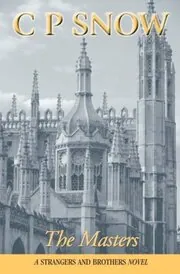
The Masters
by CP Snow
1951
When the master of a Cambridge college dies, the fellows must elect a successor. Lewis Eliot watches an apparently dignified process become a tense contest of alliances, ambition, principle, and personal history.
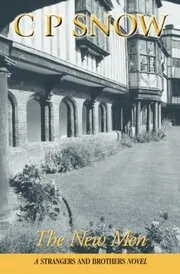
The New Men
by CP Snow
1954
During the Second World War, scientists and administrators work on the atomic bomb project. Snow follows their rivalries, friendships, and love affairs as technical ambition collides with the moral weight of a devastating new weapon.
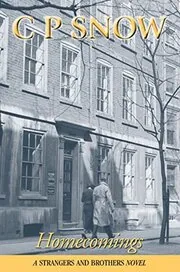
Homecomings
by CP Snow
1956
Against wartime London and the years that follow, Lewis Eliot faces changes in his work and private life. The novel follows love, conflict, and the uneasy effort to build a settled home after disruption.
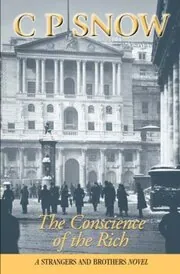
The Conscience of the Rich
by CP Snow
1958
Charles March is the reluctant heir to a wealthy Jewish banking family, but inheritance brings pressure rather than freedom. Lewis Eliot observes as family duty, social position, love, and moral responsibility pull March in competing directions.
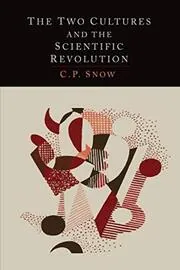
The Two Cultures and the Scientific Revolution
by CP Snow
1959
In this influential lecture, Snow warns that the gulf between scientific and literary education weakens public life. He argues for greater shared understanding in a world increasingly shaped by technology and scientific knowledge.
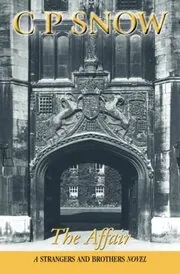
The Affair
by CP Snow
1960
A Cambridge college is shaken by an inquiry involving a young academic and a possible miscarriage of justice. Lewis Eliot must navigate evidence, loyalty, and institutional self-protection as the case turns increasingly personal.
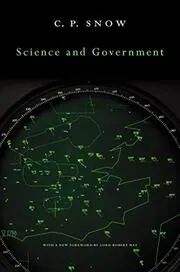
Science and Government
by CP Snow
1961
Snow recounts the wartime rivalry between scientific advisers Henry Tizard and Frederick Lindemann. Their conflict over radar, bombing, evidence, and influence becomes a sharp study of how science and politics collide.
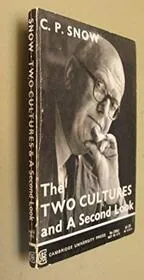
The Two Cultures/A Second Look
by CP Snow
1963
Snow argues that scientists and literary intellectuals often speak past one another, to society’s cost. This edition pairs his famous lecture with a later response that clarifies and extends his argument.
Corridors of Power
by CP Snow
1964
Lewis Eliot watches Whitehall politics through the career of Roger Quaife, a skilled diplomat and operator. As disputes over defense and policy intensify, personal ambition and private alliances shape decisions with national consequences.
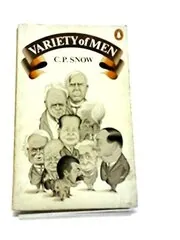
Variety of Men
by CP Snow
1967
Snow sketches nine influential figures, from Rutherford and Einstein to Churchill, Stalin, and Robert Frost. The portraits focus on temperament, ambition, intellect, and the human quirks behind public reputations.
The Sleep of Reason
by CP Snow
1969
Lewis Eliot returns to the provincial town of his youth and becomes involved in the aftermath of a murder. Old relationships, local status, and personal loyalties complicate the search for an honest account of what happened.
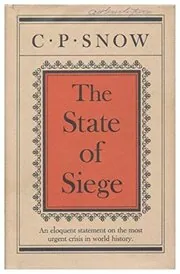
The State of Siege
by CP Snow
1969
Snow returns to questions raised by his Two Cultures argument, considering the pressures facing modern society. This short work reflects on science, education, public judgment, and the difficulty of making sensible collective choices.
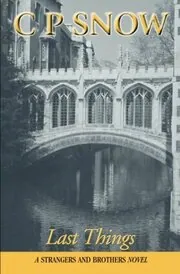
Last Things
by CP Snow
1970
After a serious operation, Lewis Eliot looks back on his life, family, and the choices that shaped him. The final Strangers and Brothers novel is a reflective story about aging, responsibility, and what can be passed on.
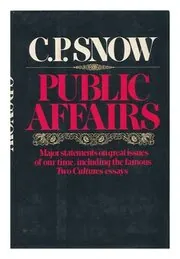
Public Affairs
by CP Snow
1971
This nonfiction collection gathers Snow’s reflections on politics, public life, science, education, and the responsibilities of people in power. He writes as a novelist and former civil servant who knew institutions from inside.
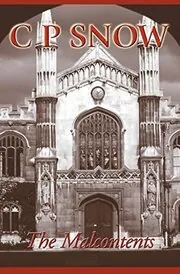
The Malcontents
by CP Snow
1972
Stephen Freer joins a secret group of young radicals determined to act against the establishment. As suspicion grows that one member is an informer, political idealism gives way to danger, divided loyalties, and tragic consequences.
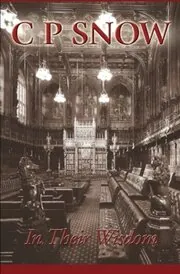
In Their Wisdom
by CP Snow
1974
After a wealthy man leaves his estate to a young outsider, his estranged daughter challenges the will. The legal dispute draws in family loyalties, old social scores, and people eager to turn private grief into advantage.
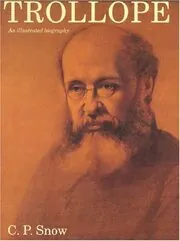
Trollope
by CP Snow
1975
Snow offers a compact study of Anthony Trollope’s life and fiction. He follows the Victorian novelist’s working habits, public career, and interest in money, institutions, love, and the compromises of ordinary life.
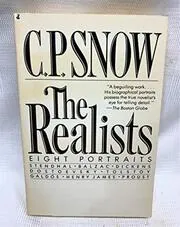
The Realists
by CP Snow
1978
Snow examines eight major novelists, including Balzac, Dickens, Dostoevsky, Tolstoy, James, and Proust. It is a direct, reader-friendly defense of the realist novel and its power to make social life visible.
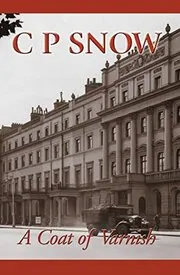
A Coat of Varnish
by CP Snow
1979
In London’s Belgravia during the hot summer of 1976, retired Humphrey Leigh visits Lady Ashbrook just before she is murdered. The investigation exposes uneasy relationships and the brittle surface of respectable society.
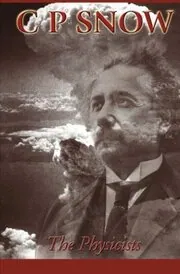
The Physicists
by CP Snow
1981
Snow looks back at the generation of physicists whose discoveries reshaped the twentieth century. Blending scientific history with personal portraits, he considers the people behind major breakthroughs and the public consequences of their work.
Where to start with CP Snow
For the full Lewis Eliot story in chronological order: Time of Hope → George Passant → The Conscience of the Rich → The Light and the Dark.
For Cambridge politics and moral pressure: The Masters → The Affair.
For science, war, and public decision-making: The Search → The New Men → Science and Government.
For Snow’s best-known cultural argument: The Two Cultures and the Scientific Revolution → The Two Cultures/A Second Look.
CP Snow sub-series and character series
Strangers and Brothers books in order
Explore this seriesStrangers and Brothers books in chronological order
Standalone CP Snow books
Author bio
C. P. Snow was born Charles Percy Snow in Leicester, England, on October 15, 1905. He grew up in the industrial Midlands in a family that valued learning, though money was often tight. His father was a church organist and choirmaster, and Snow later wrote often about people trying to move beyond the limits of class and circumstance.
At school, Snow showed a talent for science. He studied chemistry in Leicester, then went on to Cambridge for graduate work in physics, becoming a fellow of Christ’s College in 1930. For a while, the lab was the center of his working life.
Writing was there from the beginning, too.
His first novel, Death Under Sail, arrived in 1932 and took the form of a tightly contained murder mystery. The Search, published two years later, drew more closely on the pressures of scientific ambition. Its young researcher learns that a career in science can bring competition, disappointment, and a hard reckoning with the rest of life.
Snow’s own research career did not last. After an incorrect scientific result connected with a proposed method for synthesizing vitamin A, he stepped back from research. He remained close to the scientific world, however, and his experience in laboratories, universities, business, and government gave his fiction an unusually practical feel.
He knew how institutions worked from the inside.
During the Second World War, Snow worked for the Ministry of Labour, helping identify and place scientific and technical talent. He later served as a civil service commissioner and held senior scientific personnel roles in industry. Those jobs informed the long Strangers and Brothers sequence, in which narrator Lewis Eliot moves through provincial life, London law, Cambridge colleges, wartime administration, and Whitehall.
The eleven novels in that sequence are concerned with friendship, marriage, class, ambition, loyalty, and power. Books such as The Masters, about the election of a Cambridge college head, and Corridors of Power, set among senior officials and politicians, turn private conversations and committee rooms into real sources of tension. The New Men brings scientists into the race to develop the atomic bomb, while The Affair follows the damage caused by an academic investigation.
Snow also became widely known for The Two Cultures and the Scientific Revolution, based on his 1959 Rede Lecture. He argued that scientists and literary intellectuals often failed to understand one another, and that this divide mattered in a modern society shaped by science and technology. The idea sparked years of argument, which Snow revisited in The Two Cultures/A Second Look, Science and Government, and later essays.
His later books ranged from the political novel In Their Wisdom to studies of Anthony Trollope, major realist novelists, and the physicists who transformed the twentieth century. In 1950, Snow married novelist and critic Pamela Hansford Johnson. They had one son, Philip. Knighted in 1957, he became Baron Snow of Leicester in 1964 and served briefly in the Ministry of Technology.
Snow died in London on July 1, 1980. His books remain especially useful for readers who like stories about capable, flawed people making choices inside systems that can be both useful and unforgiving.








Edited by
Software engineer whose passion for tracking book recommendations from podcasts inspired the creation of MRB.
Lead investor at 3one4 Capital whose startup expertise and love for books helped shape MRB and its growth.
Comments
Did we miss something? Have feedback?
Help us improve this page by sharing your thoughts