
Code of the Lifemaker Books in Order
Part ofJames P Hogan Books in OrderSee the Code of the Lifemaker books in order by James P. Hogan, with summaries, series background, and tips on where to start reading.
Last updated:
As an Amazon Associate, we earn from qualifying purchases (at no extra cost to you).
Code of the Lifemaker books in publication order
2 books
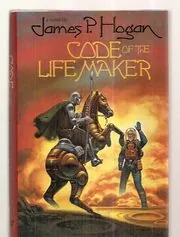
Code of the Lifemaker
by James P Hogan
1983
A mission to Titan discovers an entire mechanical ecology and a self-aware robot society that worships the Lifemaker. First contact becomes a wry, thoughtful story about intelligence, belief, and machine evolution.
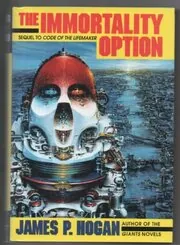
The Immortality Option
by James P Hogan
1995
Titan's self-aware robot civilization is back, and ancient code buried in forgotten systems is starting to wake up. As humans and Taloids dig into their origins, the future of that machine world hangs in the balance.
Code of the Lifemaker books in chronological order
Series background & context
The Code of the Lifemaker books take place on Titan, and that setting does almost all the heavy lifting you could want from science fiction. Titan is cold, dim, chemically strange, and not at all where humans expect to find a living culture. Yet Hogan begins with a perfect hard-SF jolt: an Earth probe lands there and is calmly taken apart by robots. That single event kicks off a secret expedition, because if machines on Titan can build, think, and organize, then somebody needs to know where they came from and what they want.
What the humans find is not a robot army waiting for battle. It is a whole mechanical ecology, complete with herds, tools, city-states, and an intelligent people known as the Taloids. They believe in a creator they call the Lifemaker, and from their point of view the universe makes sense through that story. This gives the series its central tension. Humans arrive wanting explanation and access. The Taloids already have beliefs, customs, rivalries, and their own way of deciding what counts as truth.
That clash is where the books get their spark.
Hogan uses first contact, but he bends it into something more anthropological and more playful. The question is not only whether humans can communicate with another intelligence. It is whether either side can understand what the other thinks a mind is for. The Titan setting helps here, because every part of life is mechanical without feeling sterile. Buildings can be grown. Tools have descendants. Religion and engineering sit next to each other. It is a very odd world, but it feels internally lived in rather than decorative.
The sequel, The Immortality Option, pushes the mystery forward when ancient code hidden in Titan's systems starts to wake up. Suddenly the search for origins becomes urgent again. Who wrote the buried programs? What were they meant to do? And what happens to a society built around the Lifemaker myth when harder evidence begins to surface? The scale gets bigger, but the appeal stays much the same. These books like ideas, especially ideas about artificial life, consciousness, belief, and the danger of misreading another culture because its assumptions are not your own.
If the Giants books are science mysteries about the past, this series is a science mystery about creation itself. It is thoughtful, sometimes funny, and more interested in intelligent contact than in nonstop combat. Readers who enjoy robots that feel like a real civilization, not just clever gadgets, will probably find a lot to like here.






Edited by
Software engineer whose passion for tracking book recommendations from podcasts inspired the creation of MRB.
Lead investor at 3one4 Capital whose startup expertise and love for books helped shape MRB and its growth.
Comments
Did we miss something? Have feedback?
Help us improve this page by sharing your thoughts