
Giants Books in Order
Part ofJames P Hogan Books in OrderSee the Giants books in order by James P. Hogan, with short summaries, series background, and a clear guide to where to start this classic SF saga.
Last updated:
As an Amazon Associate, we earn from qualifying purchases (at no extra cost to you).
Giants books in publication order
5 books
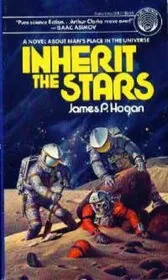
Inherit the Stars
by James P Hogan
1977
A 50,000-year-old human skeleton in a spacesuit is found on the Moon, and every known theory breaks. Victor Hunt and Christian Danchekker follow the evidence into one of classic hard science fiction's great mysteries.
The Gentle Giants of Ganymede
by James P Hogan
1978
Scientists investigating a derelict ship on Ganymede are still chasing the vanished race behind the Moon mystery. Then the giants return, and humanity's story gets stranger, larger, and far less comfortable.
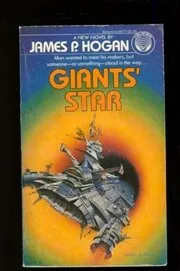
Giants' Star
by James P Hogan
1981
With the Ganymeans back and Minerva's past opening up, Victor Hunt and his allies uncover a larger cosmic pattern. The third Giants novel trades one solved riddle for an even bigger one.
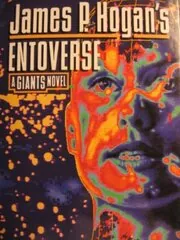
Entoverse
by James P Hogan
1991
On Jevlen, social breakdown and the giant computer JEVEX hint that something deeper is wrong. Then the Giants series swerves into a parallel universe where unfamiliar laws of reality reshape the threat.
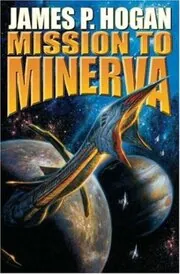
Mission to Minerva
by James P Hogan
2005
Victor Hunt's latest case begins with a call from an older version of himself. Parallel universes, old enemies, and a chance to reach Minerva before disaster pull the Giants saga into bold new territory.
Giants books in chronological order
Series background & context
The Giants books start with one of Hogan's best hooks. A human body is found on the Moon, sealed in a red spacesuit and dated to fifty thousand years ago. From there the series follows physicist Victor Hunt, biologist Christian Danchekker, and a widening circle of researchers as they try to explain the impossible. The answer is never simple, and that is really the appeal. Each book begins with a mystery, then patiently works outward until the whole Solar System feels stranger than anyone expected.
These are science mysteries on a grand, planetary scale.
The setting keeps expanding. What starts in labs, conference rooms, and lunar excavation sites moves out to Ganymede, the wreck of an ancient ship, the lost world of Minerva, and eventually the far-off descendants of the giant beings who once left the Solar System. Hogan likes to let evidence lead the way, so the books spend real time on theories, arguments, test results, and sudden reversals when a better explanation appears. If you enjoy seeing smart people reason their way through a problem, this series is very much built for you.
Victor Hunt gives the books a steady center. He is practical, curious, and willing to follow facts wherever they go. Danchekker, a biologist with a sharp eye for evolutionary puzzles, makes an ideal counterpart. Around them are astronauts, engineers, politicians, and later the Ganymeans and Thuriens, all trying to understand how humanity fits into a much older story. The ongoing tension is not only about what happened in the past, but about what different civilizations will do once that past becomes known.
Across the first three novels, the core arc is about origins. Why are there human links to worlds beyond Earth? What happened to Minerva? Why did the giants leave, and what traces did they leave behind? The later books, Entoverse and Mission to Minerva, widen the scope even further with rival human offshoots, parallel universes, and time-bending consequences. Those later turns are stranger than the opening trilogy, but they still grow out of the same love of bold speculation and high-stakes investigation.
Wonder comes first, but so does logic.
Tone matters here. The Giants series is older-school hard science fiction, which means less banter and more deduction, fewer explosions and more big reveals earned through patient thinking. But it is not dry. There is real awe in the movement from a single skeleton on the Moon to a reworked history of humanity and the Solar System. If you are deciding where to start, the first three books form a satisfying opening run, and the later two are there if you want the story to get weirder.




Edited by
Software engineer whose passion for tracking book recommendations from podcasts inspired the creation of MRB.
Lead investor at 3one4 Capital whose startup expertise and love for books helped shape MRB and its growth.
Comments
Did we miss something? Have feedback?
Help us improve this page by sharing your thoughts