
Clifford Irving Books in Order
Browse Clifford Irving books in order, from courtroom thrillers to the Howard Hughes saga, with short summaries, series notes, and tips on where to start.
Last updated:
As an Amazon Associate, we earn from qualifying purchases (at no extra cost to you).
Clifford Irving books in publication order
24 books
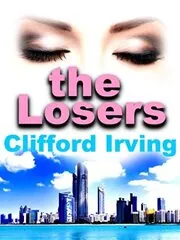
The Losers
by Clifford Irving
1959
Told against a New York backdrop, this early novel follows friends whose ambitions, loyalties, and desires keep colliding. Irving turns their chase for love, money, and self-invention into a lean story about charm, compromise, and losing badly.
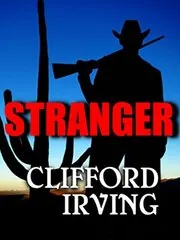
Stranger
by Clifford Irving
1961
In the lawless West, Gavin Roy bends a New Mexico valley to his will and calls it order. The real fight comes from within his own household, as his rebellious son turns the family story into a bitter struggle over power and inheritance.

The Valley
by Clifford Irving
1962
After the Civil War, ruthless Gavin Roy builds an empire in Diablo Valley and rules it through fear. When his rebellious son returns, old wounds reopen in a hard western about land, power, and the cost of trying to own other people.
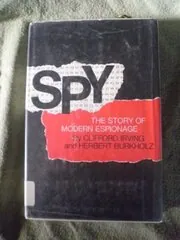
Spy
by Clifford Irving
1968
Co-written with Herbert Burkholz, this nonfiction book looks at the hidden world of modern espionage. Irving moves through spycraft, clandestine operations, and the political games behind them, showing how secrecy became a central tool of the Cold War.

The 38th Floor
by Clifford Irving
1968
John Burden is unexpectedly elevated to a top United Nations post as international tensions spiral toward war. As he questions the American line, he becomes a target at home and abroad in a political thriller that races through Manhattan.
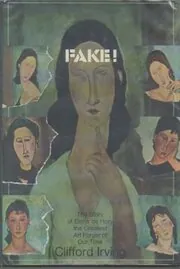
Fake! The Story of Elmyr de Hory, the Greatest Art Forger of Our Time
by Clifford Irving
1969
Irving profiles art forger Elmyr de Hory, a man who sold fake masters with style, nerve, and a talent for reinvention. The book is about forged paintings, but also about performance, authenticity, and the people who want to be fooled.
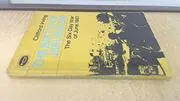
The Battle of Jerusalem
by Clifford Irving
1970
Drawing on his time in the region, Irving gives a short, vivid account of the Six-Day War in June 1967. The focus is on Israel's fight for survival, the battles around Jerusalem, and the immediacy of a reporter close to events.
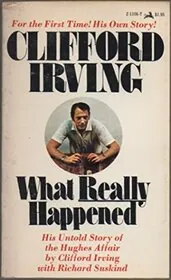
What Really Happened
by Clifford Irving
1972
Irving's first full telling of the Howard Hughes affair lays out the hoax from his side, with Richard Suskind alongside. It is a brisk, self-justifying insider narrative about ambition, performance, and a fraud that grew too large to control.
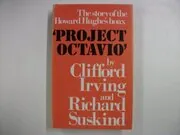
Project Octavio
by Clifford Irving
1976
Written with Richard Suskind, this is Irving's inside account of the Howard Hughes caper, from forged letters to publishing panic. The book follows how the scheme was built, sold, and finally pulled apart under scrutiny.
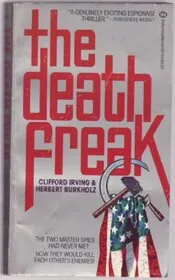
The Death Freak
by Clifford Irving
1978
CIA inventor Eddie Mancuso and his KGB opposite number, Vasily Borgneff, are masters of unusual killing devices. When their own services decide they know too much, the two men turn their tradecraft back on the people who trained them.
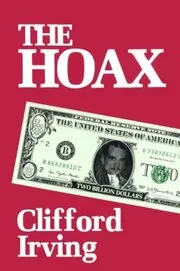
The Hoax
by Clifford Irving
1981
Irving retells the Howard Hughes affair from the inside, following the pitch, the performance, and the collapse of the fake autobiography. It reads like a caper memoir, but it also shows how badly publishers, reporters, and readers wanted to believe.
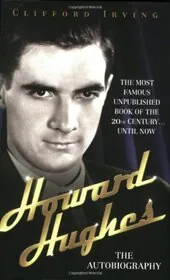
Howard Hughes
by Clifford Irving
1982
This notorious forged autobiography imagines Howard Hughes telling his own story, from ambition and fame to secrecy and obsession. It is important less as biography than as the centerpiece of one of publishing's most audacious literary frauds.
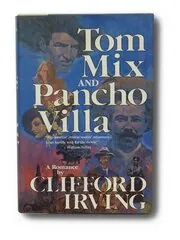
Tom Mix and Pancho Villa
by Clifford Irving
1982
A young Tom Mix rides into revolutionary Mexico and falls in with Pancho Villa in 1913. The journey gives Irving room for action, danger, and a harder look at heroism, violence, and the stories nations tell about themselves.
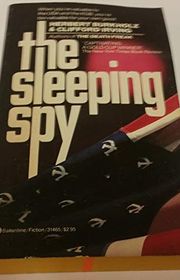
The Sleeping Spy
by Clifford Irving
1983
Retired spy craftsmen Eddie Mancuso and Vasily Borgneff are pulled back into action to hunt a dangerous sleeper agent. The result is a fast Cold War chase full of uneasy alliances, odd killings, and men who trust tradecraft more than governments.
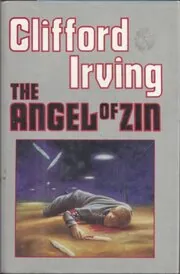
The Angel of Zin
by Clifford Irving
1984
In 1943 a Berlin homicide inspector is sent to a Polish death camp to solve a series of murders. What begins as an investigation becomes a moral reckoning as he confronts the machinery of genocide and a brewing revolt.
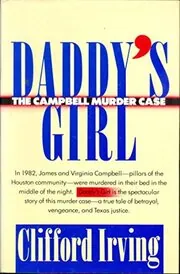
Daddy's Girl
by Clifford Irving
1988
Irving reconstructs the Campbell murder case, in which Houston attorney James Campbell and his wife were found shot to death in their home. The book follows the investigation and the bitter Texas court battle that turned private grief into public spectacle.
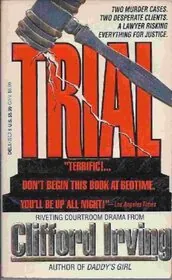
Trial
by Clifford Irving
1990
Houston lawyer Warren Blackburn defends two murder cases that seem unrelated, one involving a nightclub owner, the other a desperate immigrant. As the trials start to connect, the courtroom fight becomes a test of conscience as well as skill.
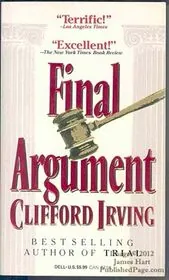
Final Argument
by Clifford Irving
1993
Florida lawyer Ted Jaffe is forced back into a murder case he thought was settled when evidence suggests a man on death row may have been wrongly convicted. Saving him could destroy Ted's career, marriage, and carefully buried past.
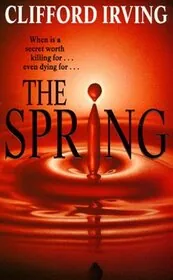
The Spring
by Clifford Irving
1996
New York criminal lawyer Dennis Conway moves to secluded Springhill, Colorado, for love and a quieter life. Then two bodies are found in the snow, his in-laws are accused, and the town's silence becomes as threatening as the case itself.

Bloomberg Discovers America
by Clifford Irving
2011
Set during the Depression, this novella follows the adventures of a wandering Jewish traveler moving through the Deep South. Romance, reinvention, and regional color all matter, but so does the outsider's eye on America itself.
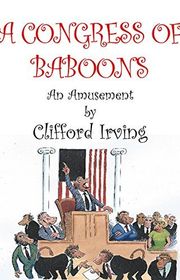
A Congress of Baboons
by Clifford Irving
2014
Clifford Irving collects unusual collective nouns for animals, then invents counterparts for groups of people. Illustrated by Robert Armstrong, this short book explores the humor and creative possibilities of expressions such as a congress of baboons.
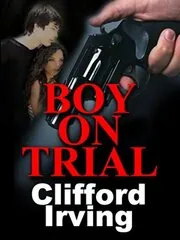
Boy on Trial
by Clifford Irving
2014
Billy Braverman is a gifted twelve-year-old, a TV star, and a rock climber. When juvenile court charges him with murdering his girlfriend's father, the case turns into a searching look at brilliance, innocence, and what adults refuse to see.
Clash by Night
by Clifford Irving
2014
In New York, a group of young people scarred by war pursue money, intimacy, and independence without accepting compromise. Their restless ambitions collide with disappointment as they struggle to find meaning and discover the costs of surrendering their illusions.
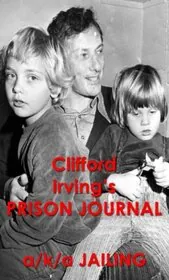
Clifford Irving's Prison Journal
by Clifford Irving
2014
Irving records the 17 months he served after the Howard Hughes hoax, with sharp observations about federal prisons, humiliation, boredom, and survival. It is part confession, part prison chronicle, and part study of how institutions try to break people.
Where to start with Clifford Irving
If you want courtroom suspense: Trial → Final Argument → The Spring → Boy on Trial
If you want the Howard Hughes saga: Howard Hughes → What Really Happened → The Hoax → Clifford Irving's Prison Journal
If you want historical adventure: Tom Mix and Pancho Villa → The Angel of Zin
If you want art, forgery, and real-life deception: Fake! The Story of Elmyr de Hory, the Greatest Art Forger of Our Time → The Hoax
If you want his early standalone fiction: The Losers → The 38th Floor → Stranger
Clifford Irving sub-series and character series
Eddie Mancuso & Vasily Borgneff books in order
Explore this seriesEddie Mancuso & Vasily Borgneff books in chronological order
Clifford Irving collections, short stories, and related book types
Short Stories/Novellas
Non-Fiction
Standalone Clifford Irving books
Author bio
Clifford Irving was born in New York City on November 5, 1930, and grew up in Manhattan, the son of cartoonist Jay Irving and Dorothy Irving. He attended the High School of Music and Art, then Cornell, where he studied English and graduated in 1951.
After college he spent time in the New York Times newsroom, but ordinary office life was never going to hold him for long. In the early 1950s he headed to Europe, found his way to Ibiza, and wrote the novel that became On a Darkling Plain.
He did not live a quiet life.
Irving traveled hard and widely. Over the years he worked odd jobs, sailed across the Atlantic, lived for a time on a houseboat in Kashmir, rode into Tibet on horseback, and stood guard on an Israeli kibbutz. That wandering energy stayed in his books, which rarely sit still for long and often feel written by someone who wanted experience first and explanation later.
His fiction ranged all over the map. The Losers looked at ambition and disappointment in New York. The Valley pushed into western territory and family power struggles. The 38th Floor turned toward international politics, and Tom Mix and Pancho Villa, one of the books readers still single out, mixed history, adventure, and disillusionment in revolutionary Mexico. Readers who like Irving usually respond to that range. He could move from drifters to diplomats to borderlands without sounding like he had settled into one lane.
Another turning point came through the art forger Elmyr de Hory, whom Irving knew in Ibiza. That friendship led to Fake! The Story of Elmyr de Hory, the Greatest Art Forger of Our Time, and Irving later appeared in Orson Welles's F for Fake. By then he had found one of his lasting subjects, the slippery border between performance, fraud, and belief.
Then came Howard Hughes.
In 1971 Irving convinced a major publisher that he had Hughes's blessing to produce an autobiography, even though he had never met him. The scheme collapsed when Hughes publicly denounced the book, and Irving served 17 months in prison. He later wrote about the affair in What Really Happened, The Hoax, and Clifford Irving's Prison Journal. Those books keep circling the same hard question: why smart people, and whole institutions, so often want a good story to be true.
Prison did not end his writing life. In the years after the hoax he kept publishing, and many readers found him through the courtroom novels Trial, Final Argument, The Spring, and later Boy on Trial. These books are tighter and more direct than some of his earlier work, built around lawyers, moral doubt, and cases that keep shifting under everyone's feet. He also kept returning to history and real lives, whether in Daddy's Girl, his true crime account of a Texas murder case, or in The Battle of Jerusalem, his concise book on the Six-Day War.
In later years he lived for long stretches in Mexico and near Aspen, and he worked to bring old books back into print, often as ebooks with help from his son. A 2006 film adaptation of The Hoax put his name in front of a new audience, even if he was open about disliking parts of the movie. Irving died in Sarasota, Florida, on December 19, 2017. His career never fit neatly in one box, which is part of what makes it interesting. He wrote fiction, reportage, history, memoir, true crime, and one of the most notorious literary frauds of the twentieth century.






Edited by
Software engineer whose passion for tracking book recommendations from podcasts inspired the creation of MRB.
Lead investor at 3one4 Capital whose startup expertise and love for books helped shape MRB and its growth.
Comments
Did we miss something? Have feedback?
Help us improve this page by sharing your thoughts