
Claudia Rankine Books in Order
Find Claudia Rankine books in order, with short summaries and guides to the author's series that help you choose where to start and what to read next.
Last updated:
As an Amazon Associate, we earn from qualifying purchases (at no extra cost to you).
Claudia Rankine books in publication order
8 books

Nothing in Nature Is Private
by Claudia Rankine
1994
Claudia Rankine’s first poetry collection explores an immigrant’s encounters with North American life and the persistence of racism. Moving between intimacy and detachment, the poems examine privilege, vulnerability, and the violence embedded in seemingly ordinary surroundings.
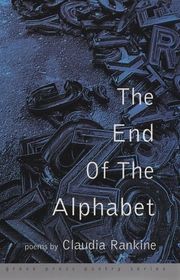
The End of the Alphabet
by Claudia Rankine
1998
A woman confronting illness struggles to move beyond despair in this poetry collection. Drawing on literary voices and shifting between bodily experience and thought, the poems examine vulnerability, desire, and the contradictions of living with disease.
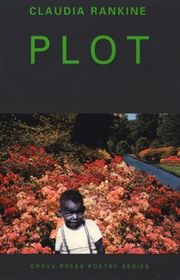
Plot
by Claudia Rankine
2001
Expectant mother Liv questions bringing a child into a bewildering world, placing her at odds with her husband Erland. Through verse, prose, dialogue, dreams, and memories, the collection explores pregnancy, artistic creation, and the uncertainty of existence.

Don’t Let Me Be Lonely
by Claudia Rankine
2004
Combining lyric writing, essays, and television imagery, Claudia Rankine examines isolation and the pressures of contemporary American life. Personal unease intersects with racism, political violence, depression, and media saturation in a search for recognition and connection.
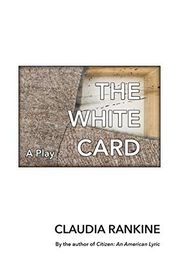
The White Card
by Claudia Rankine
2018
A wealthy Manhattan couple invites an artist to dinner, where discussion of art and race exposes conflicting assumptions. A later meeting in the artist’s studio deepens the confrontation over whiteness, representation, and who controls the act of looking.
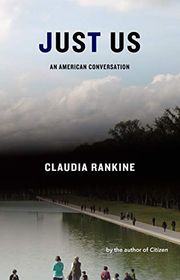
Just Us
by Claudia Rankine
2020
Through essays, poems, images, and conversations, Claudia Rankine examines how whiteness shapes everyday American encounters. Exchanges with friends and strangers expose the friction between private assumptions and public inequality, asking what honest dialogue across racial divisions requires.
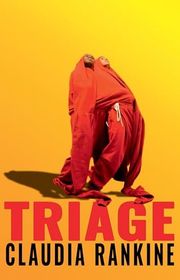
Triage
by Claudia Rankine
2026
Two women’s turbulent friendship unfolds over decades, beginning with a college game of collapsing whenever they meet. Combining narrative, criticism, memory, and images, Rankine explores grief, wounded histories, and the demands of caring amid ongoing loss.

Citizen
by Claudia Rankine
Claudia Rankine combines poetry, essays, and images to examine racism in everyday encounters, public life, media, and sport. The work explores how repeated experiences of racial aggression affect identity, belonging, and the meaning of citizenship.
Recommended by
1 person Cheryl Strayed recommended this book
Cheryl Strayed
"A really important book for us to be reading right now." - Cheryl Strayed
Where to start with Claudia Rankine
For the American trilogy in sequence: Don’t Let Me Be Lonely → Citizen → Just Us
For a direct introduction to her mixed forms: Citizen
For art, race and dramatic dialogue: The White Card
For friendship, memory and grief: Triage
Standalone Claudia Rankine books
Author bio
Claudia Rankine writes poetry, essays and plays that examine how public life enters private experience. Born in Kingston, Jamaica, in 1963, she earned a bachelor's degree at Williams College and an MFA in poetry at Columbia University. Her books often bring several forms together, asking readers to consider the relationship between a sentence, an image and the circumstances in which each is encountered.
The page can become a place where different kinds of evidence meet.
Don’t Let Me Be Lonely combines lyric writing, essay and visual material to examine loneliness and a life shaped by screens, news, illness and public anxiety. It begins the American trilogy continued by Citizen and Just Us. The books can be approached individually, but reading them in that order shows an expanding inquiry into how people experience themselves within a divided society.
Citizen examines racism through everyday encounters as well as public figures, media and sport. Its repeated acts of exclusion and aggression accumulate, making it difficult to separate an isolated incident from the pressure of a larger pattern. Poetry, prose and images work together, with shifts in form becoming part of the argument about what can be noticed, dismissed or remembered. The book won the National Book Critics Circle Award in Poetry and the Forward Prize.
Just Us moves further into conversation, especially the difficulty of speaking directly about whiteness. It brings essays, poems, documents and images alongside other people's responses. A discussion at dinner or an encounter in a public space becomes a way to consider how politeness can coexist with avoidance. The book leaves room for correction and disagreement, complicating the idea that one speaker can control the meaning of an exchange.
Conversation becomes a stage event in The White Card.
The play opens with a Manhattan dinner party hosted by influential art collectors for an artist, Charlotte. Their talk about art and race exposes assumptions about what is being displayed and who is expected to explain it. As a shorter dramatic work, it offers another entry into concerns that run through the prose and poetry. The characters' ability or refusal to listen matters alongside the statements they make.
Triage turns toward a friendship sustained and strained across decades. Two composite characters, a narrator and a theorist, begin with a college game of collapsing whenever they meet. The gesture takes on further meanings as the book moves through grief, memory, criticism and images. Readers interested in a more sustained narrative relationship can begin there, while Citizen remains a direct introduction to the formal variety of Rankine's work.
Rankine received a MacArthur Fellowship in 2016 and founded the Racial Imaginary Institute in 2017. She joined NYU's Creative Writing Program in 2021 and lives in New York. Across these books, the lyric voice is repeatedly placed in relation to someone else's experience, an artwork or a public account. That makes the collection especially suited to readers interested in poetry that shares its space with criticism and the unresolved demands of living with others.











Edited by
Software engineer whose passion for tracking book recommendations from podcasts inspired the creation of MRB.
Lead investor at 3one4 Capital whose startup expertise and love for books helped shape MRB and its growth.
Comments
Spotted a missing book, a wrong order or a mistake? Tell us and we'll fix this page.
We're a reading guide, not the author or publisher, so we can't send books or pass on messages.