
Children of Violence Books in Order
Part ofDoris Lessing Books in OrderSee the Children of Violence series by Doris Lessing in order, with book summaries, Martha Quest's full story arc, series background, and help placing this semi autobiographical cycle in her wider work.
Last updated:
As an Amazon Associate, we earn from qualifying purchases (at no extra cost to you).
Children of Violence books in publication order
5 books
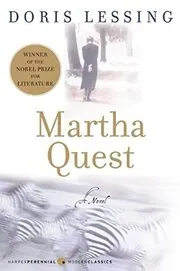
Martha Quest
by Doris Lessing
1952
Fifteen year old Martha lives on a failing farm in colonial Southern Rhodesia, devouring books and despising the narrowness of white society. Her move to town, office work, dances, and first affairs mark the beginning of a long struggle to define freedom for herself.
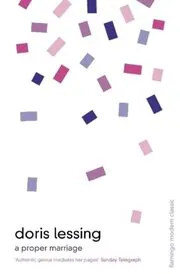
A Proper Marriage
by Doris Lessing
1954
Martha Quest tumbles into marriage and motherhood just as war and politics are reshaping her world. This second Children of Violence novel charts her resentment at domestic confinement, her uneasy role as a "proper" wife, and the growing sense that her life is being lived for her.
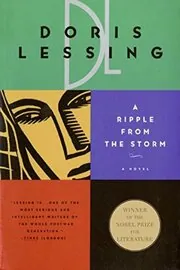
A Ripple from the Storm
by Doris Lessing
1958
Back in the Central African town of her youth, Martha joins a small communist group during the Second World War. Meetings, leaflets, and quarrels consume the members as Lessing dissects the hopes, self deceptions, and power struggles inside a tiny revolutionary cell.
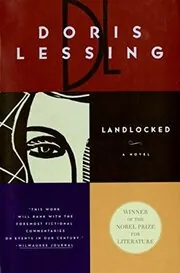
Landlocked
by Doris Lessing
1969
Set in a landlocked Central African colony after the war, this fourth Children of Violence novel finds Martha suspended between political engagement and private disillusion. The changing country, stalled marriage, and uneasy white community mirror her own sense of being trapped.
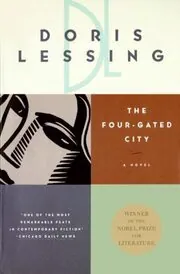
The Four-Gated City
by Doris Lessing
1969
Martha Quest arrives in postwar London and becomes entangled with the Coldridge family, Cold War politics, and the early peace movement. The final Children of Violence volume slowly shifts into a speculative future, blending social history, psychological exploration, and apocalyptic vision.
Children of Violence books in chronological order
Series background & context
Children of Violence is a five novel sequence that traces the life of Martha Quest from a restless teenager on a colonial farm to an older woman in a transformed, and finally ruined, London. It is one of Doris Lessing's most sustained explorations of how history and private life collide.
In Martha Quest we meet Martha at fifteen on a struggling farm in Southern Rhodesia. She is hungry for books, furious at the smallness of white settler society, and desperate to escape both her parents' marriage and the racial hierarchies around her. When she moves to the nearest town to work in an office, she is pulled into dances, flirtations, and awkward political conversations that both attract and repel her.
A Proper Marriage follows Martha into a swift, almost accidental marriage to Douglas, a decent young man who expects an ordinary domestic life. The arrival of a baby, the demands of housekeeping, and the onset of the Second World War press her into a role she already feels unable to inhabit. At the same time she sees the hypocrisies of the white community more clearly and feels increasingly trapped.
In A Ripple from the Storm the focus shifts to a small communist group in the town, inspired by the wartime alliance with the Soviet Union. Martha throws herself into meetings, pamphlets, and factional debates. The novel shows how idealism can harden into dogma and how easily personal needs are absorbed into the life of a group.
Landlocked finds Martha still in Central Africa after the war, surrounded by political uncertainty and personal stalemate. The country is changing, but slowly, and the white community is anxious and defensive. Martha's own commitments feel less solid, yet she has not found a new way to live.
In The Four-Gated City she finally leaves Africa for London. The book follows her through the 1950s and 60s into the anti nuclear movement, bohemian households, and experiments in psychology. In its final section the narrative jumps forward into a near future Britain shaken by disaster, and touches on ideas of telepathy and new forms of consciousness.
Taken together, the Children of Violence novels track one woman's attempt to think and feel honestly inside systems that are built on inequality and denial. They also mirror Lessing's own journey through colonial society, organised communism, and postwar London, without ever reducing Martha to a simple stand in for the author.


Edited by
Software engineer whose passion for tracking book recommendations from podcasts inspired the creation of MRB.
Lead investor at 3one4 Capital whose startup expertise and love for books helped shape MRB and its growth.
Comments
Did we miss something? Have feedback?
Help us improve this page by sharing your thoughts