
Catch 22 Books in Order
Part ofJoseph Heller Books in OrderSee the Catch-22 books by Joseph Heller in order, with short summaries, series background, and a quick note on where to start.
Last updated:
As an Amazon Associate, we earn from qualifying purchases (at no extra cost to you).
Catch 22 books in publication order
2 books
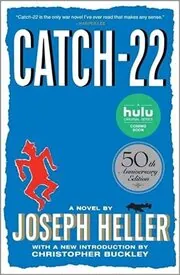
Catch-22
by Joseph Heller
1961
On a small island off Italy during World War II, bombardier Yossarian tries to stay alive while military bureaucracy keeps inventing new reasons he has to keep flying. Funny, furious, and unsettling, it's a war novel about absurd rules and ordinary fear.
Recommended by
4 people Shah Rukh Khan recommended this book
Shah Rukh Khan
"I am re reading now." - Shah Rukh Khan
Shah Rukh Khan's recommendation of this book  Larry Ellison recommended this book
Larry Ellison
"I think [Bill Gates] must be some kind of reincarnation of Milo Minderbinder from [this book]." - Larry Ellison
Larry Ellison's recommendation of this book  Mark Bittman recommended this book
Mark Bittman
"I used to buy [this book] for a lot of people because I just thought if you hadn’t read it, you had to but maybe that era is over." - Mark Bittman
Mark Bittman's recommendation of this book  Fred Wilson recommended this book
Fred Wilson
"A good one!" - Fred Wilson
Fred Wilson's recommendation of this book
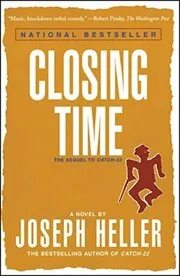
Closing Time
by Joseph Heller
1994
Decades after Catch-22, Yossarian, Milo, the chaplain, and others are older and staring down mortality instead of bombing missions. Heller mixes black comedy with melancholy as he turns from wartime madness to aging, politics, and the end of an era.
Catch 22 books in chronological order
Series background & context
The Catch-22 books are really about one idea that keeps changing shape: what happens when a person tries to stay decent, or at least stay alive, inside a system built on nonsense. The first book, Catch-22, drops you onto the island of Pianosa off the Italian coast during World War II. Its center is Captain John Yossarian, an American bombardier who wants the most basic thing in the world, to stop flying missions before somebody kills him.
That would be simple in a sane army. Heller's point is that this one is not sane. The famous rule says a flyer can be grounded if he is crazy, but if he asks to be grounded because he does not want to die, that proves he is sane enough to keep flying. Around Yossarian is a huge cast of officers, schemers, innocents, and hustlers, including Colonel Cathcart, who keeps raising the mission count, Milo Minderbinder, who turns war into business, and Chaplain Tappman, one of the few people still trying to stay gentle.
The joke is brutal because the fear is real.
What makes Catch-22 last is the mix of farce and dread. One page can feel like vaudeville, the next like a nightmare. The setting matters a lot. The air base, the hospital, the brief trips into Rome, all of them show institutions that talk about honor while treating people as numbers. Yossarian is funny, paranoid, selfish, brave, and often completely right. He becomes the reader's guide through a world where language is slippery, authority is childish, and survival can start to look like disobedience.
More than thirty years later, Closing Time returns to Yossarian, Milo, the chaplain, and other familiar faces. The war is over, but Heller is not interested in a victory lap. Now the pressure comes from aging, illness, memory, city decay, greed, and the creeping sense that the twentieth century itself is wearing out. Much of the action shifts to New York, and the comedy grows darker and sadder. These characters are no longer trying to dodge bombing runs. They are trying to make sense of old age, unfinished business, and the fact that endings do not arrive neatly.
In that way, the sequel is stranger and more melancholy.
Read in order, the two books speak to each other across decades. Catch-22 is the sharper entry point and works perfectly on its own. Closing Time is best saved for later, once Yossarian and Heller's style are already in your head. Together they form a loose, darkly funny series about war, bureaucracy, mortality, and the endless talent institutions have for making simple human needs sound unreasonable.





Edited by
Software engineer whose passion for tracking book recommendations from podcasts inspired the creation of MRB.
Lead investor at 3one4 Capital whose startup expertise and love for books helped shape MRB and its growth.
Comments
Did we miss something? Have feedback?
Help us improve this page by sharing your thoughts