
Betty MacDonald Books in Order
Browse Betty MacDonald books in order, with quick summaries, Mrs. Piggle-Wiggle series details, and clear suggestions on where to start reading.
Last updated:
As an Amazon Associate, we earn from qualifying purchases (at no extra cost to you).
Betty MacDonald books in publication order
12 books
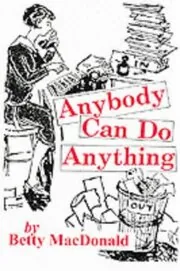
Anybody Can Do Anything
by Betty MacDonald
1945
After leaving her first marriage, Betty returns to Seattle with two daughters and hunts for work during the Depression. Much of the fun comes from her family, especially sister Mary, as each new job attempt goes sideways.
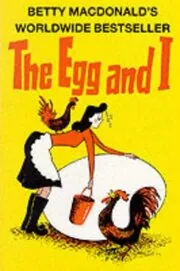
The Egg and I
by Betty MacDonald
1945
MacDonald draws on her first marriage to tell the story of moving to a remote chicken farm in Washington. The hard work, isolation, and neighboring eccentrics are real, but so is the comic energy that carries the memoir.
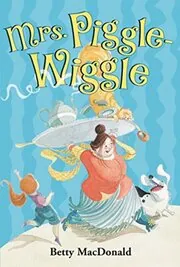
Mrs. Piggle-Wiggle
by Betty MacDonald
1947
In the first Mrs. Piggle-Wiggle book, exasperated parents call on an eccentric neighbor who always knows what to do. Toy clutter, back talk, selfishness, dirty habits, and bedtime battles all meet inventive cures.
The Plague and I
by Betty MacDonald
1948
MacDonald turns her year in a tuberculosis sanatorium near Seattle into a sharp, funny memoir. She writes about boredom, fear, hospital routines, and the odd little communities that form when life suddenly stops.
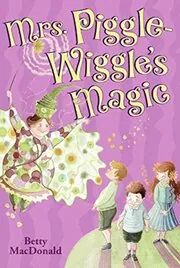
Mrs. Piggle-Wiggle's Magic
by Betty MacDonald
1949
Parents turn to Mrs. Piggle-Wiggle for help with tattling, interrupting, bad table manners, clumsiness, and skipping school. Her cures use powders, pills, and imaginative tricks that are funny first and quietly wise underneath.
Nancy and Plum
by Betty MacDonald
1952
Orphaned sisters Nancy and Plum endure the meanness of Mrs. Monday's boarding school while hoping for something better by Christmas. It's a snowy, old-fashioned story about sisterhood, endurance, and a long-awaited piece of luck.
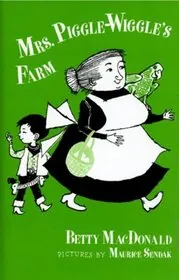
Mrs. Piggle-Wiggle's Farm
by Betty MacDonald
1954
Mrs. Piggle-Wiggle leaves town for a farm, where children learn responsibility by caring for animals and doing real work. These stories lean less on magic and more on consequences, while keeping the series' warmth and comedy.
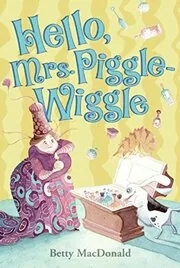
Hello, Mrs. Piggle-Wiggle
by Betty MacDonald
1955
Back in her neighborhood, Mrs. Piggle-Wiggle takes on a show-off, a crybaby, a bully, a whisperer, and a daydreaming slowpoke. Each chapter turns one ordinary childhood problem into a funny, lightly magical cure.
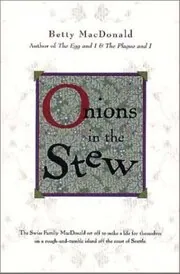
Onions in the Stew
by Betty MacDonald
1955
In this memoir, Betty MacDonald recounts family life on Vashon Island with her second husband and two daughters. Wartime shortages, weather, ferries, animals, and house repairs all become material for her dry, observant humor.
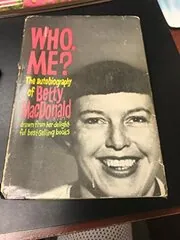
Who, Me?
by Betty MacDonald
1959
Published after MacDonald's death, this volume pulls together selected chapters from her four adult memoirs into a single autobiography. It gives readers a straight path through the family stories, hard years, and comic disasters that shaped her life.
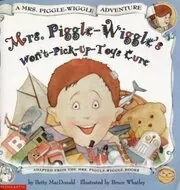
Mrs. Piggle-Wiggle's Won't-Pick-Up-Toys Cure
by Betty MacDonald
1998
Hubert never puts away his toys, and his room becomes such a mess he can barely move. Mrs. Piggle-Wiggle's playful but pointed cure lets him feel the full weight of his bad habit.
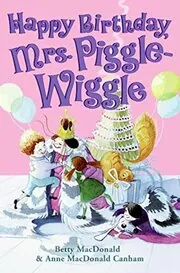
Happy Birthday, Mrs. Piggle-Wiggle
by Betty MacDonald
2007
Mrs. Piggle-Wiggle returns with fresh cures for too much TV, picky eating, fear of trying new things, and more, all leading up to a surprise birthday party. The book was completed by Betty MacDonald's daughter Anne from Betty's notes.
Where to start with Betty MacDonald
If you want her best-known memoir: The Egg and I → The Plague and I → Anybody Can Do Anything → Onions in the Stew
If you want her classic children's books: Mrs. Piggle-Wiggle → Mrs. Piggle-Wiggle's Magic → Mrs. Piggle-Wiggle's Farm → Hello, Mrs. Piggle-Wiggle
If you want a standalone children's story: Nancy and Plum
If you want a one-volume life story: Who, Me?
Betty MacDonald sub-series and character series
Betty MacDonald collections, short stories, and related book types
Memoirs
Standalone Betty MacDonald books
Author bio
Betty MacDonald was born Anne Elizabeth Campbell Bard in Boulder, Colorado, in 1907. Her father was a mining engineer, so childhood meant movement, with time in Mexico, Idaho, and Montana before the family settled in Seattle. She graduated from Roosevelt High School in 1924, and the Pacific Northwest would become the setting readers most strongly associate with her work.
She did not begin with a tidy plan to become a writer at all.
After a year at the University of Washington, she married Robert Heskett in 1927 and moved to a chicken farm in Chimacum Valley, near Port Townsend. The work was rough, the house lacked comforts, and country life was nothing like the romantic version. Those years later became The Egg and I, which turns chores, mud, chickens, and strange neighbors into very sharp comedy.
The marriage ended in 1931, and MacDonald returned to Seattle with her daughters, Anne and Joan. She worked one job after another during the Depression, then spent nine months at Firland Sanatorium in 1937 and 1938 after being diagnosed with tuberculosis. Those experiences fed Anybody Can Do Anything and The Plague and I, books that stay funny without pretending the hard parts were small.
Her break came because of her sister Mary Bard. Mary told a publishing scout that Betty was writing a book, which forced Betty to produce a proposal for The Egg and I in a hurry. She kept going, finished the manuscript, and saw it published in 1945 after serialization. The book sold its first million copies in less than a year, became a 1947 film, and helped launch the Ma and Pa Kettle movies.
What readers found was a voice that sounded amused, practical, and very awake.
In 1942 she had married Donald C. MacDonald, and on Vashon Island she wrote most of her later books. Onions in the Stew grew from family life there, with ferries, weather, house repairs, and daily disorder all turned into material. The bedtime stories she told her daughters, nieces, nephews, and neighborhood children grew into Mrs. Piggle-Wiggle and its sequels, where humor and affection matter as much as the magic cures.
Nancy and Plum shows another side of her, gentler and more storybook, but still interested in family ties and small acts of endurance. Across her work, she keeps returning to stubborn people, domestic chaos, the Pacific Northwest, and the relief of laughing at a bad situation before it swallows you.
The MacDonalds moved to Carmel Valley, California, in 1956, though she returned to Seattle for cancer treatment. She died there in 1958 at age fifty. Her daughter Anne MacDonald Canham later used Betty's notes to complete Happy Birthday, Mrs. Piggle-Wiggle, which is a good reminder that her stories kept traveling long after she was gone.






Edited by
Software engineer whose passion for tracking book recommendations from podcasts inspired the creation of MRB.
Lead investor at 3one4 Capital whose startup expertise and love for books helped shape MRB and its growth.
Comments
Did we miss something? Have feedback?
Help us improve this page by sharing your thoughts