
Betty Smith Books in Order
Browse Betty Smith's books in order, with quick summaries, notes on her life and themes, and simple advice on where to start after A Tree Grows in Brooklyn.
Last updated:
As an Amazon Associate, we earn from qualifying purchases (at no extra cost to you).
Betty Smith books in publication order
5 books
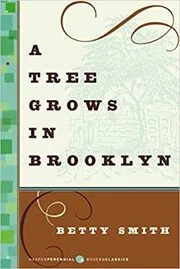
A Tree Grows in Brooklyn
by Betty Smith
1943
In early 1900s Williamsburg, young Francie Nolan grows up in a poor family held together by a practical mother and a charming, unreliable father. It is a coming-of-age story about hunger, books, family, and stubborn hope.
Recommended by
1 person Stephen Dubner recommended this book
Stephen Dubner
"I read it over and over in part because I felt it was describing to me what my parents’ life was like when they were kids." - Stephen Dubner
Stephen Dubner's recommendation of this book
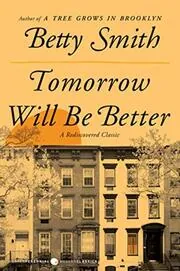
Tomorrow Will Be Better
by Betty Smith
1948
In 1920s Brooklyn, shy but hopeful Margy Shannon wants more than the cramped poverty that has worn down her parents. Her courtship and marriage to Frankie Malone force her to test just how much hope can survive real life.
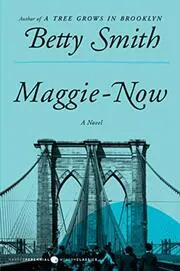
Maggie-Now
by Betty Smith
1950
Set in Brooklyn's Irish immigrant world, this novel follows Maggie-Now as she grows from watchful girl to the person everyone leans on. Family duty, marriage, and the wish for a fuller life pull her in different directions.
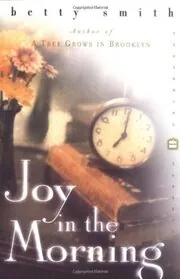
Joy in the Morning
by Betty Smith
1963
Annie McGairy and Carl Brown marry young and head to a Midwestern college town, full of love and almost no money. Their first year together turns everyday chores, study, and survival into a tender test of loyalty and grit.

Wednesdays and Other Stories
by Betty Smith
2013
This short story collection gathers four pieces that move through fantasy, envy, dread, and sudden change. It offers a smaller, stranger side of Betty Smith, while keeping her eye on ordinary people under pressure.
Where to start with Betty Smith
If you want the classic first: A Tree Grows in Brooklyn
If you want young love tested by real life: Joy in the Morning
If you want more Brooklyn hardship and hope: Tomorrow Will Be Better → Maggie-Now
If you want a shorter sampler: Wednesdays and Other Stories
Betty Smith collections, short stories, and related book types
Collections
Standalone Betty Smith books
Author bio
Betty Smith was born Elisabeth Lillian Wehner on December 15, 1896, in Brooklyn, and she grew up in Williamsburg in a family that did not have much money. Her parents were Brooklyn-born children of German immigrants, and the crowded tenement streets around her stayed with her for life. Years later, that world would feed directly into A Tree Grows in Brooklyn.
She wanted to write early, but first she had to work. Smith left school after the eighth grade to help support her family, then later tried to continue her education while holding jobs, including night work in Manhattan and a day job with the Postal Service. She also spent as much time as she could in the public library and at cheap Saturday matinees, which helped shape both the reader and the playwright she became.
In her late teens she was active at Brooklyn's Jackson Street Settlement House, where she took classes in acting and playwriting. There she met George H. E. Smith, whom she married in Ann Arbor, Michigan, in 1919. The couple had two daughters, and while her husband studied law and later political science, Smith pushed her own education forward too, attending high school classes in Ann Arbor and taking writing and journalism courses at the University of Michigan as a special student.
Then playwriting opened a door.
In 1931 she won the Avery Hopwood Award at Michigan for a full-length play, a big break that brought money and attention. The prize led to a fellowship at Yale's drama school, where she studied under George Pierce Baker and wrote more plays. After Yale she worked for the Federal Theatre Project, and in 1936 she went to Chapel Hill, North Carolina, for regional theater work. That move mattered. Chapel Hill became an important home base, and it was during these years that she turned from plays toward fiction.
She wrote what she knew best: working-class Brooklyn, young people growing up fast, and families trying to stay decent under pressure. A Tree Grows in Brooklyn, published in 1943, made her name. Its heroine, Francie Nolan, grows up poor but observant, bookish, and stubbornly hopeful in Williamsburg, and readers connected with the book right away. It became a bestseller, was adapted into a film in 1945, and later into a musical.
Her later novels kept returning to some of the same worries, but never in exactly the same way. Tomorrow Will Be Better follows Margy Shannon, a young Brooklyn woman reaching for a life bigger than poverty. Maggie-Now looks at family duty and desire inside a Brooklyn Irish household. Joy in the Morning, published in 1963 and based in part on Smith's own early marriage, follows Annie and Carl through the first hard year of married life while Carl studies law. Readers who stay with Smith tend to like her plain, direct prose, her sharp ear for neighborhood talk, and the way she writes about money, marriage, mothers, and ambition without turning anyone into a saint.
She never lost her feel for the block, the kitchen table, or the rent money.
Smith married three times and kept the surname from her first marriage for the rest of her career. She spent important years in North Carolina, liked fishing, and was known to enjoy bingo, small details that somehow feel right for a writer so alert to ordinary life. She died in Shelton, Connecticut, on January 17, 1972. Her body of work is small, just four novels and later-collected stories, but it has held on because she understood how hope and hardship can live in the same room.











Edited by
Software engineer whose passion for tracking book recommendations from podcasts inspired the creation of MRB.
Lead investor at 3one4 Capital whose startup expertise and love for books helped shape MRB and its growth.
Comments
Did we miss something? Have feedback?
Help us improve this page by sharing your thoughts