
Mrs Piggle Wiggle Books in Order
Part ofBetty MacDonald Books in OrderSee the Mrs. Piggle-Wiggle series by Betty MacDonald in order, with short summaries, series background, and easy help on where to start.
Last updated:
As an Amazon Associate, we earn from qualifying purchases (at no extra cost to you).
Mrs Piggle Wiggle books in publication order
6 books
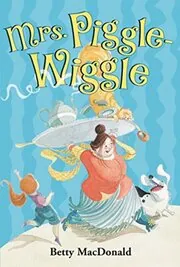
Mrs. Piggle-Wiggle
by Betty MacDonald
1947
In the first Mrs. Piggle-Wiggle book, exasperated parents call on an eccentric neighbor who always knows what to do. Toy clutter, back talk, selfishness, dirty habits, and bedtime battles all meet inventive cures.
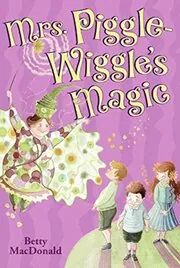
Mrs. Piggle-Wiggle's Magic
by Betty MacDonald
1949
Parents turn to Mrs. Piggle-Wiggle for help with tattling, interrupting, bad table manners, clumsiness, and skipping school. Her cures use powders, pills, and imaginative tricks that are funny first and quietly wise underneath.
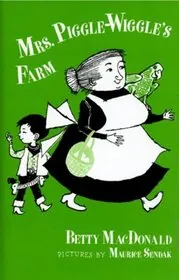
Mrs. Piggle-Wiggle's Farm
by Betty MacDonald
1954
Mrs. Piggle-Wiggle leaves town for a farm, where children learn responsibility by caring for animals and doing real work. These stories lean less on magic and more on consequences, while keeping the series' warmth and comedy.
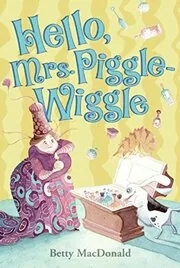
Hello, Mrs. Piggle-Wiggle
by Betty MacDonald
1955
Back in her neighborhood, Mrs. Piggle-Wiggle takes on a show-off, a crybaby, a bully, a whisperer, and a daydreaming slowpoke. Each chapter turns one ordinary childhood problem into a funny, lightly magical cure.
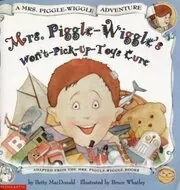
Mrs. Piggle-Wiggle's Won't-Pick-Up-Toys Cure
by Betty MacDonald
1998
Hubert never puts away his toys, and his room becomes such a mess he can barely move. Mrs. Piggle-Wiggle's playful but pointed cure lets him feel the full weight of his bad habit.
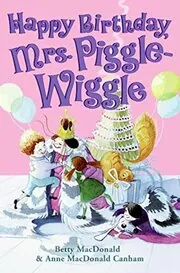
Happy Birthday, Mrs. Piggle-Wiggle
by Betty MacDonald
2007
Mrs. Piggle-Wiggle returns with fresh cures for too much TV, picky eating, fear of trying new things, and more, all leading up to a surprise birthday party. The book was completed by Betty MacDonald's daughter Anne from Betty's notes.
Mrs Piggle Wiggle books in chronological order
Series background & context
The Mrs. Piggle-Wiggle books run on a simple and very good idea: some child has a habit that is driving the grown-ups up the wall, and Mrs. Piggle-Wiggle knows exactly what to do. She lives in an upside-down house, likes children, and never treats them as hopeless. Parents arrive exasperated. Children usually leave wiser, and often a little embarrassed.
The books are episodic, but the setup gives them a strong rhythm.
In Mrs. Piggle-Wiggle and Mrs. Piggle-Wiggle's Magic, each chapter revolves around a single cure. One child will not pick up toys. Another answers back, tattles, interrupts, refuses baths, or avoids school. Some of the cures are basically child psychology dressed up with flair. Others lean into powders, pills, animals, or the magical chest Mrs. Piggle-Wiggle inherited from her pirate husband. The fun comes from watching a bad habit become impossible to ignore.
What keeps the series from feeling mean is MacDonald's view of children. The kids can be rude, messy, lazy, noisy, or scared, but they are not treated as villains. They are recognizable children with large feelings and very fixed ideas. Mrs. Piggle-Wiggle does not do much scolding. She sets the stage, lets the problem play itself out, and gives the child room to discover that a better way is easier. That makes the stories playful instead of preachy.
The setting matters too. This is a neighborhood world of mothers on the phone, children running in and out of houses, and a heroine whose home feels half fairy tale and half family clutter. In Mrs. Piggle-Wiggle's Farm, the series shifts gears and sends children to a farm, where caring for animals and handling real chores do more than magic powders can. In Hello, Mrs. Piggle-Wiggle, the stories return to the neighborhood and its familiar comic troubles.
The problems are old-fashioned, but they still sound familiar.
Across the series, there is no single big plot so much as a shared promise: childhood bad habits can be funny, frustrating, and fixable. That makes these books easy to read in order or dip into one at a time. The later Happy Birthday, Mrs. Piggle-Wiggle, completed from Betty MacDonald's notes by her daughter Anne MacDonald Canham, keeps that same pattern and ends with a town-wide birthday party. If you like short chapters, affectionate comedy, and a touch of make-believe, this series knows exactly what it is.



Edited by
Software engineer whose passion for tracking book recommendations from podcasts inspired the creation of MRB.
Lead investor at 3one4 Capital whose startup expertise and love for books helped shape MRB and its growth.
Comments
Did we miss something? Have feedback?
Help us improve this page by sharing your thoughts