
Ayn Rand Books in Order
Browse Ayn Rand books in order, with quick summaries, notes on her novels and essays, and a simple guide to where to start with her fiction or philosophy.
Last updated:
As an Amazon Associate, we earn from qualifying purchases (at no extra cost to you).
Ayn Rand books in publication order
15 books
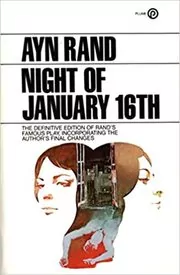
The Night of January 16th
by Ayn Rand
1936
This courtroom play centers on Karen Andre, tried after the death of tycoon Bjorn Faulkner. Testimony, jealousy, and clashing values drive the drama, and the jury, traditionally drawn from the audience, must decide her fate.
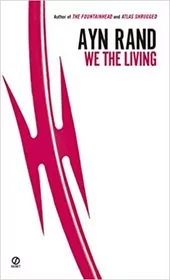
We the Living
by Ayn Rand
1936
Kira Argounova comes of age in Soviet Russia, where ambition, love, and private happiness are treated as threats. Trying to build a life of her own, she is pulled into hard choices between survival, desire, and political power.
Anthem
by Ayn Rand
1938
In a future society where individuality has been erased, Equality 7-2521 commits the crime of thinking for himself. His secret discoveries and his bond with Liberty 5-3000 turn a small rebellion into a search for selfhood.
Recommended by
1 person Ev Williams recommended this book
Ev Williams
On the "books read" section of Ev Williams' GoodReads profile.
Ev Williams's recommendation of this book
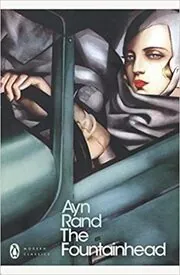
The Fountainhead
by Ayn Rand
1943
Howard Roark is a fiercely independent architect who refuses to copy the past or flatter public taste. As rivals, critics, and power brokers close in, his work and his relationship with Dominique Francon become a test of principle.
Recommended by
14 people Mark Cuban recommended this book
Mark Cuban
"I'll pick it up when I need motivation." - Mark Cuban
Mark Cuban's recommendation of this book  Tim Urban recommended this book
Tim Urban
"I absolutely loved the book. Sure, the characters are extreme and one-dimensional - but to me, that was the point." - Tim Urban
Tim Urban's recommendation of this book  Larry Ellison recommended this book
Larry Ellison
"As a kid, I wanted to be an architect. That's before I read [this book]. I mean it is hard to find a profession that pays worse than architecture." - Larry Ellison
Larry Ellison's recommendation of this book  Emma Watson recommended this book
Emma Watson
"I know, it's a cult. I'm not going to take it too far, but I did enjoy it." - Emma Watson
Emma Watson's recommendation of this book  Kevin Kelly recommended this book
Kevin Kelly
"By the end of the book, I decided to drop out of school. I never returned. It was the best decision of my life." - Kevin Kelly
Kevin Kelly's recommendation of this book  Travis Kalanick recommended this book
Travis Kalanick
"It’s one of my favorite books." - Travis Kalanick
Travis Kalanick's recommendation of this book +8
More recommendations
- Vince Vaughn
"Defiant in its pursuit of one’s artistic goals, meaning you don’t compromise; you stay truthful to what you’re exploring." - Vince Vaughn
- Ev Williams
On the "books read" section of Ev Williams' GoodReads profile.
- Jesse Williams
"The protagonist’s audacious self-confidence and refusal to compromise his artistic vision—which was to say, himself—was a fascinating thing to survey." - Jesse Williams
- Noah Kagan
"Healthy selfishness is a great thing." - Noah Kagan
- Fred Wilson
"I do love [this book]." - Fred Wilson
- Jim Carrey
"I would be Howard Roark and not Peter Keating in [this book]." - Jim Carrey
- Ray Dalio
"Regarding economics, if you haven’t read [this author] lately, I suggest that you do." - Ray Dalio
- Shah Rukh Khan
"[This book] is good a difficult long read though..." - Shah Rukh Khan
- Vince Vaughn
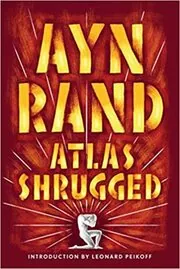
Atlas Shrugged
by Ayn Rand
1957
As the economy buckles under political controls, railroad executive Dagny Taggart and steelmaker Hank Rearden try to keep the country running while its best minds vanish. The mystery of John Galt hangs over every crisis.
Recommended by
23 people Elon Musk recommended this book
Elon Musk
"A counterpoint to communism and useful as such, but should be tempered with kindness." - Elon Musk
Elon Musk's recommendation of this book  Steve Jobs recommended this book
Steve Jobs
Steve Wozniak said he thinks Steve Jobs mentioned this book and it really was a guide in his life.
Steve Jobs's recommendation of this book  Peter Thiel recommended this book
Peter Thiel
"When I first read [Ayn Rand's books] in the late 80s, it felt pretty crazy. And in the last decades, it's in many ways felt much more correct." - Peter Thiel
Peter Thiel's recommendation of this book  Shah Rukh Khan recommended this book
Shah Rukh Khan
One of Shah Rukh Khan's favorite novels.
Shah Rukh Khan's recommendation of this book  Joe De Sena recommended this book
Joe De Sena
"Loved [this book]. Read often." - Joe De Sena
Joe De Sena's recommendation of this book  Peter Diamandis recommended this book
Peter Diamandis
"Something I’ve read multiple times to get me in the mindset of not letting anything stand in my way" - Peter Diamandis
Peter Diamandis's recommendation of this book +17
More recommendations
- Ev Williams
On the "books read" section of Ev Williams' GoodReads profile.
- Gabby Reece
"[I read this book when] I was 15, and I gave [it] to a lot of people because it shifted how I looked at certain things." - Gabby Reece
- Travis Kalanick
Travis Kalanick mentioned this book in a Washington Post interview.
- Brian Armstrong
"Celebrate the creators in the world (even when they struggle). They may be more valuable than we think." - Brian Armstrong
- Amelia Boone
"When I read [this book] in my teens, Dagny Taggart’s character spoke to me on a level I’d never experienced with any other novel." - Amelia Boone
- Bob Metcalfe
"My favorite book." - Bob Metcalfe
- Blake Scholl
"Far and away my favorite book." - Blake Scholl
- Fred Wilson
Fred Wilson recommended this book on his blog.
- Phil Jackson
"I consider it philosophical." - Phil Jackson
- John Carmack
"If you can't see its archetypes in the world around you, you aren't paying attention." - John Carmack
- Mark Cuban
"I'll read it again. So there goes another 3 weeks of me reading it for the tenth time." - Mark Cuban
- Ray Dalio
"Regarding economics, if you haven’t read [this author] lately, I suggest that you do." - Ray Dalio
- Austen Allred
"I really liked it." - Austen Allred
- Russell Brunson
"It is so good!!!" - Russell Brunson
- Paul Krugman
"About a fantasy world whose unrealism can seriously warp your personality and outlook." - Paul Krugman
- Rand Paul
On Rand Paul's website's "reading suggestions for students" section.
- Patrick Bet-David
Patrick Bet-David recommended this book on his website.
- Ev Williams
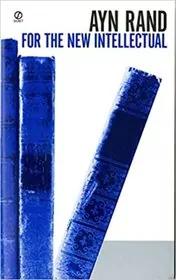
For the New Intellectual
by Ayn Rand
1961
Part manifesto, part anthology, this book opens with Rand's case for a new philosophy of reason and then gathers major speeches from her fiction. It is one of the clearest bridges between the novels and her formal ideas.
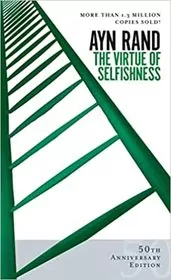
The Virtue of Selfishness
by Ayn Rand
1964
In these essays on ethics, Rand argues that rational self-interest is not cruelty and that self-sacrifice should not be the measure of virtue. The book lays out one of her clearest statements of Objectivist morality.
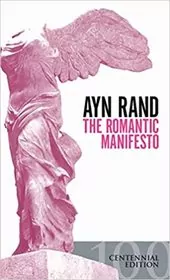
The Romantic Manifesto
by Ayn Rand
1969
Rand turns from politics to art, asking what literature is for and why people need it. These essays explore Romanticism, aesthetic judgment, and her belief that art gives abstract ideas a felt, immediate form.

The Return of the Primitive
by Ayn Rand
1971
This essay collection attacks the New Left and the cultural trends Rand saw as hostile to reason, education, and individualism. It reads as sharp political commentary on protest movements, collectivism, and the ideas behind them.

Philosophy: Who Needs It
by Ayn Rand
1982
In essays and lectures drawn from her later years, Rand argues that philosophy shapes everyday life whether people notice it or not. She brings abstract questions about ideas, values, and politics down to practical stakes.
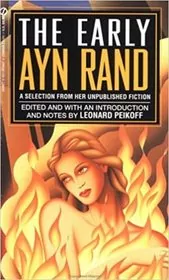
The Early Ayn Rand
by Ayn Rand
1984
This collection gathers early fiction, film treatments, and deleted passages, including material tied to We the Living and The Fountainhead. It is less polished than the major novels but revealing about how her themes took shape.

The Ayn Rand Lexicon: Objectivism from A to Z
by Ayn Rand
1986
A reference guide rather than a narrative book, this volume organizes key passages from Rand's work by subject. It is useful if you want to trace what she says about reason, rights, art, money, and much more.

The Voice of Reason: Essays in Objectivist Thought
by Ayn Rand
1989
A wide-ranging essay collection on ethics, religion, politics, and culture, built around Rand's later nonfiction. It works well for readers who want her arguments in shorter pieces rather than in the long sweep of the novels.

Ayn Rand
by Ayn Rand
2012
A brief interview volume that captures Rand answering questions about Objectivism, politics, religion, sex, and art in a direct, conversational format. It is a quick way to hear her ideas in her own voice.
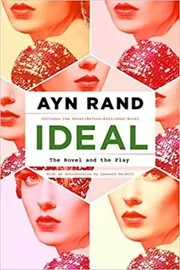
Ideal
by Ayn Rand
2015
A famous actress, Kay Gonda, goes on the run after a murder and turns to the admirers who claim to worship her ideals. The story tests whether those fans will risk anything real when admiration suddenly asks for action.
Where to start with Ayn Rand
If you want a short first read: Anthem → The Fountainhead
If you want her core fiction: The Fountainhead → Atlas Shrugged
If you want her novel of life under communism: We the Living → Anthem
If you want the ideas in essay form: For the New Intellectual → The Virtue of Selfishness → Philosophy: Who Needs It
Ayn Rand collections, short stories, and related book types
Short Story Collections
Non-Fiction
The Ayn Rand Library
Standalone Ayn Rand books
Author bio
Ayn Rand was born Alissa Rosenbaum in St. Petersburg in 1905. Her father was a pharmacist, and the Russian Revolution overturned the world she grew up in. After the family moved to Crimea, she finished high school there, carrying away a permanent anger at collectivist politics and a sharp interest in the fate of the individual.
She returned to Russia in 1921 and studied history at Leningrad State University. Books mattered to her, but so did movies, theater, and big visual storytelling. In 1926 she left for the United States to visit relatives in Chicago, adopted the name Ayn Rand, and chose not to return to Soviet Russia.
After six months in Chicago, she went to Hollywood. A chance meeting with Cecil B. DeMille helped her find studio work, first as a movie extra and then in office jobs and screenwriting work. She met actor Frank O'Connor on a film set and married him in 1929. She became an American citizen in 1931.
She wrote whenever she could, around studio jobs and daily life.
Her early successes show what kept pulling her back to the page. The Night of January 16th became a Broadway play. We the Living followed the fiercely independent Kira Argounova through Soviet life, and Anthem turned the same conflict into a short dystopian fable about a world that nearly erased the word I. Even this early, Rand was drawn to people who wanted to think, work, and love on their own terms.
The Fountainhead changed her career in 1943. Its hero, architect Howard Roark, refuses to copy the past or bend to public taste, and readers who love the novel still respond to that stubborn clarity. They also tend to remember the New York setting, the battles over work and status, and the pressure of living in a culture that rewards second-hand thinking.
Then came Atlas Shrugged.
Published in 1957, it follows Dagny Taggart, Hank Rearden, and the mystery of John Galt as a society weighed down by controls begins to lose its most capable people. For many readers, this is the book that defines Rand, huge in scale, full of argument, and completely serious about work, ambition, and freedom. It also made her philosophy, Objectivism, fully explicit, with its emphasis on reason, rational self-interest, individual rights, and capitalism.
After Atlas Shrugged, she mostly turned to nonfiction and public speaking. In books like For the New Intellectual, The Virtue of Selfishness, The Romantic Manifesto, and Philosophy: Who Needs It, she tried to explain the ideas behind the fiction and apply them to ethics, politics, education, and art. Her recurring characters had often been architects, inventors, executives, and creators with a central purpose. Her essays made that pattern easier to see.
She spent much of her adult life in New York, writing, lecturing, and editing journals devoted to her ideas. She died there in 1982. Her books still find readers who are curious, skeptical, inspired, annoyed, or all four at once. That feels fitting. Rand wrote to start an argument about how a person should live, and the argument has not gone away.

Edited by
Software engineer whose passion for tracking book recommendations from podcasts inspired the creation of MRB.
Lead investor at 3one4 Capital whose startup expertise and love for books helped shape MRB and its growth.
Comments
Did we miss something? Have feedback?
Help us improve this page by sharing your thoughts