
Arthur Koestler Books in Order
This page lists Arthur Koestler books in order, with short summaries, key novels and essays, memoirs, and a quick guide to where new readers should start.
Last updated:
As an Amazon Associate, we earn from qualifying purchases (at no extra cost to you).
Arthur Koestler books in publication order
39 books

Spanish Testament
by Arthur Koestler
1937
Koestler's account of the Spanish Civil War combines reportage on the conflict with the prison narrative later published as Dialogue with Death. It captures propaganda, chaos, and the fear of living under a death sentence.
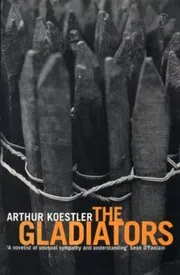
The Gladiators
by Arthur Koestler
1939
Koestler retells Spartacus's slave revolt as both historical novel and political parable. Beneath the battles sits a hard question: what happens when a revolution tries to stay pure while using violent means?
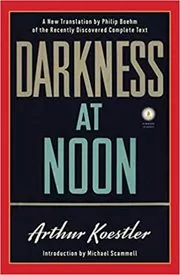
Darkness at Noon
by Arthur Koestler
1940
Rubashov, an old Bolshevik, is imprisoned during the Soviet purge trials and forced to face the logic of the revolution he once served. Koestler turns a prison novel into a devastating study of confession, power, and ideology.
Recommended by
1 person Christopher Hitchens recommended this book
Christopher Hitchens
"I was re-reading [this book] for what felt like (and quite possibly was) the third time in a month." - Christopher Hitchens
Christopher Hitchens's recommendation of this book
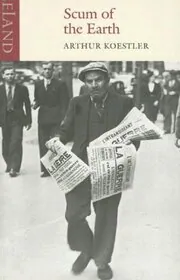
Scum of the Earth
by Arthur Koestler
1941
This memoir follows Koestler through France's collapse in 1939-1940, internment as an unwanted foreigner, and eventual escape to England. Personal survival and political breakdown are tightly bound together.
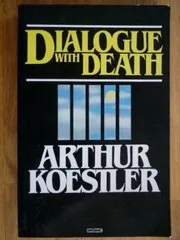
Dialogue with Death
by Arthur Koestler
1942
Koestler recounts his arrest by Franco's forces during the Spanish Civil War and the months he spent awaiting execution in Seville. It is short, stark, and shaped by the daily terror of not knowing who will die next.
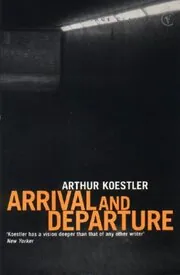
Arrival and Departure
by Arthur Koestler
1943
A refugee and former communist escapes wartime Europe to a neutral country and tries to understand what made him choose politics, exile, and sacrifice. Koestler blends psychological inquiry with the moral wreckage of war.
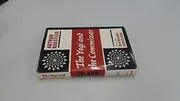
The Yogi and the Commissar and Other Essays
by Arthur Koestler
1945
These essays weigh political action against inner transformation, using the commissar and the yogi as opposing models. Written during and just after the war, they show Koestler thinking past both dogma and passivity.

Twilight Bar
by Arthur Koestler
1945
A political play set in an invented island society, where officials, ordinary people, and absurd rituals expose the death of old illusions. Koestler uses stage comedy and satire to probe power, fear, and public doublespeak.
Thieves in the Night
by Arthur Koestler
1946
Set in British Mandate Palestine, this novel follows Jewish settlers trying to build a collective future under pressure from violence, idealism, and divided loyalties. Koestler draws directly on his own experience in the region.
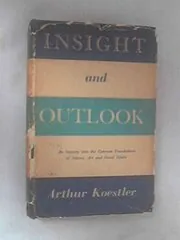
Insight and Outlook
by Arthur Koestler
1949
Koestler searches for common ground between science, art, psychology, and social ethics. It is an early statement of the broad, anti-reductionist thinking that would shape much of his later nonfiction.
Promise and Fulfilment
by Arthur Koestler
1949
A history of Palestine and Israel from 1917 to 1949, blending reportage, political analysis, and firsthand observation. Koestler traces the British Mandate, Zionist hopes, and the rough beginnings of statehood.
The God That Failed
by Arthur Koestler
1949
This influential anthology brings together six writers reflecting on their attraction to communism and their eventual break with it. Koestler's contribution is one of the book's central testimonies of political faith turned sour.
The Age of Longing
by Arthur Koestler
1951
Set in a tense near-future Paris, this Cold War novel follows intellectuals, diplomats, and drifters searching for belief in a frightened Europe. Koestler turns café talk and political anxiety into a novel of ideas.
Arrow in the Blue
by Arthur Koestler
1952
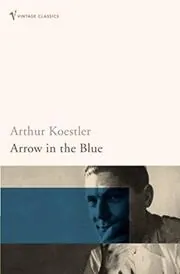
Koestler's first autobiographical volume follows his life from Budapest and Vienna to Palestine, journalism, and the brink of communism. It captures a restless young writer trying on identities before history hardens around him.
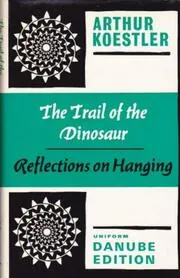
The Trail of the Dinosaur
by Arthur Koestler
1952
This essay collection gathers Koestler's early postwar reflections on politics, culture, and the dangers he saw in Western civilization. He called it a farewell to arms, but the arguments still have bite.
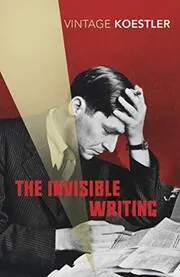
The Invisible Writing
by Arthur Koestler
1954
The second volume of Koestler's autobiography covers 1932 to 1940, the years of communism, Spain, prison, and disillusionment. It is both a political confession and a portrait of Europe sliding toward catastrophe.
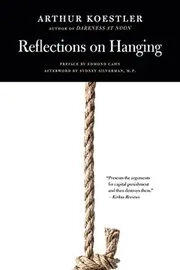
Reflections on Hanging
by Arthur Koestler
1956
Koestler's classic argument against capital punishment grew out of his own time under sentence of death in Spain. He examines hanging in Britain through law, history, and human cost, building a fierce case for abolition.
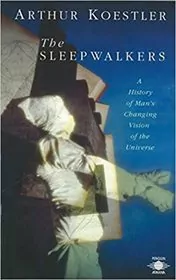
The Sleepwalkers
by Arthur Koestler
1959
A sweeping history of astronomy and cosmology from the ancient world to Newton. Koestler tells the story through bold personalities and argues that discovery often advances by intuition before theory catches up.
Recommended by
1 person Stewart Brand recommended this book
Stewart Brand
Stewart Brand mentioned this book on "The Tim Ferriss Show" podcast.
Stewart Brand's recommendation of this book
The Lotus and the Robot
by Arthur Koestler
1960
Based on travels in India and Japan, Koestler explores religious practice, mysticism, and modern life in Asia. The book is sharp and often skeptical, more travelogue and argument than spiritual pilgrimage.
The Watershed
by Arthur Koestler
1960
An excerpted book from The Sleepwalkers, this volume focuses on Johannes Kepler and the struggle to turn observation into cosmic law. Koestler treats scientific discovery as a drama of obsession, intuition, and hard-earned insight.
Hanged by the Neck
by Arthur Koestler
1961
Koestler attacks capital punishment in Britain, focusing on hanging, wrongful convictions, and the moral cost of state killing. Drawn in part from Reflections on Hanging, it is a sharp, unsparing case for abolition.
Recommended by
1 person- Christopher Hitchens recommended this book
Christopher Hitchens
"A life-changing book." - Christopher Hitchens
Christopher Hitchens's recommendation of this book

Suicide of a Nation
by Arthur Koestler
1963
This polemical inquiry examines Britain's political and social condition in the early 1960s. Koestler writes as a worried outsider, pressing the question of whether the country is drifting into decline by habit and hesitation.
The Act of Creation
by Arthur Koestler
1964
Koestler looks for a common pattern behind jokes, discoveries, and artistic breakthroughs. His key idea, "bisociation," links creativity to the sudden meeting of two previously separate ways of thinking.
Recommended by
2 people Adam Robinson recommended this book
Adam Robinson
"[One of five books that confirm] there is far, far more in our unconscious mind than is dreamt of in our philosophy." - Adam Robinson
Adam Robinson's recommendation of this book  Patrick O'Shaughnessy recommended this book
Patrick O'Shaughnessy
"My favorite book on creativity." - Patrick O'Shaughnessy
Patrick O'Shaughnessy's recommendation of this book
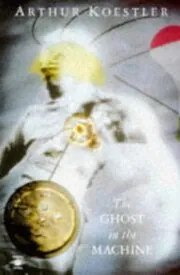
The Ghost in the Machine
by Arthur Koestler
1967
Koestler asks why human beings are so prone to violence and self-destruction. Drawing on psychology, evolution, and brain theory, he argues that our mental life is layered, unstable, and not well explained by simple mechanistic models.
Drinkers of Infinity
by Arthur Koestler
1968
This essay collection gathers Koestler's pieces from 1955 to 1967 on science, politics, art, and the mind. It is varied but unified by his appetite for big questions and unfashionable arguments.
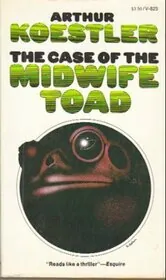
The Case of the Midwife Toad
by Arthur Koestler
1971
Koestler revisits biologist Paul Kammerer's disputed experiments on the midwife toad and the possibility of Lamarckian inheritance. It reads like a scientific detective story about fraud, reputation, and heresy in science.
Beyond Reductionism
by Arthur Koestler
1972
Co-edited with J. R. Smythies, this symposium volume gathers scientists and thinkers arguing that life cannot be explained by simple reduction alone. It sits at the crossroads of biology, systems theory, and Koestler's lifelong interest in wholeness.
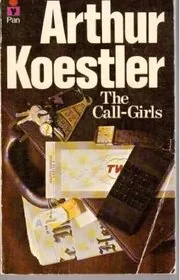
The Call-Girls
by Arthur Koestler
1972
A satirical novel about a circle of scholars and conference regulars who meet to discuss why humanity is bent on self-destruction. As tensions rise, Koestler turns academic vanity and intellectual rivalry into dark comedy.

The Roots of Coincidence
by Arthur Koestler
1972
Koestler explores parapsychology, synchronicity, ESP, and psychokinesis, asking whether science has left too much out. It is speculative and controversial, but readable as a map of his fascination with coincidence and the paranormal.

The Lion and the Ostrich
by Arthur Koestler
1973
A brief political work about Britain's character and its uneasy place in Europe. Koestler uses the lion and ostrich image to examine courage, evasion, and the choices facing the country.
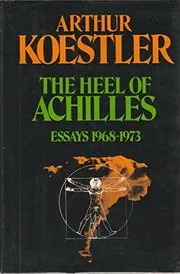
The Heel of Achilles; Essays 1968-1973
by Arthur Koestler
1974
A collection of late essays, lectures, and reviews on politics, psychiatry, science, and cultural decline. The pieces are argumentative and wide-ranging, showing Koestler still eager to challenge orthodoxies.
Astride the Two Cultures
by Arthur Koestler
1975
Published for Koestler's seventieth birthday, this tribute volume brings together essays on his novels, ideas, and public life. It reflects the unusual span of his career, from political fiction to science and philosophy.
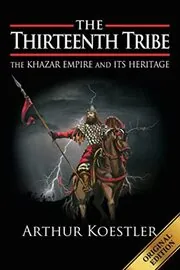
The Thirteenth Tribe
by Arthur Koestler
1976
Koestler explores the history of the Khazar Empire and argues that Ashkenazi Jews largely descended from Khazars rather than ancient Israelites. It is a provocative, much-debated historical thesis with clear political intentions.

Twentieth Century Views
by Arthur Koestler
1977
This volume collects critical essays on Koestler's fiction, politics, and intellectual range. It is less an original work than a guide to how later readers and critics understood his achievement and contradictions.
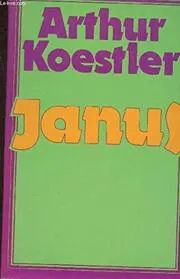
Janus
by Arthur Koestler
1978
Koestler's late philosophical synthesis argues that living and social systems are built from "holons," things that are both wholes and parts. It extends the ideas of The Ghost in the Machine into a broader theory of order and complexity.
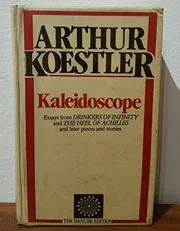
Kaleidoscope
by Arthur Koestler
1981
This late collection gathers essays from Drinkers of Infinity and The Heel of Achilles, along with later pieces and stories. It offers a compact tour of Koestler's political, scientific, and personal preoccupations.
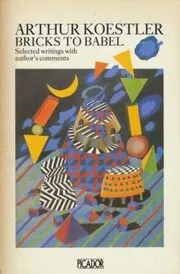
Bricks to Babel
by Arthur Koestler
1982
A large self-selected anthology drawn from fifty years of Koestler's work. Novels, memoirs, essays, and scientific writing appear side by side, with fresh commentary that shows how his ideas changed over time.
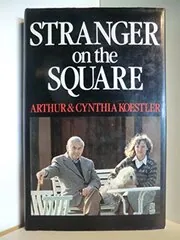
Stranger on the Square
by Arthur Koestler
1984
Published after Koestler's death, this third autobiographical volume combines his chapters with Cynthia Koestler's. It looks at their life together and revisits his postwar years from a more intimate, domestic angle.

Promise and Fulfilment Palestine 1917-1949
by Arthur Koestler
2017
A history of Palestine from the Balfour Declaration to the first year of Israel. Koestler mixes reportage, political argument, and diary-like observation to examine Zionism, British rule, and the making of a new state.
Where to start with Arthur Koestler
If you want his defining political novel: Darkness at Noon → The Gladiators → Arrival and Departure
If you want firsthand history and memoir: Spanish Testament → Scum of the Earth → Dialogue with Death
If you want the autobiographical path: Arrow in the Blue → The Invisible Writing → Stranger on the Square
If you want the big-idea nonfiction: The Sleepwalkers → The Act of Creation → The Ghost in the Machine
Arthur Koestler collections, short stories, and related book types
Plays
Non-Fiction
Standalone Arthur Koestler books
Author bio
Arthur Koestler was born in Budapest on September 5, 1905, into a Hungarian Jewish family, and much of his childhood was shaped by movement and upheaval. During the First World War his family spent time in Vienna, and he was educated mainly in Austria rather than Hungary. That mix of languages, borders, and political shocks stayed with him for life. He would become one of those writers who seemed to belong to several countries at once and to feel fully at home in none of them.
He was restless early.
Koestler studied engineering at the University of Vienna but did not stay the course. In the 1920s he was drawn first to Zionism, then to the practical adventure of leaving Europe for British Mandate Palestine. He tried life on a kibbutz, took odd jobs in Jerusalem, Haifa, and Tel Aviv, and began making his way as a journalist. That was the real start. Reporting gave him a living, but it also gave him the habit that shaped all his books, looking at big ideas through lived experience.
Journalism carried him to Berlin, Paris, the Soviet Union, and eventually Spain. In 1931 he joined the Communist Party of Germany, convinced that liberal politics had failed to stop fascism. What broke that faith was not one tidy revelation but a series of collisions with reality: Soviet dogma, party discipline, and then the Spanish Civil War, where he was arrested by Franco's forces and held under sentence of death in Seville. He survived, but the experience left a permanent mark on his politics and his writing.
That break shaped the rest of his career.
His best-known novel, Darkness at Noon, turned the logic of the Stalinist show trials into gripping fiction. Readers still come to it for the prison setting and the pressure-cooker conversations, but what makes it last is the larger question underneath: what happens when people let the cause excuse everything. Earlier and later novels such as The Gladiators, Arrival and Departure, and Thieves in the Night circle similar territory, revolution, exile, belief, and the cost of trying to build a better world with damaged tools.
He never stayed in one lane for long. After the war he moved further into nonfiction and became a kind of roaming public intellectual, writing not just about politics but also about science, psychology, history, creativity, and the stranger edges of human thought. In The Sleepwalkers he told the story of astronomy through figures like Copernicus, Kepler, and Newton. In The Act of Creation he tried to explain what jokes, scientific breakthroughs, and artistic leaps have in common. In The Ghost in the Machine he asked why human beings are so clever and yet so capable of self-destruction.
Some readers love him most as a novelist. Others come for the big, unruly arguments.
Later books such as The Roots of Coincidence, Janus, and The Thirteenth Tribe show how wide his interests became, from parapsychology to systems theory to Jewish history. Not all of those books aged equally well, and some were fiercely disputed almost at once. But even when he was wrong, he was rarely dull. Koestler liked ideas that made trouble.
His later life was spent mostly in England, though the sense of being an émigré never really left him. He won the Sonning Prize in 1968 and was appointed a CBE in 1972. In the 1970s he was diagnosed first with Parkinson's disease and later with leukemia, which made work harder but did not stop it. He and his wife Cynthia died together in London on March 1, 1983. By then he had left behind novels, memoirs, political books, science books, and essays that still feel powered by the same driving force: impatience with easy answers.










Edited by
Software engineer whose passion for tracking book recommendations from podcasts inspired the creation of MRB.
Lead investor at 3one4 Capital whose startup expertise and love for books helped shape MRB and its growth.
Comments
Did we miss something? Have feedback?
Help us improve this page by sharing your thoughts