
Arthur Hailey Books in Order
This page lists Arthur Hailey's novels in order with quick summaries, background on his research heavy thrillers, and guidance on the best books to start with.
Last updated:
As an Amazon Associate, we earn from qualifying purchases (at no extra cost to you).
Arthur Hailey books in publication order
11 books
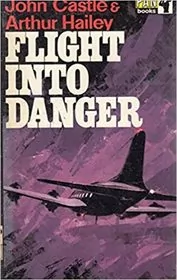
Flight into Danger / Runway Zero-Eight
by Arthur Hailey
1958
During a charter flight to Vancouver, food poisoning strikes passengers and both pilots, leaving ex-fighter pilot George Spencer and a stewardess to keep the airliner in the sky while controllers on the ground talk them through an emergency landing.
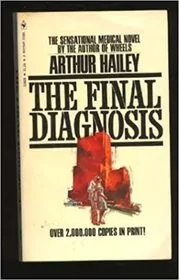
The Final Diagnosis
by Arthur Hailey
1959
At Three Counties Hospital in Pennsylvania, a dynamic young surgeon tries to modernize a struggling institution while clashing with its aging chief pathologist, whose outdated methods put patients at risk in a tense mix of medical detail and human drama.
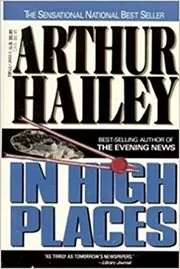
In High Places
by Arthur Hailey
1961
Set in Cold War Canada, this novel follows Prime Minister James Howden as he navigates a looming nuclear crisis, a risky treaty with the United States, and a bruising immigration case that threatens both his government and his conscience.

Hotel
by Arthur Hailey
1965
Over five turbulent days at New Orleans's aging St. Gregory Hotel, the manager and owner battle financial ruin, a looming takeover, and a string of scandals as guests, staff, and outsiders collide in a tightly wound backstage portrait of a luxury hotel.
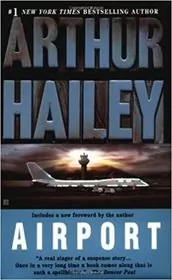
Airport
by Arthur Hailey
1968
During a brutal winter storm at Chicago's fictional Lincoln International Airport, general manager Mel Bakersfeld juggles blocked runways, restless passengers, and a potentially catastrophic flight in trouble, all while his personal life crumbles under the same unrelenting pressure.
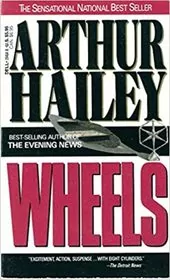
Wheels
by Arthur Hailey
1971
In Detroit's cutthroat auto industry, ambitious executive Adam Trenton fights to launch a radical new car while unions, rival companies, dealers, and activists pull the business apart, exposing workplace tensions, racism, and the human cost of chasing the next model year.
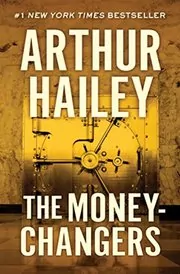
The Moneychangers
by Arthur Hailey
1975
Inside First Mercantile American Bank, two senior executives wage a bitter succession battle as scandals over credit card fraud, risky loans, and insider deals erupt, pulling in tellers, customers, and regulators in a sweeping story of modern high finance.
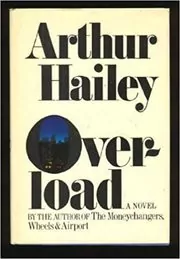
Overload
by Arthur Hailey
1978
In heat stricken California, Golden State Power and Light executive Nim Goldman struggles to keep the lights on as demand soars, terrorists attack key plants, and environmental battles stall new projects, forcing hard choices about risk, profit, and public safety.

Strong Medicine
by Arthur Hailey
1984
Following Celia Jordan from idealistic sales rep to top executive, this novel pulls back the curtain on the pharmaceutical industry, where life saving drugs, aggressive marketing, and rushed approvals collide in boardrooms, labs, and hearings with real human stakes.
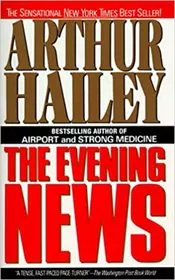
The Evening News
by Arthur Hailey
1990
Network anchorman Crawford Sloane is used to reporting crises, not living inside one, until terrorists linked to a South American drug cartel kidnap his family, drawing him into a relentless hunt that exposes the ruthless politics of television news.
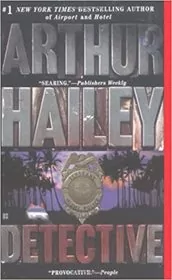
Detective
by Arthur Hailey
1997
Miami homicide detective and former Catholic priest Malcolm Ainslie is called to hear a serial killer's final confession, only to learn one of the murders may be unsolved, forcing him back through old cases and church secrets to track a hidden killer.
Where to start with Arthur Hailey
If you want his biggest classics: Hotel → Airport
If you enjoy political and corporate drama: In High Places → Wheels → The Moneychangers
If you like medical and pharma stories: The Final Diagnosis → Strong Medicine
If you prefer media and terrorism thrillers: The Evening News → Detective
If you want aviation tension from the start: Flight into Danger / Runway Zero-Eight → Airport
Standalone Arthur Hailey books
Author bio
Arthur Hailey was a British born, later Canadian novelist who built tense, highly readable stories around the workplaces many people take for granted. From hotels and airports to car plants and hospitals, he liked to show what happened behind the doors marked staff only, then push ordinary characters to their limits.
He was born on 5 April 1920 in Luton, Bedfordshire, the only child of a factory worker and a mother who loved books. As a boy he read anything he could find and started writing poems and short pieces, encouraged by a parent who let him skip chores so he could type.
Hailey left school at fourteen after failing to win a scholarship that would have kept him in the classroom. Instead he went to London as an office boy and clerk in the mid 1930s, learning how business paperwork moved while he dreamed about flying and kept scribbling stories on the side.
When the Second World War began, he joined the Royal Air Force and trained as a pilot. He flew for Britain in dangerous conditions, eventually becoming a flight lieutenant. Years later, the discipline of flying and the feeling of being responsible for many lives would surface again in his aviation stories.
After the war he found postwar Britain grim and politically frustrating, so in 1947 he emigrated to Canada and settled in Toronto. There he held a string of jobs in sales, real estate, and advertising, and edited a trade magazine for the bus and truck industry. All of it fed his interest in how organizations actually worked.
Writing never went away. In the mid 1950s he wrote a script called Flight into Danger about a passenger forced to land an airliner after the pilots fall ill. Broadcast live on Canadian television in 1956, it became a surprise smash, was remade around the world, and was later novelized as Runway Zero-Eight.
The television success gave him a new career as a full time writer, and Hailey began turning his ideas into novels. The Final Diagnosis took readers into the tense world of a struggling American hospital. In High Places moved to the Canadian prime minister’s office during the Cold War. Then Hotel, published in 1965, changed his life, spending almost a year on bestseller lists and allowing him to move with his family to California.
He followed that with Airport, about one snowbound night at a major Chicago airport, and with big novels on the auto industry in Wheels, banking in The Moneychangers, and the power grid in Overload. For each book he spent about three years, usually a full year on research, months sorting notes, then more than a year writing. He visited factories, control towers, car plants, hotel back offices, even jungle camps, convinced that readers would feel the difference if he got the details right.
After heart bypass surgery he kept going, turning to the pharmaceutical business in Strong Medicine, the world of network television and terrorism in The Evening News, and a Miami homicide squad in Detective. Across all of these books he returned to the same themes, showing ordinary professionals who care about their work trapped between ethics, profit, and personal loyalties. He often said he was a storyteller first, and he let the research support the plot rather than overshadow it.
Hailey married twice and raised six children, three from each marriage. In the 1970s he and his second wife Sheila settled in Lyford Cay in the Bahamas, first for tax reasons and then because they loved the place. He slowed his publishing schedule but kept writing, reading, and sailing. On 24 November 2004 he died in his sleep at home, aged eighty four, leaving a shelf of books that still give readers a guided tour of complex systems wrapped in very human suspense.











Edited by
Software engineer whose passion for tracking book recommendations from podcasts inspired the creation of MRB.
Lead investor at 3one4 Capital whose startup expertise and love for books helped shape MRB and its growth.
Comments
Did we miss something? Have feedback?
Help us improve this page by sharing your thoughts