
Anthony Giddens Books in Order
Find Anthony Giddens books in order, with brief summaries, context on his ideas, and pointers on where to start with his sociology, politics and globalization.
Last updated:
As an Amazon Associate, we earn from qualifying purchases (at no extra cost to you).
Anthony Giddens books in publication order
41 books
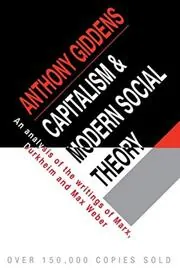
Capitalism and Modern Social Theory: An Analysis of the Writings of Marx, Durkheim and Max Weber
by Anthony Giddens
1971
A classic study that closely reads Marx, Durkheim and Weber to show how each grappled with capitalism and modern social life. Giddens highlights the internal coherence of their theories and compares their different ways of linking economic change and social order.
The Class Structure Of The Advanced Societies
by Anthony Giddens
1973
Giddens analyses class structures in modern capitalist societies, engaging with and revising Marxist and Weberian ideas. He looks at how occupational hierarchies, property relations and state policies shape class divisions in advanced industrial economies.
Central Problems in Social Theory: Action, Structure, and Contradiction in Social Analysis
by Anthony Giddens
1979
This influential book of essays develops core elements of structuration theory. Giddens critiques interpretive sociology, functionalism and structuralism, arguing that social actors are knowledgeable and that time–space relations, power and contradiction must be central to social analysis.
Classes, Power and Conflict: Classical and Contemporary Debates
by Anthony Giddens
1982
Coedited with David Held, this reader brings together classic texts and modern research on class, power and the state. Substantial editorial introductions connect Marx, Weber and Lenin to contemporary analyses of stratification, labour markets and political conflict.
Profiles And Critiques In Social Theory
by Anthony Giddens
1982
A series of critical essays on major traditions and problems in social theory, including positivism, hermeneutics, social structure and political sociology. Giddens profiles key thinkers while developing his own arguments about interpretation and the nature of sociological explanation.
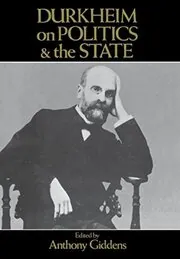
Durkheim on Politics and the State
by Anthony Giddens
1986
Edited by Giddens, this volume gathers Émile Durkheim’s writings on the state, government, socialism and Marxism in new translations. An extensive introduction situates Durkheim’s political thought within his broader sociology and shows its relevance for debates about democracy and citizenship.
Sociology: A brief but critical introduction
by Anthony Giddens
1986
A short, accessible overview of sociology that keeps a critical edge. Giddens introduces core themes such as industrial society, class, the state, cities, family and the world system, encouraging readers to see sociology as a way of questioning taken-for-granted assumptions.
The Nation-State and Violence: Volume 2 of A Contemporary Critique of Historical Materialism
by Anthony Giddens
1987
This volume analyses how modern nation-states emerged and how they concentrate administrative power, surveillance and organised violence. Giddens links military organisation, nationalism and capitalism, offering a non-deterministic alternative to traditional Marxist accounts of the modern state.
Modernity and Self-Identity: Self and Society in the Late Modern Age
by Anthony Giddens
1991
Building on his analysis of modernity, Giddens argues that the self has become a reflexive project in late modern societies. He explores how risk, choice, intimacy and therapy culture shape personal narratives, and what this means for politics and everyday life.
Social Theory And Modern Sociology
by Anthony Giddens
1991
A set of interconnected essays that survey late twentieth-century social theory and its implications for sociology. Giddens reviews structuralism, post-structuralism, Goffman, Habermas and others while clarifying his own positions on time, power, nation-states and the future of the discipline.
The Consequences of Modernity
by Anthony Giddens
1991
Here Giddens outlines what makes modernity distinctive: its dynamism, global reach and reliance on abstract systems of trust. He examines globalization, risk and disembedding, and argues that we live not in a postmodern era but in a radicalised, high-risk phase of modernity.
The Constitution of Society: Outline of the Theory of Structuration
by Anthony Giddens
1991
This major work offers Giddens’s fullest statement of structuration theory, arguing that social life is produced through recurrent practices of knowledgeable agents. He explores agency, power, institutions and time–space, linking abstract theory to questions of method and empirical research.

Human Societies: Introductory Reader in Sociology
by Anthony Giddens
1992
Designed to accompany introductory courses, this reader gathers classic and contemporary texts on topics such as class, family, urban life and globalization. Short editor introductions help students connect each selection to key sociological themes and debates.
The Transformation of Intimacy
by Anthony Giddens
1992
Giddens traces how modernity has reshaped sexuality, love and personal relationships. He introduces ideas like the “pure relationship” and “plastic sexuality” to describe more negotiated, egalitarian forms of intimacy and the new freedoms and anxieties they bring.
New Rules of Sociological Method: A Positive Critique of Interpretative Sociologies
by Anthony Giddens
1993
In this methodological essay, Giddens critiques both positivist and purely interpretive approaches to sociology. He argues that social scientists study knowledgeable actors in structured settings, and lays groundwork for concepts like the double hermeneutic and structuration.
Beyond Left and Right: The Future of Radical Politics
by Anthony Giddens
1994
Arguing that traditional left–right divisions no longer capture today’s political challenges, Giddens sketches a new radical politics centred on “life politics”. He discusses risk, ecology, family change and democracy, and proposes ways to renew solidarity without reverting to old formulas.
Reflexive Modernization: Politics, Tradition and Aesthetics in the Modern Social Order
by Anthony Giddens
1994
Coauthored with Ulrich Beck and Scott Lash, this book develops the idea that modern societies increasingly turn their gaze back on themselves. The authors link risk, institutional change and cultural experimentation, and debate how reflexive modernity alters politics, tradition and everyday life.
A Contemporary Critique of Historical Materialism
by Anthony Giddens
1995
Giddens re-examines Marx’s theory of history in light of modern social science, questioning any single “motor” of historical change. He analyses class, the state, violence and industrialism, arguing for a more plural account of how modern societies develop and transform.
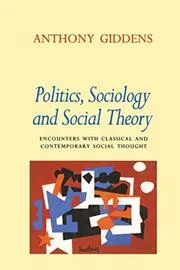
Politics, Sociology, and Social Theory
by Anthony Giddens
1995
Built around critical encounters with major thinkers, this book explores how political ideas and sociological analysis intertwine. Giddens discusses figures from Weber and Durkheim to Habermas and Foucault, using them to sharpen his own views on modernity and social theory.
In Defence of Sociology: Essays, Interpretations and Rejoinders
by Anthony Giddens
1996
This collection of essays argues that sociology is still vital for understanding modern societies, despite claims of its decline. Giddens revisits classic thinkers, comments on contemporary debates and responds to critics who see the discipline as either obsolete or unserious.
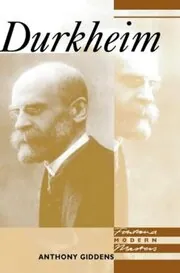
Durkheim
by Anthony Giddens
1997
A concise intellectual portrait of Émile Durkheim written for the Fontana Modern Masters series. Giddens introduces Durkheim’s key ideas on social facts, solidarity, religion and suicide, and explains why they remain central to sociological theory today.
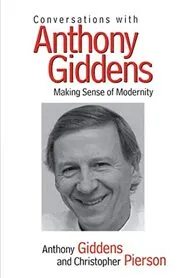
Conversations with Anthony Giddens
by Anthony Giddens
1998
In extended interviews, Giddens reflects on his life, intellectual influences and key ideas, from structuration theory to globalization and the third way. The conversational format makes his often dense theoretical work more accessible to students and general readers.
The Global Third Way Debate
by Anthony Giddens
1998
As editor, Giddens gathers contributions from around the world on how centre-left governments are rethinking policy. The essays cover welfare reform, regulation, democracy and global governance, showing how “third way” arguments play out in different national contexts.

The Third Way and Its Critics
by Anthony Giddens
1998
Responding to debates sparked by his earlier book, Giddens addresses objections from both left and right to third way politics. He clarifies what the approach does and does not endorse, and reflects on how centre-left parties have interpreted his ideas in practice.
The Third Way: The Renewal of Social Democracy
by Anthony Giddens
1998
Here Giddens lays out a program for renewing social democracy in an era without clear alternatives to capitalism. He argues for a “radical centre” that combines market openness with social investment, mutual obligations and an active state that helps citizens navigate rapid change.
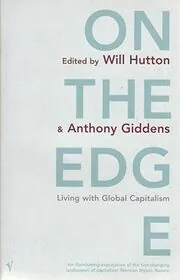
On the Edge
by Anthony Giddens
2000
Coedited with Will Hutton, this collection brings together leading thinkers to analyse contemporary capitalism. Essays explore global finance, corporate power, inequality and cultural change, asking whether the new, more flexible capitalism can be reconciled with social justice and democracy.
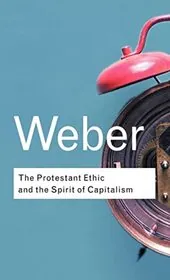
The Protestant Ethic and the Spirit of Capitalism
by Anthony Giddens
2002
This edition presents Max Weber’s classic argument that certain Protestant beliefs helped foster a disciplined, profit‑oriented ethos central to modern capitalism. Giddens’s editorial work and introduction place Weber’s text in historical context and highlight its continuing sociological importance.
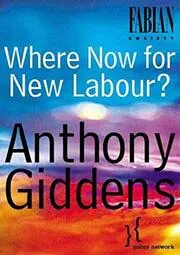
Where Now for New Labour?
by Anthony Giddens
2002
After Labour’s 2001 victory, Giddens asks how the party should evolve in a world of globalisation, protests and economic uncertainty. He uses international comparisons to argue for deepening, not abandoning, the New Labour project while clarifying its long-term social vision.
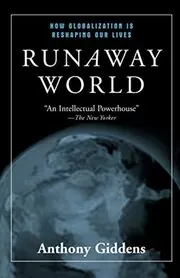
Runaway World: How Globalization is Reshaping Our Lives
by Anthony Giddens
2003
Based on his Reith Lectures, Giddens introduces globalization’s impact on everyday life through themes of risk, tradition, family and democracy. He argues that rapid global change unsettles old certainties yet also opens new possibilities for more reflexive, cosmopolitan ways of living.
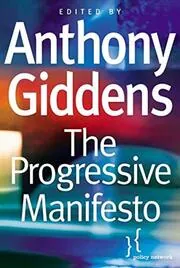
The Progressive Manifesto: New Ideas for the Centre-Left
by Anthony Giddens
2003
Gathering papers from a summit of progressive leaders and thinkers, this book sketches how centre-left politics might move beyond the formulas of the 1990s. Essays propose fresh approaches to welfare, economic policy, environmental protection and democratic participation.
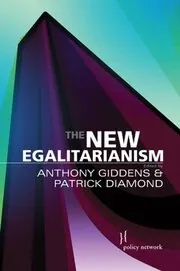
The New Egalitarianism
by Anthony Giddens
2005
This edited collection tackles rising inequality in advanced democracies and asks what a modern agenda of equality should look like. Contributors outline a “new egalitarianism” that combines opportunity, social investment and shared risk in an open, globalised economy.
Europe in the Global Age
by Anthony Giddens
2006
Giddens examines how globalisation, demographic change and cultural diversity strain Europe’s welfare and economic systems. He argues that renewing the European social model and embracing reform are essential if the continent is to stay prosperous and cohesive in a changing world.

Global Europe, Social Europe
by Anthony Giddens
2006
An edited volume that asks how Europe can reconcile its social model with global economic pressures. Essays explore enlargement, labour mobility, welfare reform, gender equality and environmental policy while arguing that integration and strong welfare states need not be opponents.
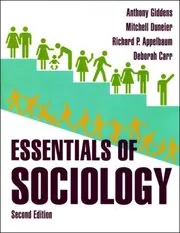
Essentials of Sociology
by Anthony Giddens
2007
A streamlined version of Giddens’s introductory text that focuses on the key tools of sociological thinking. Using up-to-date data, real-world cases and digital resources, it shows how sociology can illuminate issues from inequality to work, family and the environment.
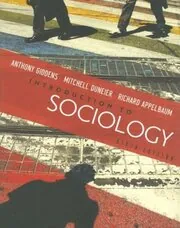
Introduction to Sociology
by Anthony Giddens
2007
A comprehensive introductory textbook that combines classic theory, contemporary research and global examples. Coauthored with leading sociologists, it helps students see how core concepts like culture, inequality and institutions connect to current events and everyday life.

Over to You, MR Brown: How Labour Can Win Again
by Anthony Giddens
2007
Written as Gordon Brown became prime minister, this book argues that Labour can only win a fourth term by renewing its ideas, not just its leader. Giddens defends the political centre ground while urging bold policy shifts and a forward-looking “Contract with the Future”.
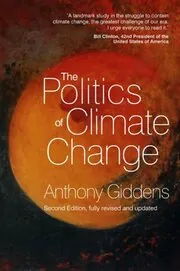
The Politics of Climate Change
by Anthony Giddens
2009
Giddens explains why climate change is such a difficult political problem and formulates what he calls the Giddens paradox. He assesses existing policies and proposes a more coherent politics that links climate action, energy security and long-term economic planning.
Politics and Sociology in the Thought of Max Weber
by Anthony Giddens
2013
This short study examines how Max Weber’s political concerns in imperial Germany shaped his sociology of capitalism, authority and religion. Giddens shows that Weber’s political writings and sociological work are tightly interwoven rather than separate strands.

Turbulent and Mighty Continent
by Anthony Giddens
2013
Giddens surveys Europe after the euro crisis, exploring austerity, democracy, social policy and identity in the European Union. He argues that Europe is a shared “community of fate” and calls for institutional reform and renewed public engagement to keep the project alive.
Studies in Social and Political Theory
by Anthony Giddens
2015
A collection of essays that re-examines classical European social theory to ask what it still offers contemporary social science. Giddens probes questions of method, social change and critique while sketching ideas that feed into his later structuration work.
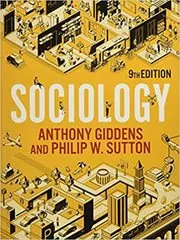
Sociology
by Anthony Giddens
Giddens and Philip W. Sutton introduce sociological theories and research through topics including gender, poverty, politics, media and globalization. The ninth edition connects contemporary problems with digital change and global relationships, using studies and exercises to develop critical analysis.
Where to start with Anthony Giddens
If you want his core social theory: Capitalism and Modern Social Theory → Central Problems in Social Theory → The Constitution of Society.
If you are curious about modernity and the self: The Consequences of Modernity → Modernity and Self-Identity → The Transformation of Intimacy.
If you care about globalization and politics: Runaway World: How Globalization is Reshaping Our Lives → Beyond Left and Right → The Third Way: The Renewal of Social Democracy → The Politics of Climate Change.
If you prefer textbook-style overviews: Introduction to Sociology → Essentials of Sociology → Sociology: A brief but critical introduction.
If you are interested in Europe and social democracy today: Europe in the Global Age → Global Europe, Social Europe → Turbulent and Mighty Continent.
Anthony Giddens collections, short stories, and related book types
Social Science Books
Textbooks

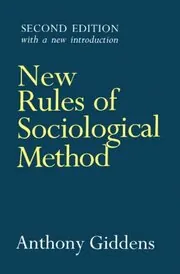
New Rules of Sociological Method: A Positive Critique of Interpretative Sociologies
by Anthony Giddens
1993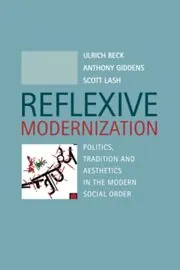
Reflexive Modernization: Politics, Tradition and Aesthetics in the Modern Social Order
by Anthony Giddens
1994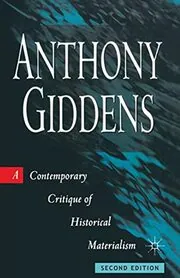



Medical Books
Standalone Anthony Giddens books
Author bio
Anthony Giddens was born on 18 January 1938 in Edmonton, a working‑class suburb of North London, and grew up in a lower‑middle‑class family where books were scarce and higher education was not taken for granted. He was the first in his family to go to university, studying sociology and psychology at the University of Hull, then completing a master’s degree at the London School of Economics and a PhD at King’s College, Cambridge.
After finishing his studies he began teaching social psychology at the University of Leicester in the early 1960s, one of the places where British sociology was taking shape. There he met Norbert Elias and started to work out his own approach to social theory, questioning both structural functionalism and orthodox Marxism.
In 1969 Giddens moved to Cambridge, where he helped create what became the Social and Political Sciences programme and spent many years as a fellow of King’s College. Alongside his academic posts he co‑founded the independent publisher Polity Press in the mid‑1980s, giving a home to a generation of social theory and politics titles.
Much of his writing is organised into four overlapping phases. Early books such as Capitalism and Modern Social Theory and The Class Structure of the Advanced Societies revisit Marx, Durkheim and Weber to show how classical theory can still illuminate modern capitalism and class.
He then developed structuration theory, his best‑known contribution to social theory. In works like New Rules of Sociological Method, Central Problems in Social Theory and The Constitution of Society, he argues that social life is produced through a constant back‑and‑forth between knowledgeable human agents and the structures that both constrain and enable them, a relationship he calls the “duality of structure”.
From the late 1980s his focus shifted toward modernity, globalization and everyday life. Books including The Consequences of Modernity, Modernity and Self‑Identity and The Transformation of Intimacy explore how global networks, abstract systems such as finance, and changing family and sexual relationships reshape personal identity, risk and trust in late modern societies.
A shorter, one‑sentence book.
In the 1990s Giddens became closely involved with centre‑left politics, especially in Britain. In Beyond Left and Right and The Third Way he tried to rethink social democracy for an era of open markets, individualisation and weakened class loyalties, arguing for an activist state that combines market dynamism with social justice. His ideas influenced debates inside New Labour, and he later reflected on this experience in books on New Labour, European integration and inequality.
From 1997 to 2003 he served as Director of the London School of Economics, helping to raise its international profile while continuing to write and lecture widely. In 2004 he entered the House of Lords as Baron Giddens of Southgate, sitting on the Labour benches and bringing an academic’s perspective to parliamentary debates.
In the 2000s he turned to concrete global problems. Runaway World introduced a broad audience to the social consequences of globalization, while The Politics of Climate Change examined why governments struggle to act on global warming and what a realistic climate politics might look like. Later work on Europe, especially Europe in the Global Age and Turbulent and Mighty Continent, grapples with the future of the European Union in a turbulent global economy.
In recent years he has written and spoken about the digital revolution and what he calls a “high opportunity, high risk” society, where new technologies transform medicine, work and communication while creating fresh vulnerabilities. He remains Emeritus Professor at the LSE, a life peer, and an active voice in discussions about modernity, democracy and the environmental and technological risks that will shape the coming decades.












Edited by
Software engineer whose passion for tracking book recommendations from podcasts inspired the creation of MRB.
Lead investor at 3one4 Capital whose startup expertise and love for books helped shape MRB and its growth.
Comments
Did we miss something? Have feedback?
Help us improve this page by sharing your thoughts