
Anthony Berkeley Books in Order
Find Anthony Berkeley books in order, with summaries, Roger Sheringham reading guidance, series background, and where to start with his mysteries.
Last updated:
As an Amazon Associate, we earn from qualifying purchases (at no extra cost to you).
Anthony Berkeley books in publication order
19 books
The Layton Court Mystery
by Anthony Berkeley
1925
At Layton Court, wealthy Victor Stanworth is found shot in a locked library, and suicide seems the easy answer. Guest Roger Sheringham is not convinced, beginning his career as a nosy, witty amateur sleuth.
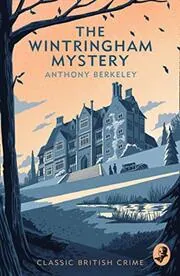
The Wintringham Mystery
by Anthony Berkeley
1926
London gadabout Stephen Munro becomes a footman at Wintringham Hall after losing his inheritance. When a séance ends in an impossible disappearance and murder follows, he and his former valet Bridger start investigating.
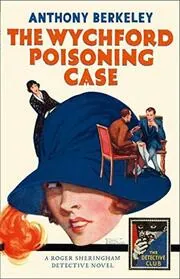
The Wychford Poisoning Case
by Anthony Berkeley
1926
Mrs. Jacqueline Bentley appears doomed when arsenic evidence piles up after her husband's death. Roger Sheringham thinks the case is too obvious, and his investigation turns a village poisoning into a study of motive and character.
Mr Priestley's Problem
by Anthony Berkeley
1927
Respectable Matthew Priestley is mistaken for a burglar-for-hire, then drawn into a blackmail errand that seems to end in murder. What begins as an experiment in criminal psychology spins into panic and farce.
Roger Sheringham and the Vane Mystery
by Anthony Berkeley
1927
Roger Sheringham travels to Ludmouth to report on Mrs. Vane’s fall from a cliff, then finds the accident story too neat. With his cousin Anthony Walton, he digs into a coastal case of jealousy and misdirection.
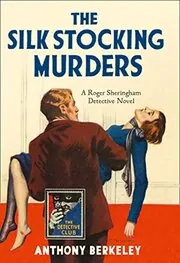
The Silk Stocking Murders
by Anthony Berkeley
1928
When a parson’s daughter disappears in London and is found strangled with her own silk stocking, the death looks like suicide. Roger Sheringham suspects a pattern and follows the clues into a darker city mystery.
The Piccadilly Murder
by Anthony Berkeley
1929
Ambrose Chitterwick sees a woman die in a hotel lounge after something is dropped into her coffee. His evidence points to a convenient heir, but his own doubts push him into awkward, persistent detection.
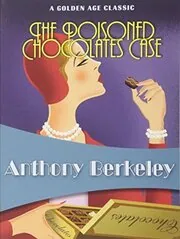
The Poisoned Chocolates Case
by Anthony Berkeley
1929
A poisoned box of chocolates kills Joan Bendix after it was meant, apparently, for Sir Eustace Pennefather. Roger Sheringham’s Crimes Circle offers solution after solution, each persuasive, and each more unsettling than the last.
The Second Shot
by Anthony Berkeley
1930
A murder game at Minton Deeps Farm turns real when Eric Scott-Davies is shot dead. With suspicion falling on Cyril Pinkerton, Roger Sheringham arrives to untangle a house party full of motives.
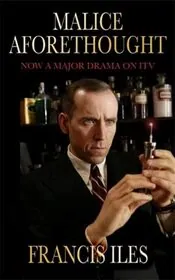
Malice Aforethought
by Anthony Berkeley
1931
Dr. Edmund Bickleigh wants freedom from his domineering wife and chooses murder as the neatest route. Berkeley lets readers watch the crime from inside the killer's head, where vanity and panic do most of the damage.
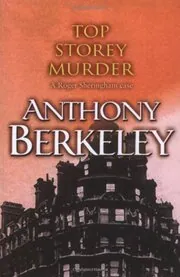
Top Storey Murder
by Anthony Berkeley
1931
When Miss Adelaide Barnett is strangled in her top-floor flat, Scotland Yard sees a burglar’s routine violence. Roger Sheringham notices details that do not fit, especially around the victim’s niece and the residents of Monmouth Mansions.
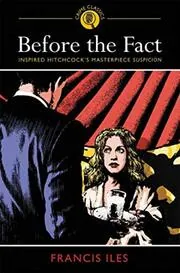
Before the Fact
by Anthony Berkeley
1932
Lina McLaidlaw marries charming Johnnie Aysgarth despite warnings that he wants her money. As lies, thefts, and darker suspicions mount, the question becomes whether she can trust her husband, or her own fear.
Murder in the Basement
by Anthony Berkeley
1932
Newlyweds Reginald and Molly Dane find a woman's body buried under their basement floor. Chief Inspector Moresby turns to Roger Sheringham, whose unfinished school novel may hold the odd key to the victim's identity.
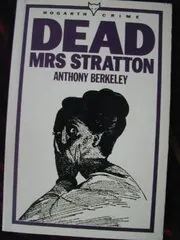
Dead Mrs. Stratton / Jumping Jenny
by Anthony Berkeley
1933
At Ronald Stratton’s murder-themed party, a rooftop gallows is only meant as decoration until Ena Stratton is found hanging from it. Roger Sheringham must decide whether truth or mercy matters more.
Panic Party
by Anthony Berkeley
1934
Roger Sheringham joins a cruise party run by Mr. Pidgeon, whose social experiment strands the group on an island and whispers of murder. Polite manners collapse fast when the game turns deadly.
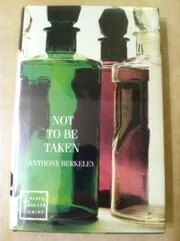
Not to Be Taken
by Anthony Berkeley
1937
In the village of Anneypenny, John Waterhouse's death seems natural until exhumation reveals arsenic poisoning. With no obvious motive and gossip spiraling, a quiet fruit farmer pieces together a cleverly hidden village crime.
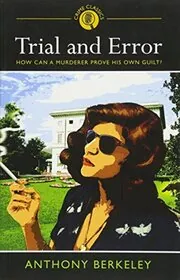
Trial and Error
by Anthony Berkeley
1937
Lawrence Todhunter, told he has little time left, decides to murder someone he thinks the world would be better without. When an innocent person comes under suspicion, Ambrose Chitterwick faces a grimly comic tangle of justice.

Death in the House
by Anthony Berkeley
1939
A cabinet minister collapses during a Commons debate on an India bill, and threats suggest political murder. As more ministers are targeted, an under-secretary must solve the method before the Prime Minister is next.
The Avenging Chance and Other Mysteries from Roger Sheringham's Casebook
by Anthony Berkeley
2004
This collection gathers Roger Sheringham and Chief Inspector Moresby stories, including the case that grew into The Poisoned Chocolates Case. The puzzles range from fake suicides to disappearing corpses, with Sheringham often as wrong as he is confident.
Where to start with Anthony Berkeley
For Roger Sheringham in order: The Layton Court Mystery → The Wychford Poisoning Case → Roger Sheringham and the Vane Mystery → The Silk Stocking Murders
For Berkeley’s best-known puzzle work: The Poisoned Chocolates Case → The Avenging Chance and Other Mysteries from Roger Sheringham's Casebook
For psychological suspense as Francis Iles: Malice Aforethought → Before the Fact
For stand-alone experiments: Trial and Error → Not to Be Taken → Death in the House
Anthony Berkeley sub-series and character series
British Library Crime Classics (Anthony Berkeley) books in order
Explore this seriesBritish Library Crime Classics (Anthony Berkeley) books in chronological order
Roger Sheringham Cases books in order
Explore this series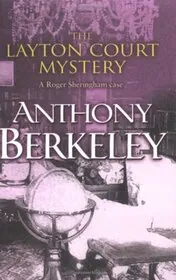



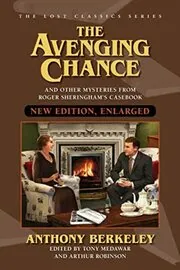
The Avenging Chance and Other Mysteries from Roger Sheringham's Casebook
by Anthony Berkeley
2004Roger Sheringham Cases, Book 11
Roger Sheringham Cases books in chronological order
The Avenging Chance and Other Mysteries from Roger Sheringham's Casebook
by Anthony Berkeley
2004Roger Sheringham Cases, Book 11
Standalone Anthony Berkeley books
Author bio
Anthony Berkeley was the best-known pen name of Anthony Berkeley Cox, born in Watford, Hertfordshire, on July 5, 1893. His father was a doctor, and his mother ran a school at Monmouth House, one of the family properties on Watford High Street. That mix of professional comfort, private schooling, and watchful social comedy later fed into the world of clubs, country houses, and self-important amateurs in his mysteries.
He was educated at Rose Hill School, Sherborne School, and University College, Oxford. Then the First World War cut across his young adulthood. Cox served with the Northamptonshire Regiment, was badly affected by a gas attack in France, and came home with health problems that never quite left him.
Writing began in lighter places.
After the war he worked as a journalist and wrote comic pieces for magazines including Punch. His first detective novel, The Layton Court Mystery, appeared anonymously in 1925 and introduced Roger Sheringham, a novelist, amateur sleuth, and expert nuisance. Sheringham was not built to be the cool, flawless detective. He talked too much, guessed too boldly, and sometimes got things wrong, which was exactly the point.
Berkeley liked to pull apart the machinery of the detective story while still giving readers a puzzle to enjoy. The Poisoned Chocolates Case is the cleanest example: a group of armchair detectives studies one murder and produces several convincing answers. Murder in the Basement plays with the question of identifying a victim before the killer. Jumping Jenny bends the country-house party into something darker and stranger. His books often ask not just who did it, but why people are so quick to believe a neat answer.
Then came Francis Iles.
Under that name, Cox wrote Malice Aforethought and Before the Fact, two crime novels that pushed closer to psychological suspense. In Malice Aforethought, readers know early what Dr. Bickleigh plans, so the tension comes from character, self-deception, and consequences. Before the Fact follows Lina Aysgarth as her marriage turns into a long, anxious study of fear and trust. Alfred Hitchcock later used elements of it for the film Suspicion.
Berkeley also helped found the Detection Club in London, alongside writers such as Agatha Christie, Dorothy L. Sayers, and Freeman Wills Crofts. The club suited him in one way, since he cared deeply about the craft of crime writing, but he was also a private, prickly figure who did not always seem made for literary sociability.
He stopped writing detective novels after the late 1930s, though he lived until 1971. For decades he reviewed crime fiction under the Iles name and paid attention to newer writers, including Ruth Rendell and P. D. James. His own fiction remains bracing because it refuses to treat detection as tidy. Berkeley knew that clues can point in several directions, and that people are often most dangerous when they think they are being clever.






Edited by
Software engineer whose passion for tracking book recommendations from podcasts inspired the creation of MRB.
Lead investor at 3one4 Capital whose startup expertise and love for books helped shape MRB and its growth.
Comments
Did we miss something? Have feedback?
Help us improve this page by sharing your thoughts