
Amitav Ghosh Books in Order
Browse Amitav Ghosh's books in order, with summaries, series background, and suggestions on where to start with his fiction and nonfiction.
Last updated:
As an Amazon Associate, we earn from qualifying purchases (at no extra cost to you).
Amitav Ghosh books in publication order
21 books
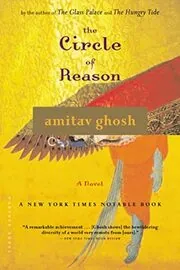
The Circle of Reason
by Amitav Ghosh
1986
Ghosh's debut follows Alu, an orphan with an unusually shaped head, who is falsely accused of terrorism and driven from a Bengal village to an oil town in the Gulf and onward to North Africa, chasing work, safety, and a sense of belonging.
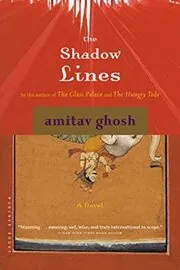
The Shadow Lines
by Amitav Ghosh
1988
Told through a web of family memories, this novel links a Calcutta boy to relatives in London and Dhaka, weaving together childhood obsession, Partition-era violence, and questions about borders that can exist in maps yet vanish inside people's lives.
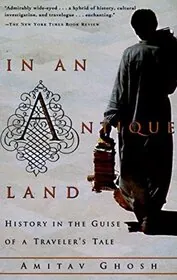
In an Antique Land
by Amitav Ghosh
1993
Part travelogue, part historical reconstruction, this book moves between 1980s Egyptian villages and the medieval Indian Ocean, as Ghosh traces a Jewish merchant and his Indian slave through Geniza documents while reflecting on friendship, religion, and the legacies of empire.

The Calcutta Chromosome
by Amitav Ghosh
1996
Set between near-future New York, 1990s Calcutta, and colonial India, this speculative thriller follows a data analyst and an obsessed researcher as they uncover a secretive group whose shadowy experiments rewrite the story of malaria, science, and reincarnation.
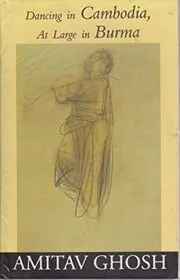
Dancing in Cambodia, at Large in Burma
by Amitav Ghosh
1998
Gathering reportage from Cambodia and Myanmar, these essays juxtapose royal dancers, colonial monuments, and resistance movements, asking how art, architecture, and personal memory carry the weight of revolution, dictatorship, and forgotten wars in Southeast Asia.

The Glass Palace
by Amitav Ghosh
2000
Beginning with the British invasion of Mandalay, this sweeping novel follows orphaned outsider Rajkumar and palace attendant Dolly across Burma, India, and Malaya, as royal courts fall, rubber fortunes rise, and families are tested by war, empire, and changing ideas of nationhood.
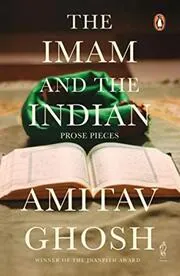
The Imam and the Indian - Prose Pieces
by Amitav Ghosh
2002
This essay collection grows out of Ghosh's years of anthropological fieldwork, from Egyptian villages to Indian cities, exploring envy, labor, fundamentalism, and storytelling, and reflecting on how older civilizations negotiate the power and violence of the modern world.
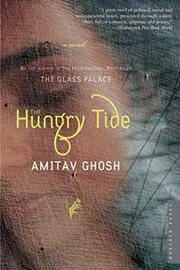
The Hungry Tide
by Amitav Ghosh
2004
In the mangrove labyrinth of the Sundarbans, American marine biologist Piya Roy teams up with a taciturn fisherman and an urbane translator to study rare river dolphins, only to be swept into local politics, myth, and the dangers of a rising sea.
Recommended by
1 person Jack Edwards recommended this book
Jack Edwards
"All about the symbiotic relationship between fishermen and the water." - Jack Edwards
Jack Edwards's recommendation of this book
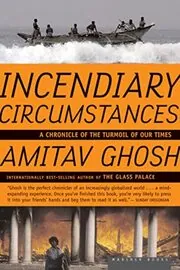
Incendiary Circumstances
by Amitav Ghosh
2005
Spanning war zones, disaster sites, and city streets, these essays take readers from the Andaman Islands after the 2004 tsunami to New York on September 11, tracing how violence, nationalism, and memory shape communities in Asia and beyond.
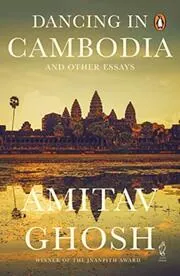
Dancing in Cambodia and Other Essays
by Amitav Ghosh
2008
In this slim collection, Ghosh braids reportage and memoir, from royal dancers on a 1906 trip to Europe to visits to post-tsunami islands and a child's-eye view of September 11, asking how ordinary lives absorb political upheaval.
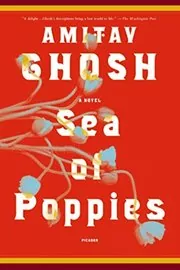
Sea of Poppies
by Amitav Ghosh
2008
Set on the eve of the First Opium War, this novel follows a Bihari widow, a disgraced zamindar, a mixed-race American sailor, and others as they board the ship Ibis for Mauritius, their intersecting journeys reshaping caste, identity, and freedom.
Recommended by
1 person Aamir Khan recommended this book
Aamir Khan
"An absolute must read! Outstanding!" - Aamir Khan
Aamir Khan's recommendation of this book
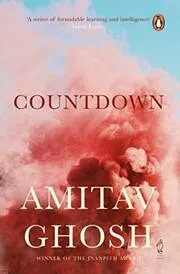
Countdown
by Amitav Ghosh
2010
This reportage-driven book follows Ghosh in the months after India and Pakistan's 1998 nuclear tests, as he travels from desert test sites to glacial front lines, listening to soldiers, villagers, and activists debate risk, nationalism, and war.
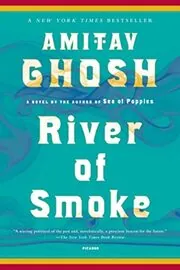
River of Smoke
by Amitav Ghosh
2011
As three ships from a violent storm converge on Canton, opium trader Bahram Modi, artist Paulette, and other survivors navigate the crowded foreign enclave, where trade intrigues and local resistance push China and the British Empire toward open conflict.
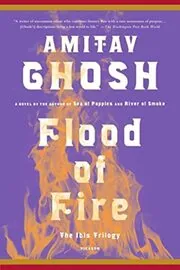
Flood of Fire
by Amitav Ghosh
2015
In the trilogy's climax, soldiers, sailors, and merchants from India, China, and Britain are drawn into the First Opium War, as the fate of the Ibis's former passengers collides with imperial ambition in a story of loyalty, profit, and rebellion.
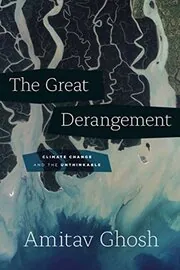
The Great Derangement
by Amitav Ghosh
2016
In this extended essay, Ghosh asks why modern novels, politics, and history have struggled to face climate change, tracing links between empire, fossil fuels, and culture, and urging readers to rethink what stories we tell about the planet.

Gun Island
by Amitav Ghosh
2019
Rare-book dealer Deen Datta is pulled out of his quiet Brooklyn life by an old Bengali legend, sending him from the Sundarbans to Venice through a world of storms, refugees, and uncanny coincidences that link folklore to a warming planet.

Jungle Nama: A Story of the Sunderban
by Amitav Ghosh
2021
Told in rhythmic verse and inspired by a beloved Bengali legend, this retelling of the Bon Bibi story follows a greedy merchant, a vulnerable boy, and the spirits of the Sundarbans, turning a folk tale into an ecological fable about greed and balance.
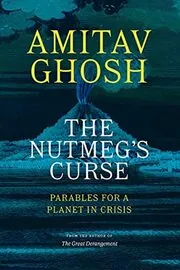
The Nutmeg's Curse
by Amitav Ghosh
2021
Drawing on the bloody history of the Banda Islands and the global trade in spices, this book connects colonial conquest to today's ecological crisis, using the humble nutmeg to show how extractive thinking still shapes violence, inequality, and climate breakdown.

Smoke and Ashes: Opium's Hidden Histories
by Amitav Ghosh
2024
Blending memoir, archival research, and travel writing, Ghosh traces how the opium trade shaped Britain, India, China, and even his own family, revealing the drug's role in building empires, corporations, and many of the inequalities of the modern global economy.

Wild Fictions: Essays on Literature, Empire, and the Environment
by Amitav Ghosh
2025
Collecting essays from across twenty-five years, this volume gathers Ghosh's reflections on imperialism, decolonization, climate change, language, and travel, showing how stories about spices, mangrove forests, and multilingual lives can challenge the myths that sustain empire and extraction.

Ghost-Eye
by Amitav Ghosh
2026
In late 1960s Calcutta, three-year-old Varsha shocks her vegetarian family by insisting she once lived by a river and ate fish, sending psychiatrist Shoma Bose into the uncanny world of reincarnation cases that echo forward into present-day activism and climate anxiety.
Where to start with Amitav Ghosh
If you love sweeping historical epics: Sea of Poppies → River of Smoke → Flood of Fire.
If you want a stand-alone novel to start with: The Shadow Lines → The Hungry Tide → The Glass Palace.
If you are curious about climate and empire in nonfiction: The Great Derangement → The Nutmeg's Curse → Smoke and Ashes.
If you prefer essays and hybrid travel writing: In an Antique Land → Dancing in Cambodia, at Large in Burma → Incendiary Circumstances.
Amitav Ghosh sub-series and character series
Amitav Ghosh collections, short stories, and related book types
Collections
Poetry Collections
Non-Fiction Books
Berlin Family Lectures
Standalone Amitav Ghosh books
Author bio
Amitav Ghosh was born in Calcutta in 1956 and has spent much of his life moving between countries, languages, and disciplines. An Indian novelist, essayist, and trained anthropologist, he is best known for richly researched stories that braid together history, migration, and the changing climate, from the historical sweep of The Glass Palace and the Ibis trilogy to the searching nonfiction of The Great Derangement and The Nutmeg's Curse.
He grew up following his diplomat father’s postings across India, Bangladesh, Sri Lanka, and Iran, an itinerant childhood that made reading a constant companion. At The Doon School in Dehradun he edited student magazines, traded books with classmates, and began to imagine a life built around stories.
After school, Ghosh studied history and economics at St Stephen’s College and the Delhi School of Economics, both at the University of Delhi, while also working as a reporter at the Indian Express in New Delhi. Journalism sharpened his eye for everyday detail, but it was a doctorate in social anthropology at the University of Oxford, based on fieldwork in an Egyptian village, that gave him a long view on how ordinary lives intersect with large historical forces.
That combination of reporting and anthropology shapes his early books. His first novel, The Circle of Reason, published in 1986, follows an accused young man from a Bengal village to the Gulf and North Africa, tracing migration and work in the late twentieth century. Two years later, The Shadow Lines used one family’s memories in Calcutta, London, and Dhaka to think about borders, Partition, and the fragile lines that divide safety from violence.
In the 1990s Ghosh turned back to his Egyptian fieldwork in In an Antique Land, a hybrid of travel writing, archival history, and memoir that moves between medieval merchants and modern villagers. Around the same time he published The Calcutta Chromosome, a speculative medical thriller about malaria research and secrecy, which showed how comfortably he moves between literary fiction, genre elements, and ideas from science.
The turn of the century brought even larger canvases. The Glass Palace follows an orphaned boy and a palace attendant through the fall of the Burmese monarchy, the rise of rubber plantations, and the upheavals of the Second World War. With the Ibis trilogy, beginning with Sea of Poppies and continuing through River of Smoke and Flood of Fire, he spent more than a decade exploring the opium trade, indenture, and the seaborne world that linked India, China, and the islands of the Indian Ocean.
At the same time, many readers discovered him through The Hungry Tide, set in the storm-battered mangrove islands of the Sundarbans, where river dolphins, fishermen, and outsiders share a precarious landscape. In recent years he has written more directly about the planetary emergency, in nonfiction such as The Great Derangement, The Nutmeg’s Curse, and Smoke and Ashes, and in works like Gun Island and Jungle Nama, which fold climate change and environmental history into myth and contemporary storytelling.
His books have won major prizes in India and abroad, including the Jnanpith Award and the Sahitya Akademi Award, and they have been translated into many languages, yet they remain grounded in precise places, spoken idioms, and the small textures of daily life.
Ghosh has taught at universities in Delhi, Cairo, New York, and elsewhere, but he now spends most of his time writing, dividing the year between Brooklyn, Kolkata, and Goa with his wife, the writer Deborah Baker, and staying close to his grown children. He has called himself a quiet person who prefers his desk to the spotlight, which may be why his novels feel so patient: they take the long way around a subject, listening closely to people, histories, and landscapes that are often pushed to the margins.













Edited by
Software engineer whose passion for tracking book recommendations from podcasts inspired the creation of MRB.
Lead investor at 3one4 Capital whose startup expertise and love for books helped shape MRB and its growth.
Comments
Did we miss something? Have feedback?
Help us improve this page by sharing your thoughts