
Ackroyd's Brief Lives Books in Order
Part ofPeter Ackroyd Books in OrderBrowse Ackroyd's Brief Lives by Peter Ackroyd in order, with quick summaries, reading order, and notes on which short biography to try first.
Last updated:
As an Amazon Associate, we earn from qualifying purchases (at no extra cost to you).
Ackroyd's Brief Lives books in publication order
7 books
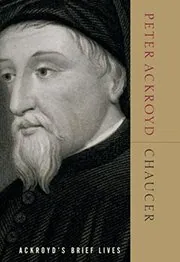
Chaucer
by Peter Ackroyd
1980
Ackroyd gives a brisk, vivid life of Geoffrey Chaucer, courtier, diplomat, and poet. He places Chaucer inside the rough, busy world of medieval England while opening a clear path into the work that made him famous.
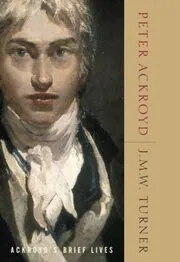
J.M.W. Turner
by Peter Ackroyd
2002
A short life of Turner, from his London childhood to his rise as the painter of storms, light, and sea. Ackroyd keeps one eye on the art and the other on the stubborn, secretive man behind it.
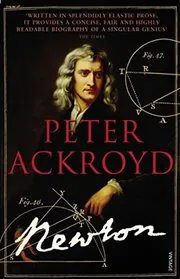
Newton
by Peter Ackroyd
2006
Ackroyd sketches Isaac Newton as both scientific giant and difficult human being. The book moves from calculus and gravity to alchemy, religion, and rivalry, showing how strange and wide Newton's mind really was.
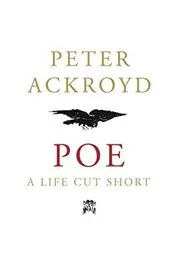
Poe
by Peter Ackroyd
2008
A concise portrait of Edgar Allan Poe, whose short life was marked by loss, poverty, and literary ambition. Ackroyd follows the making of the poems and tales while keeping the gothic misery of Poe's life in view.
Wilkie Collins
by Peter Ackroyd
2012
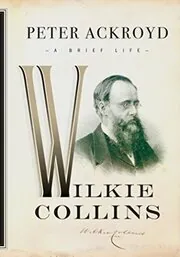
Ackroyd traces Wilkie Collins from hardworking Victorian professional to master of sensation fiction. It is a quick, readable introduction to the author of The Woman in White and The Moonstone, and the world that shaped him.
Charlie Chaplin
by Peter Ackroyd
2014
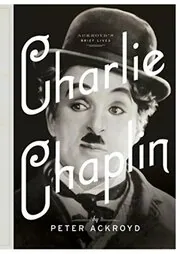
From London poverty and music hall beginnings to the Little Tramp and global fame, this short biography follows Chaplin's rise. Ackroyd also shows the loneliness, control, and restlessness behind the comic genius.
Alfred Hitchcock
by Peter Ackroyd
2015
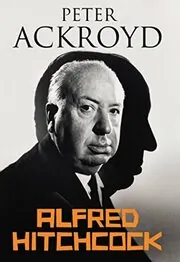
Ackroyd follows Hitchcock from fearful London boyhood to mastery of suspense on screen. The book looks at the making of the public image, the famous films, and the private obsessions that fed them.
Ackroyd's Brief Lives books in chronological order
Series background & context
Ackroyd's Brief Lives is Peter Ackroyd in compact form. Instead of one long, doorstop biography, each book takes a single figure and builds a sharp, readable portrait around them. The subjects in this sequence range widely, from Geoffrey Chaucer and J.M.W. Turner to Isaac Newton, Edgar Allan Poe, Wilkie Collins, Charlie Chaplin, and Alfred Hitchcock.
Short does not mean slight.
What these books do well is give you the shape of a life without burying you in footnotes or academic argument. Ackroyd usually begins with the world his subject was born into, then moves through the turning points that made the work possible. In Chaucer, that means court life, diplomacy, and medieval London as much as poetry. In J.M.W. Turner, it means the rough London childhood, the Royal Academy, and the strange, brilliant pursuit of light. In Newton, science sits right beside religion, alchemy, and personal obsession.
The later volumes keep that same method but shift the mood with the subject. Poe follows a life of poverty, grief, and hard-earned literary fame. Wilkie Collins looks at the creator of sensation fiction and the restless Victorian world that fed his imagination. Charlie Chaplin and Alfred Hitchcock move into film, performance, control, and the making of public myth, while still keeping a close eye on the lonely or difficult private selves behind the famous names.
Ackroyd is especially good at setting. He likes streets, rooms, studios, theaters, taverns, churches, printing houses, and all the physical places where a career happens. That matters here, because these books are not only about achievement. They are also about the texture of daily life, the habits of a period, and the odd details that make a historical figure feel like a person rather than a monument.
They are very good entry points.
If you already know the subject, these books work as brisk refreshers. If you are coming in cold, they are often the easiest place to start. Each volume stands alone, so you can pick the person who interests you most. Taken together, they also form a quiet map of Ackroyd's own interests, writers, artists, performers, inventors, and people whose work changed the way English-speaking culture looks, sounds, or thinks.


Edited by
Software engineer whose passion for tracking book recommendations from podcasts inspired the creation of MRB.
Lead investor at 3one4 Capital whose startup expertise and love for books helped shape MRB and its growth.
Comments
Did we miss something? Have feedback?
Help us improve this page by sharing your thoughts