
A Brief History Books in Order
Part ofYuval Noah Harari Books in OrderExplore the A Brief History books by Yuval Noah Harari in order, with summaries, series background and guidance on how Sapiens, Homo Deus, 21 Lessons and Nexus connect.
Last updated:
As an Amazon Associate, we earn from qualifying purchases (at no extra cost to you).
A Brief History books in publication order
2 books
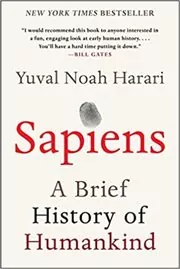
Sapiens
by Yuval Noah Harari
2011
Harari condenses 70,000 years of human history into a single narrative, tracing how Homo sapiens rose from apes on the savannah to planet-shaping forces. He focuses on shared myths, empires, money, religion and science, and asks whether all this progress made us happier.
Recommended by
32 people Joe Rogan recommended this book
Joe Rogan
"It really puts in perspective how bizarre human beings are. It’s an awesome overview of our species." - Joe Rogan
Joe Rogan's recommendation of this book  Bill Gates recommended this book
Bill Gates
"I would recommend this book to anyone interested in a fun, engaging look at early human history." - Bill Gates
Bill Gates's recommendation of this book  Naval Ravikant recommended this book
Naval Ravikant
"Best book I've read in [2015]." - Naval Ravikant
Naval Ravikant's recommendation of this book  Lex Fridman recommended this book
Lex Fridman
"Basically one of the things we've created here is we've imagined ideas that we all share." - Lex Fridman
Lex Fridman's recommendation of this book  Mark Zuckerberg recommended this book
Mark Zuckerberg
"A big history narrative of human civilization." - Mark Zuckerberg
Mark Zuckerberg's recommendation of this book  Peter Attia recommended this book
Peter Attia
One of Peter Attia's answers to "any books you feel would make your reading list?"
Peter Attia's recommendation of this book +26
More recommendations
- Ashton Kutcher
"The brainy book I seem to be sharing or talking about the most lately." - Ashton Kutcher
- Whitney Cummings
"A great book about [how] we’ve evolved and why we have anxiety." - Whitney Cummings
- Richard Branson
"I just love the style of his writing." - Richard Branson
- Ray Dalio
Ray Dalio mentioned this book on "The Tim Ferriss Show" podcast.
- Vinod Khosla
"A previous favorite." - Vinod Khosla
- James Cameron
"It explains human behavior and why we are the way we are in human civilization from soup to nuts. And I’ve read it now a couple of times. It’s a pretty astonishing book." - James Cameron
- Demis Hassabis
"There's not many times where I read a book and come out with 20 new ideas I hadn't thought about before, and [this book] made me think like that." - Demis Hassabis
- Keith Rabois
Keith Rabois recommended this book on a Medium blog post.
- Daniel Ek
"Both sobering and conservatively optimistic in equal measure." - Daniel Ek
- Reid Hoffman
"A grand theory of humanity." - Reid Hoffman
- Sam Kass
Sam Kass recommended this book in the "Tools of Titans" book.
- Sebastian Junger
"I’m going to give [this book] over and over again to everyone I know." - Sebastian Junger
- Kishore Biyani
"Fascinating because of its multi-disciplinary approach towards understanding human society, our behaviour and our future." - Kishore Biyani
- Ryan Shea
One of Ryan Shea's 4 answers to "what is the book (or books) you’ve given most as a gift?"
- Melinda Gates
Melinda Gates recommended this book on Likewise.com.
- Bill Gurley
"I really enjoyed [this book]." - Bill Gurley
- Karlie Kloss
"An amazing book on the beginning of humanity." - Karlie Kloss
- Anthony Pompliano
"[One of the] best books I read in 2017." - Anthony Pompliano
- Changpeng Zhao
"Gives me a greater perspective about how humans emerged and why we behave the way we do." - Changpeng Zhao
- PewDiePie
"Tells the major revolutions of human history." - PewDiePie
- Patrick O'Shaughnessy
"Provides a concise history of humankind and outlines why we have the psychology we do today." - Patrick O'Shaughnessy
- Chris Evans
"Truly mind-blowing. It’s changed the way I look at almost everything. I can’t endorse it enough." - Chris Evans
- Simon Mayo
"Love this book still." - Simon Mayo
- Penn Jillette
Penn Jillette mentioned this book in a New York Times interview.
- Mark Manson
Mark Manson recommended this book on his website.
- James Clear
"[One of] the 10 best nonfiction books of all-time." - James Clear
- Ashton Kutcher
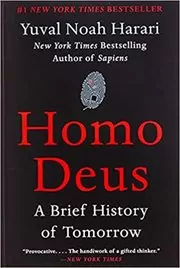
Homo Deus
by Yuval Noah Harari
2017
In this follow-up to Sapiens, Harari looks forward rather than back, asking what happens when humans start to redesign bodies, brains and societies. He explores dreams of immortality, algorithmic control and dataism, and what they might mean for freedom and meaning.
Recommended by
8 people- Bill Gates recommended this book
Bill Gates
"A thoughtful look at what may be in store for humanity." - Bill Gates
Bill Gates's recommendation of this book - Naval Ravikant recommended this book
Naval Ravikant
"Didn't finish it. Good book but not as seminal as Sapiens." - Naval Ravikant
Naval Ravikant's recommendation of this book 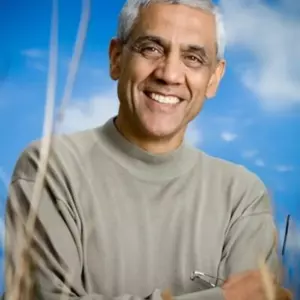 Vinod Khosla recommended this book
Vinod Khosla
"Not that I agree with all of it, but it is still mind-bending speculation about our future." - Vinod Khosla
Vinod Khosla's recommendation of this book  Richard Branson recommended this book
Richard Branson
Richard Branson recommended this book on his "70 must-read books" blog post.
Richard Branson's recommendation of this book  Raoul Pal recommended this book
Raoul Pal
Raoul Pal recommended this book on Twitter.
Raoul Pal's recommendation of this book  Tai Lopez recommended this book
Tai Lopez
"Badass book." - Tai Lopez
Tai Lopez's recommendation of this book +2
More recommendations
- Penn Jillette
Penn Jillette mentioned this book in a New York Times interview.
- Mark Manson
Mark Manson recommended this book on his website.
- Penn Jillette
A Brief History books in chronological order
Series background & context
The A Brief History sequence gathers Yuval Noah Harari’s big nonfiction books into one loose family. Rather than telling a single continuous story, these volumes circle the same questions from different angles: where humans came from, what we are doing now and where we might be heading.
The journey usually starts with Sapiens: A Brief History of Humankind. Here Harari races from early Homo sapiens through the Cognitive, Agricultural and Scientific Revolutions, pausing to show how shared myths about gods, nations, money and human rights let large groups cooperate. The tone is conversational but wide‑ranging, blending anthropology, economics and political history into one long, provocative narrative.
Homo Deus: A Brief History of Tomorrow flips the timeline. Instead of asking how we got here, it asks what happens if humans use biotechnology, algorithms and data systems to chase happiness, power and even immortality. Harari sketches possible futures in which traditional humanist ideas collide with new forms of surveillance, genetic engineering and artificial intelligence.
While those two books focus on deep past and speculative future, 21 Lessons for the 21st Century stays close to the present. It is built from short essays on themes like work, nationalism, terrorism, religion and education. Rather than offering neat answers, Harari lays out tensions: between liberty and security, global problems and national politics, personal meaning and information overload.
Nexus: A Brief History of Information Networks from the Stone Age to AI threads a line through all of this. It treats information networks – from oral myths and sacred texts to bureaucracies, newspapers, social media and machine‑learning systems – as the real infrastructure of human power. The book argues that whoever shapes these networks also shapes reality for billions of people, and it worries openly about what happens when non‑human intelligences begin to write the stories and rules we live by.
Alongside these major volumes sits Money, a compact spin‑off that gathers and reframes Harari’s ideas about how money was invented, why we believe in it and how digital finance might change that belief in the future.
Taken together, the A Brief History books don’t ask you to memorise dates. Instead they invite you to zoom out, compare eras and see modern debates about technology, politics and ethics as chapters in a much longer human experiment. You can read them in publication order or dip into the one that matches your current questions, knowing that the same big themes – power, stories, happiness and risk – run through them all.









Edited by
Software engineer whose passion for tracking book recommendations from podcasts inspired the creation of MRB.
Lead investor at 3one4 Capital whose startup expertise and love for books helped shape MRB and its growth.
Comments
Did we miss something? Have feedback?
Help us improve this page by sharing your thoughts