
18 Best Tai Chi Books
The best tai chi books, ranked by how many expert sources recommend each one, with notes on who each book suits and where students at different levels can start.
Our take
Tai chi books can explain principles, preserve a teacher’s words, or help you reflect on movements you already practice. They differ by style and purpose. A Yang-style form reference, a memoir of a teacher, and a modern introduction do not offer the same kind of help. For a physical practice, the clearest use of a book is often alongside lessons where someone can observe your movement.
There Are No Secrets offers an approachable view of learning through a teacher’s example. The Harvard Medical School Guide to Tai Chi uses a more contemporary explanatory framework, while Cheng Tzu’s Thirteen Treatises on T’ai Chi Ch’uan and T’ai Chi Classics invite slower study of traditional ideas. Yang-style students may prefer the detail in Mastering Yang Style Taijiquan or The Essence and Applications of Taijiquan. Start with a book that matches your goals and the style you practice, then return to the denser texts as your experience grows.
18 books · 7 sources · Last updated
As an Amazon Associate, we earn from qualifying purchases (at no extra cost to you).
How to choose from this list
Skip to the full rankingIf you want an approachable perspective on learning: There Are No Secrets
If you want a modern introductory framework: The Harvard Medical School Guide to Tai Chi
If you want to study traditional writings: T'ai Chi Classics → Cheng Tzu's Thirteen Treatises on T'ai Chi Ch'uan
If you practice Yang style: Mastering Yang Style Taijiquan → The Essence and Applications of Taijiquan
If you want language and imagery: How to Grasp the Bird's Tail If You Don't Speak Chinese
If you enjoy reflective humor: The Manual of Bean Curd Boxing
The 18 books, ranked
Ranked by how many expert sources name each book. Ties go to the book more people recommend.

Cheng Tzu's Thirteen Treatises on T'ai Chi Ch'uan
For students ready to reflect on principles alongside an established practice. The compact essays reward revisiting as experience grows, though the traditional terminology and concentrated argument need more interpretation than a modern beginner guide.
What it's about
Cheng Man Ch'ing explains his approach to tai chi in thirteen essays addressing posture, movement, anatomy, and martial principles. Photographs of his shortened form accompany discussions of practice and the relationship between theory and physical technique.

Mastering Yang Style Taijiquan
For Yang-style students who want a detailed reference beside their lessons. The precise descriptions and drawings support close study, though readers need to match the form to their lineage and cannot see timing from static pages.
What it's about
Fu Zhongwen presents detailed instructions for the Yang style tai chi form, supported by line drawings. The manual also covers push hands exercises, with commentary connecting practical training to the tradition's language and cultural background.

For students interested in Yang-family writings and how teachings were transmitted. Wile's translated material offers historical depth beyond a general introduction, though the varied texts and older terminology call for slow, contextual reading.
What it's about
Douglas Wile translates writings associated with three generations of the Yang family. Photographs, training verses, commentaries, and personal accounts document the transmission of tai chi teachings and the traditions surrounding their practice.

The Essence and Applications of Taijiquan
For students interested in a foundational historical presentation of Yang-style practice. The translated demonstrations connect posture with application, though the terse explanations and period context are easier to understand alongside an experienced teacher.
What it's about
Yang Chengfu explains the postures and martial applications of his tai chi form through demonstrations and instructional commentary. Translation notes place this historical manual within the philosophy and development of the Yang family's tradition.
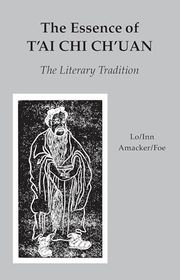
The Essence of T'ai Chi Ch'uan: The Literary Tradition
For students who want a compact collection of classical writings to revisit during practice. The multiple translators bring foundational texts together, though their compressed language requires patient interpretation rather than offering a simple sequence of exercises.
What it's about
This translated collection presents classical writings on tai chi principles, movement, and training. Benjamin Pang Jeng Lo, Martin Inn, Robert Amacker, and Susan Foe bring the texts together as a reference for studying the art’s literary tradition.

The Harvard Medical School Guide to Tai Chi
12 Weeks to a Healthy Body, Strong Heart, and Sharp Mind
For general readers who want research discussed alongside an accessible introduction to practice. Its modern explanatory framework differs from the classical commentaries, though a broad introductory program offers less lineage-specific detail than a traditional form manual.
What it's about
Peter Wayne examines research on tai chi and introduces an illustrated twelve-week practice program. He connects traditional principles with simplified exercises and considers how readers can incorporate mindful movement into everyday activities.

For practitioners who want to understand a teacher through remembered lessons and daily encounters. Lowenthal makes principles feel personal, though the memoir format offers fewer systematic instructions than a form manual.
What it's about
Wolfe Lowenthal recalls studying tai chi with Cheng Man Ch'ing in New York during the 1960s. Personal memories and accounts of lessons explore the teacher's approach to movement, martial practice, and daily life.

How to Grasp the Bird's Tail If You Don't Speak Chinese
For practitioners curious about the imagery behind posture names. Schorre turns language into a playful route toward understanding familiar movements, though the interpretive approach supplements practice rather than supplying a complete form or literal language course.
What it's about
Jane Schorre explores the Chinese names of tai chi movements through imagery, stories, paintings, and calligraphy. Her playful interpretations invite readers unfamiliar with Chinese to consider the meanings and associations behind familiar postures.

For readers interested in the people and stories behind tai chi lineages. Olson gives the teacher's personality room to emerge, though the biographical anecdotes should not be mistaken for a structured training course.
What it's about
Stuart Alve Olson recounts the life of tai chi teacher T. T. Liang, tracing experiences in China, Taiwan, and the United States. Episodes involving official work, danger, and martial study introduce the personality behind his teaching.

T'Ai Chi Ch'uan for Health and Self-Defense
For practitioners who know basic postures and want their underlying ideas explained more fully. Liang connects reflection with the martial tradition, though its assumptions about prior experience make it a poor first source for learning movements.
What it's about
T. T. Liang addresses readers who already know basic tai chi postures and want to deepen their practice. His guide examines the philosophy underlying the movements and their possible variations, connecting the art's physical practice with its self-defense applications.

T'ai Chi Classics
For readers who want a compact encounter with classical tai chi ideas and commentary. Liao makes a small set of texts accessible in one volume, though the traditional energy language can be difficult without practical context.
What it's about
Waysun Liao translates and comments on three classical tai chi texts, exploring their inner meanings and concepts of energy and martial power. Line drawings accompany instructions for a complete sequence of movements.

For readers who want a broad traditional account connecting practice and philosophy. Jou gives the art's underlying ideas substantial attention, though the density and traditional explanatory framework require more interpretation than a straightforward modern overview.
What it's about
Jou Tsung Hwa introduces taijiquan through its movements, classical writings, and philosophical foundations. The book connects practical training with Taoist ideas, offering a detailed study of the principles behind this Chinese martial art.

The Five Levels of Taijiquan
For practitioners who want a framework for thinking about long-term progress. The commentary makes a short traditional teaching easier to examine, though the stages are broad guides and cannot assess an individual reader's skill.
What it's about
Chen Xiaowang outlines five stages of development in taijiquan, from beginner practice to advanced attainment. Jan Silberstorff's detailed commentary helps explain the teachings and provides a framework for considering progress and directing further training.

For readers who enjoy humor as an entry into tai chi and Taoist reflection. Read's conversational approach makes familiar habits worth reconsidering, though the playful essays offer less technical precision than a structured practice reference.
What it's about
Paul Read uses humor, illustrations, and animal imagery to explore tai chi and Taoist ideas. His reflections connect the practice with everyday living, asking how doing less can encourage more thoughtful and efficient action.

The Power of Internal Martial Arts and Chi
Combat and Energy Secrets of Ba Gua, Tai Chi and Hsing-I
For readers comparing tai chi with other internal martial arts. Frantzis supplies a broader practitioner perspective than a single-style manual, though the wide scope and traditional energy claims need distinguishing from established scientific explanations.
What it's about
Bruce Frantzis compares ba gua, tai chi, and hsing-i through their training methods, combat strategies, and applications. Personal accounts and teacher profiles accompany his discussion of internal energy practices, Taoist meditation, and spiritual development.

For readers drawn to movement as creative expression and a way of paying attention. Huang's reflective, visual approach offers a different mood from technical manuals, though it gives less help with precise form correction.
What it's about
Chungliang Al Huang introduces Tai Ji through reflections on movement, stillness, and living in the present. Illustrated with photographs and calligraphy, the book presents the practice's underlying principles as an approach to everyday experience.

For practitioners who want another perspective on the relationship between movement and power. Its focused theme can prompt comparison with other explanations, though the general discussion provides less structure than a detailed style-specific manual.
What it's about
Cloud Hands presents an introduction and reference to tai chi chuan, exploring its techniques and philosophical foundations. The book considers the principles underlying the art and their significance for understanding its approach to movement and power.

For experienced Yang-style practitioners who want to study traditional accounts of martial power. The translated verses add depth to the technical discussion, though the specialist vocabulary and training assumptions make it unsuitable as a first manual.
What it's about
Yang Jwing-Ming examines martial power in advanced Yang style tai chi, discussing training methods and the role of the mind. Translated poems and commentary explain traditional concepts of energy and their relationship to practice.
Sources






Edited by
Software engineer whose passion for tracking book recommendations from podcasts inspired the creation of MRB.
Lead investor at 3one4 Capital whose startup expertise and love for books helped shape MRB and its growth.
Comments
Did we miss something? Have feedback?
Help us improve this page by sharing your thoughts