
9 Best Relativity Books
The best relativity books, ranked by expert source recommendations, with notes on who each suits, from accessible explanations to undergraduate and graduate texts.
Our take
Relativity changes how physics describes space, time, motion, and gravity. Books on the subject range from explanations built around thought experiments to textbooks that require calculus and differential geometry. The right starting point depends less on how interested you are than on the mathematics you already know and whether you want to solve problems or understand the broad ideas.
Gravity from the Ground Up and Black Holes and Time Warps connect the subject with astronomy and physical questions. Einstein's Relativity offers his own historical explanation. For a more active introduction to special relativity, Spacetime Physics develops reasoning through diagrams and exercises. Gravity and A First Course in General Relativity build toward the mathematics of curved spacetime, while Spacetime and Geometry, General Relativity, and Gravitation serve more prepared readers. Start with a conceptual account if the language is unfamiliar, or special relativity and its exercises if you're preparing for a mathematical course.
9 books · 8 sources · Last updated
As an Amazon Associate, we earn from qualifying purchases (at no extra cost to you).
How to choose from this list
Skip to the full rankingIf you want an accessible physical overview: Gravity from the Ground Up → Black Holes and Time Warps
If you want Einstein's own explanation: Relativity
If you're ready to study special relativity: Spacetime Physics
If you're beginning mathematical general relativity: Gravity → A First Course in General Relativity → Spacetime and Geometry
If you need advanced references: Gravitation → General Relativity
The 9 books, ranked
Ranked by how many expert sources name each book. Ties go to the book more people recommend.

Gravitation
For advanced students who want an extensive reference with strong physical intuition. Its two-track structure provides several routes through the material, though the sheer size and older presentation make it less manageable than a first-course textbook.
What it's about
Charles Misner, Kip Thorne, and John Wheeler present a graduate-level treatment of Einstein's general relativity. The extensive textbook develops the physics of gravitation through two tracks, combining core material with advanced topics for a longer course.
Also recommended by
1 person Eric Weinstein recommended this book
Eric Weinstein
Eric Weinstein tweet about books that mattered enough to him.
Eric Weinstein's recommendation of this book

General Relativity
For mathematically prepared readers who want a concise, rigorous route through general relativity. Wald's geometric approach offers more formal depth than the introductory books, though the compressed exposition and demanding exercises make it a difficult first encounter.
What it's about
Robert M. Wald presents a mathematically rigorous introduction to general relativity and its physical interpretation. The textbook examines central questions and problems in the theory, developing detailed analyses for students beginning sustained study of the subject.

For undergraduates who prefer seeing physical applications before a full geometric treatment. Hartle's examples-first sequence makes the purpose of the theory visible early, though the book remains mathematical and leaves some formal details to more advanced texts.
What it's about
James Hartle introduces general relativity through its physical applications before developing the supporting mathematics. Written for undergraduate physics students, the textbook explores warped spacetime, black holes, gravitational waves, and cosmology using a physics-first approach.
Also recommended by
1 person Brian Cox recommended this book
Brian Cox
"The best intro text book in my view." - Brian Cox
Brian Cox's recommendation of this book

For students ready to learn general relativity through differential geometry and physical applications. Carroll offers a more continuous modern course than an encyclopedic reference, though readers need mathematical preparation and time to work through derivations.
What it's about
Sean Carroll introduces general relativity for advanced students, progressing from special relativity to differential geometry and Einstein's equations. The textbook balances mathematical techniques with physical interpretation through applications to black holes, gravitational radiation, and cosmology.
Also recommended by
1 person Patrick Collison recommended this book
Patrick Collison
Patrick Collison labeled this book "substantially above average."
Patrick Collison's recommendation of this book

A First Course in General Relativity
For undergraduates beginning general relativity who want mathematical tools introduced as they become useful. Schutz provides a gentler progression than the graduate references, though understanding the material still requires calculus, exercises, and sustained study.
What it's about
Bernard Schutz introduces general relativity to undergraduates with limited mathematical preparation. Exercises develop the necessary techniques alongside applications to black holes, relativistic stars, pulsars, gravitational waves, and cosmology, connecting the theory with questions in astronomy.
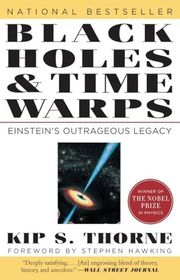
Black Holes and Time Warps
For general readers interested in what relativity means for extreme astronomical objects. Thorne combines physical explanation with the history of discovery more extensively than a short introduction, though the lengthy account reflects an earlier stage of observational research.
What it's about
Kip S. Thorne traces the development of ideas about black holes, gravitational waves, wormholes, and the structure of spacetime. The book combines explanations of relativity with accounts of the scientists and debates that shaped twentieth-century gravitational physics.
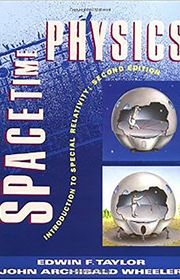
Spacetime Physics
For students who want to develop special-relativistic reasoning before tackling curved spacetime. Its diagrams and problems build intuition more actively than a popular account, though it concentrates on special relativity and expects mathematical participation.
What it's about
Edwin F. Taylor and John Archibald Wheeler develop special relativity through spacetime diagrams, physical examples, and exercises. The textbook explores intervals, motion, energy, momentum, and related ideas, emphasizing how to reason consistently about events seen from different frames.
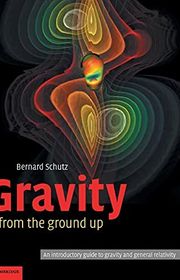
Gravity from the Ground Up
For curious readers who want a broad account of gravity without starting with tensor calculus. Its astronomical examples connect familiar phenomena with relativity, though the length and occasional quantitative reasoning make it more involved than a brief popular overview.
What it's about
Bernard Schutz introduces gravity by connecting everyday experience with astronomy and general relativity. Using high-school mathematics and optional computer explorations, he develops explanations of stars, black holes and the universe while showing how gravity shapes observable phenomena.
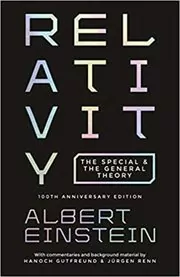
For readers who want Einstein's own explanation of the central ideas. Thought experiments offer a direct historical perspective, though the older language and scientific context make this less straightforward than a contemporary introduction.
What it's about
Albert Einstein introduces special and general relativity for readers outside professional physics. Using thought experiments and explanations of space, time, motion, and gravitation, he develops the reasoning behind theories that challenge familiar assumptions about the physical world.
Sources
- 1
A Guide to Relativity Books
math.ucr.edu
- 2
book:ggr:books - Geometry of General Relativity
sites.science.oregonstate.edu
- 3
Books for general relativity
physics.stackexchange.com
- 4
Relativity Books
goodreads.com
- 5
General Relativity: Recommended Books and Resources
damtp.cam.ac.uk
- 6
GP-B: Further Reading About Spacetime
einstein-new.stanford.edu
- 7
Further reading
einstein-online.info
- 8
Trying to learn relativity, any recommended books?
reddit.com






Edited by
Software engineer whose passion for tracking book recommendations from podcasts inspired the creation of MRB.
Lead investor at 3one4 Capital whose startup expertise and love for books helped shape MRB and its growth.
Comments
Spotted a missing book, a wrong order or a mistake? Tell us and we'll fix this page.
We're a reading guide, not the author or publisher, so we can't send books or pass on messages.