
19 Best Kubernetes Books
The best Kubernetes books, ranked by how many expert sources recommend each one, with notes on learning, application patterns and production operations.
Our take
Kubernetes books serve several different jobs: learning the core objects, deploying an application, operating a cluster or extending the platform itself. A beginner needs a clear model of containers, Pods, Services and Deployments before the operational detail becomes useful. Developers may then focus on application patterns, while platform engineers need to consider upgrades, access, networking, storage and the people who depend on the system. Because the ecosystem changes, check each edition's examples against the versions and services you use.
The Kubernetes Book and Quick Start Kubernetes provide approachable entry points, while Kubernetes in Action offers a more detailed progression. The Book of Kubernetes spends extra time on the container foundations beneath the platform. For application design, try Kubernetes Patterns. For infrastructure responsibilities, Managing Kubernetes and Production Kubernetes shift attention toward operations and platform decisions. Kubernetes Operators and Programming Kubernetes address automation and extensions, while the CKAD guide serves a specific exam goal. Start with an introduction, then choose the book closest to the work you need to perform.
19 books · 8 sources · Last updated
As an Amazon Associate, we earn from qualifying purchases (at no extra cost to you).
How to choose from this list
Skip to the full rankingIf you're starting with Kubernetes: The Kubernetes Book → Kubernetes in Action
If container internals are the missing piece: The Book of Kubernetes
If you're designing applications: Kubernetes Patterns → Kubernetes Best Practices
If you're responsible for operations: Managing Kubernetes → Production Kubernetes
If you want to build extensions: Kubernetes Operators → Programming Kubernetes
If you're preparing for CKAD: Certified Kubernetes Application Developer (CKAD) Study Guide
The 19 books, ranked
Ranked by how many expert sources name each book. Ties go to the book more people recommend.

For developers who want a broad practical introduction before specializing. The examples connect Kubernetes objects with running applications, though the compact survey gives less room to internal mechanisms or production platform design than the longer, more focused books.
What it's about
Brendan Burns and his coauthors introduce Kubernetes through practical examples of containerized applications. Readers learn to work with clusters, pods, deployments, configuration, and application packaging, then explore techniques for organizing and operating applications at larger scales.

Kubernetes in Action
For readers who want to understand how Kubernetes behaves as well as follow deployment instructions. The detailed progression supports a deeper mental model, though the substantial length and version-sensitive examples require more commitment than a quick introduction.
What it's about
Marko Luksa introduces Kubernetes by taking readers from container basics to deploying and managing applications. Examples develop an understanding of clusters, scaling, configuration, monitoring, security, and updates, while explaining the system’s internal behavior.
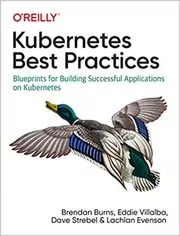
Kubernetes Best Practices
Blueprints for Building Successful Applications on Kubernetes
For developers who already know the basic objects and need practical patterns for reliable applications. The task-oriented guidance is easy to revisit, though the recommendations need adapting to your platform, organizational constraints and the edition's Kubernetes assumptions.
What it's about
Brendan Burns and his coauthors share practices for developing and running applications on Kubernetes. Topics include deployment, monitoring, security, upgrades, networking, and integrating existing systems, with guidance for teams building reliable platforms and specialized workloads.
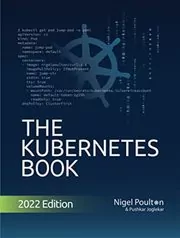
The Kubernetes Book
For beginners who want an approachable explanation of core objects and architecture. Poulton connects concepts with practical deployment steps, though readers should check the edition and expect to supplement the introduction for specialized production or security responsibilities.
What it's about
Nigel Poulton explains Kubernetes architecture and the objects used to run containerized applications. Practical examples introduce installation, Pods, Services, and Deployments, connecting the platform's underlying concepts with the work of deploying and managing applications.
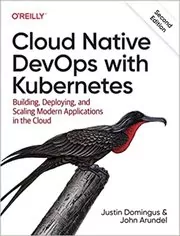
Cloud Native DevOps with Kubernetes
Building, Deploying, and Scaling Modern Applications in the Cloud
For teams that want Kubernetes placed inside a broader delivery and operations workflow. The coverage connects pipelines, monitoring and cost with application development, though it is wider than a focused guide to Kubernetes internals or one certification exam.
What it's about
Justin Domingus and John Arundel guide readers through building and operating applications with containers and Kubernetes. Practical examples cover development, testing, deployment pipelines, monitoring, security, resilience, and managing infrastructure costs and capacity.
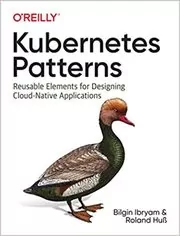
For developers who want reusable ways to structure applications rather than another installation walkthrough. The pattern format makes recurring problems and tradeoffs easier to discuss, though selecting the right pattern still requires understanding your workload and operational context.
What it's about
Bilgin Ibryam and Roland Huss present reusable patterns for designing applications on Kubernetes. Each pattern explains a recurring problem and a practical solution, covering workload behavior, configuration, application structure, and advanced approaches such as Operators.
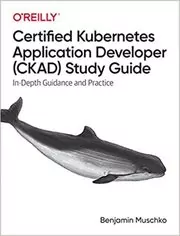
Certified Kubernetes Application Developer (CKAD) Study Guide
In-Depth Guidance and Practice
For developers preparing specifically for CKAD who want organized command-line practice. Its exercises connect application topics with working under time pressure, though an exam-focused guide should be checked against the current curriculum and supplemented with real cluster practice.
What it's about
Benjamin Muschko prepares readers for the CKAD exam with explanations and practical exercises. The guide covers application configuration, multi-container pods, observability, networking, and state management, alongside command-line practice and strategies for completing tasks under exam time limits.
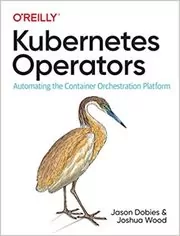
For developers exploring automated application management through custom resources and control loops. The Operator Framework gives the explanation a concrete development path, though framework-specific examples need version checks and are narrower than a general introduction to Kubernetes extensions.
What it's about
Jason Dobies and Joshua Wood explain how Kubernetes Operators automate application management. Readers learn about custom resources and control loops, then use the Operator Framework to build and distribute software that handles tasks such as upgrades, recovery, and backups.
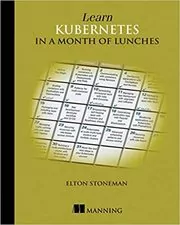
Learn Kubernetes in a Month of Lunches
For readers who learn best through a sequence of manageable practical lessons. The progression connects first deployments with production concerns, though the lunch-sized format still requires time at a keyboard and cannot replace experience operating a real workload.
What it's about
Elton Stoneman teaches Kubernetes through twenty-two practical lessons. Readers build from pods and deployments toward production concerns, including scaling, recovery, upgrades, rollback, and security, with examples spanning new applications, existing systems, and serverless workloads.
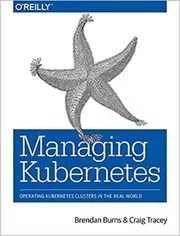
For administrators responsible for the cluster itself, including upgrades and troubleshooting. Burns and Tracey emphasize operational choices beyond application manifests, though the older infrastructure examples need comparison with current cloud services and the Kubernetes versions you support.
What it's about
Brendan Burns and Craig Tracey explain how to build and operate Kubernetes clusters. Coverage includes architecture, access control, monitoring, upgrades, and troubleshooting, helping administrators manage installations in cloud and on-premises environments and extend them as requirements change.

Mastering Kubernetes
For practitioners expanding from basic deployments into complex distributed workloads. Its wide coverage connects architecture, storage, networking and security, though the breadth and changing ecosystem make it most useful when you can test examples against your own cluster version.
What it's about
Gigi Sayfan develops advanced Kubernetes skills for operating large distributed applications. The guide examines cluster architecture, stateful microservices, autoscaling, storage, network configuration, and security, with additional coverage of serverless computing and service meshes for managing complex deployments.
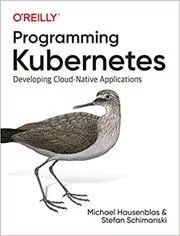
For Go developers building controllers, custom resources or other Kubernetes extensions. Its focus on API machinery goes deeper than application deployment books, though it assumes programming confidence and the older library examples require reconciliation with current client versions.
What it's about
Michael Hausenblas and Stefan Schimanski explain how to build applications that interact directly with Kubernetes. Coverage moves through its API, Go client libraries, and custom resources to developing controllers, operators, and extensions that manage resource state.
Quick Start Kubernetes
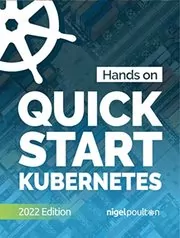
For complete beginners who want a concise first deployment before reading a full reference. The focused introduction makes an initial working example approachable, though its brevity leaves much of operations, security and application design for later study.
What it's about
Nigel Poulton introduces Kubernetes for readers without prior experience, combining essential background with a practical application deployment. The concise guide explains the platform's purpose while leading readers through hands-on work that establishes a foundation for further study.
The Book of Kubernetes
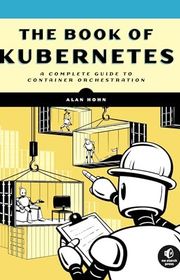
For readers who want to understand containers beneath the orchestration layer. Hohn connects operating-system behavior, networking and storage with Kubernetes through practical exploration, though the foundations-first route takes longer to reach everyday deployment tasks than a quick-start guide.
What it's about
Alan Hohn explains how containers work and how Kubernetes coordinates them. Practical examples explore container creation, cluster deployment and debugging, networking across nodes and the operating-system mechanisms underneath, connecting infrastructure behavior with the platform's higher-level abstractions.
Introduction to DevOps with Kubernetes
Build scalable cloud-native applications using DevOps patterns created with Kubernetes
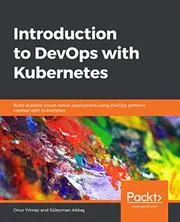
For developers who want a practical connection between Kubernetes and a DevOps workflow. The deployment, configuration and troubleshooting examples give the learning a clear application, though the older tooling assumptions need adjustment rather than copying commands without checking.
What it's about
Onur Yilmaz and Suleyman Akbas introduce Kubernetes as part of a DevOps workflow. Hands-on material covers cluster setup, application deployment and scaling, configuration, storage, monitoring, and troubleshooting with Kubernetes command-line tools.
Production Kubernetes
For engineers designing an application platform rather than only learning Kubernetes commands. Its attention to infrastructure integrations and operational tradeoffs widens the view across teams, though it assumes platform knowledge and is less useful as a first deployment tutorial.
What it's about
Josh Rosso, Rich Lander, Alex Brand and John Harris examine Kubernetes as a foundation for application platforms. The book explores technology choices, integration patterns and abstractions across infrastructure disciplines, helping teams reason about the operational requirements of production environments.
Kubernetes in Production Best Practices
Build and Manage Highly Available Production-Ready Kubernetes Clusters
For engineers building highly available infrastructure who want worked provisioning and operations examples. The AWS, Terraform and Ansible setting makes implementation concrete, though readers on other platforms must translate those details and verify current provider behavior.
What it's about
Aly Saleh and Murat Karslioglu guide the design and operation of production Kubernetes infrastructure. Examples using AWS, Terraform, and Ansible address provisioning, networking, storage, security, observability, availability, and cost management, with principles applicable across cloud environments.
Learn Kubernetes Security
Securely Orchestrate, Scale, and Manage your Microservices in Kubernetes Deployments
For practitioners who want a focused introduction to threats, access control and defensive tooling. Its practical examples make risks more tangible than a general platform overview, though security guidance and tool versions need checking against current documentation and deployment policies.
What it's about
Kaizhe Huang and Pranjal Jumde examine security risks in Kubernetes environments and ways to protect container deployments. Practical examples cover threat modeling, authentication, authorization, image scanning, cluster components, and monitoring resources with tools that support detection and defense.
The Kubernetes Workshop
Learn How to Build and Run Highly Scalable Workloads on Kubernetes
For readers who want an activity-led course that develops skills through repeated implementation. The workshop structure connects setup with progressively harder tasks, though the older dependency and policy examples require version checks and more adaptation than a current introductory walkthrough.
What it's about
This practical workshop introduces Kubernetes through examples and activities, from setting up an environment to deploying applications. Readers work with containers, Pods, configuration files, and cluster components before exploring security policies, custom controllers, and more advanced operations.
Sources
- 1
Top 10 Kubernetes Books Every Developer Should Read in 2024
turing.com
- 2
Best Kubernetes Books for 2026: Beginner to Production
computingforgeeks.com
- 3
16 Best Kubernetes Books for Beginners 2025
dev.to
- 4
Kubernetes Books
goodreads.com
- 5
want to learn K8s recommend a good hands-on book?
reddit.com
- 6
Kubestronaut in Orbit: Aaron Zhilong Wang
cncf.io
- 7
Kubernetes Study Path: From kubectl to a Production Cluster
semicolony.dev
- 8
Books on Kubernetes
essenceoftoday.org






Edited by
Software engineer whose passion for tracking book recommendations from podcasts inspired the creation of MRB.
Lead investor at 3one4 Capital whose startup expertise and love for books helped shape MRB and its growth.
Comments
Spotted a missing book, a wrong order or a mistake? Tell us and we'll fix this page.
We're a reading guide, not the author or publisher, so we can't send books or pass on messages.