
Kim Stanley Robinson Books in Order
Explore Kim Stanley Robinson’s books in order, with series lists, brief summaries, background on his Mars and climate novels, and where-to-start reading tips.
Last updated: 1 new book added
As an Amazon Associate, we earn from qualifying purchases (at no extra cost to you).
Kim Stanley Robinson books in publication order
41 books
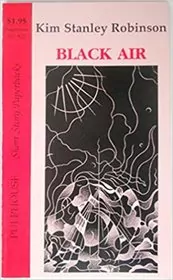
Black Air
by Kim Stanley Robinson
1983
In this award-winning historical fantasy, orphan Manuel is pressed into service aboard a Spanish Armada galleon, where storms, visions, and the slow collapse of the fleet force him to question faith, fate, and what survival really means.
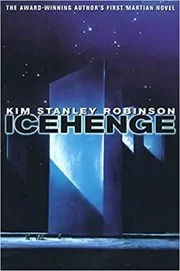
Icehenge
by Kim Stanley Robinson
1984
A mysterious Stonehenge-like circle of ice on Pluto, a buried diary from a lost Martian revolution, and a historian centuries later all intertwine, as three narrators try to untangle whether the monument marks alien contact, human mythmaking, or a deliberate hoax.
The Novels of Philip K. Dick
by Kim Stanley Robinson
1984
Robinson's doctoral study of Philip K. Dick surveys every major novel, tracing recurring themes, narrative experiments, and political anxieties, and helps readers see how Dick's strange futures reflected the cultural pressures of postwar America.
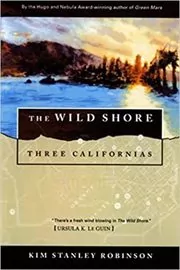
The Wild Shore
by Kim Stanley Robinson
1984
In 2047, a small fishing village on the ruined California coast struggles to survive after a devastating nuclear attack, while young Hank Fletcher is drawn toward dangerous schemes to reconnect with the wider world and remake a broken America.

Green Mars (novella; in Asimov's)
by Kim Stanley Robinson
1985
In this earlier, stand-alone Mars story, veteran politician Roger Clayborne joins an expedition to climb Olympus Mons, where the physical ordeal and sweeping views force him to confront what Mars has gained and lost through centuries of terraforming.
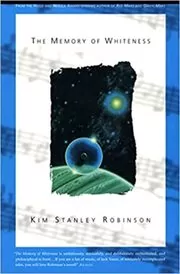
The Memory of Whiteness
by Kim Stanley Robinson
1985
In the thirty-third century, a solar system linked by a mysterious energy grid follows the Holywelkin Orchestra on a grand tour, as its new master, Johannes, finds his musical calling tangled up with cults, conspiracies, and control of humanity's power source.
The Blind Geometer
by Kim Stanley Robinson
1986
A blind mathematician who sees through sound and touch is drawn into a dangerous scheme by new colleagues, and must rely on his geometric intuition and a fragile new friendship to uncover what they are really plotting.
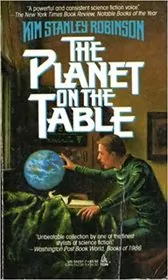
The Planet on the Table
by Kim Stanley Robinson
1986
This early story collection gathers eight of Robinson's best shorter works, from drowned future Venice and miners on Uranus to the Hiroshima alternate history The Lucky Strike and the Spanish Armada tale Black Air, showcasing his range in compact form.

Mother Goddess of the World (in Asimov's)
by Kim Stanley Robinson
1987
One of the Escape from Kathmandu novellas, this story sends George, Freds, and a band of climbers on an illegal ascent of Mount Everest to keep a camera crew from exploiting a legendary discovery, mixing slapstick, spirituality, and thin-air danger.
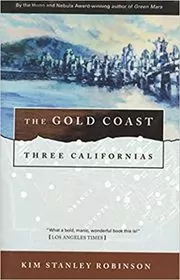
The Gold Coast
by Kim Stanley Robinson
1988
In an Orange County smothered in freeways, malls, and defense contractors, drifting poet Jim McPherson is pulled from parties and designer drugs into underground sabotage, forcing a collision between his ideals and his father's work in high-tech weapons.
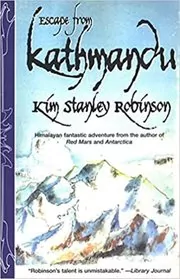
Escape From Kathmandu
by Kim Stanley Robinson
1989
This linked set of Himalayan adventures follows trekking guides George and Freds, two American expatriates in Nepal whose encounters with a captured yeti, clandestine Everest climbs, hidden kingdoms, and bureaucratic absurdities turn mountaineering into a comic, gently satirical quest.
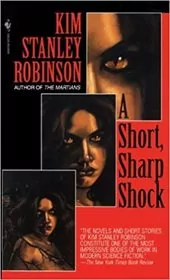
A Short, Sharp Shock
by Kim Stanley Robinson
1990
A nameless man wakes on a strange shore with no memories and only a glimpse of a lost woman, then is forced to journey along a ribbon of land encircling an endless sea, through bizarre cultures and dangers, to try to find her again.
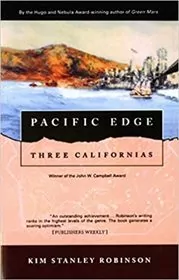
Pacific Edge
by Kim Stanley Robinson
1990
Set in a small Southern California town that has embraced green politics and cooperative living, the novel follows carpenter and new councilmember Kevin Clayborne as a development fight over the last wild hill tests friendships, ideals, and this fragile utopia.
Recommended by
1 person Cory Doctorow recommended this book
Cory Doctorow
"My favorite KSR novel." - Cory Doctorow
Cory Doctorow's recommendation of this book
Remaking History
by Kim Stanley Robinson
1991
This collection of fifteen stories ranges from alternate histories and media satires to intimate portraits of climbers, workers, and activists, all circling Robinson's fascination with how people remember the twentieth century and try to change the course of events.
Down and Out in the Year 2000
by Kim Stanley Robinson
1992
A British collection that brings together the fantasy novella A Short, Sharp Shock, award-winning The Blind Geometer, and key stories from Remaking History, offering a compact tour through Robinson's early obsessions with poverty, politics, memory, and strange landscapes.
Red Mars
by Kim Stanley Robinson
1993
The first Mars Trilogy volume follows the First Hundred colonists as they build the initial settlements, debate whether to terraform the planet, and become entangled in revolutions and corporate power struggles that reshape both Mars and an ecologically stressed Earth.
Future Primitive
by Kim Stanley Robinson
1994
Edited by Robinson, this anthology gathers utopian and cautionary tales of ecotopias, showcasing writers who imagine societies that use high technology to live lightly on Earth, or warn what happens when that experiment goes very wrong.
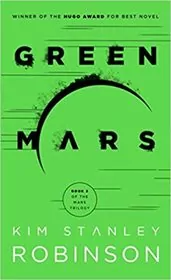
Green Mars
by Kim Stanley Robinson
1994
Decades after the first landing, long-lived colonists and their children push terraforming forward, organize underground resistance to Earth's control, and fight over what kind of society Mars should become as the planet slowly turns from red to green.
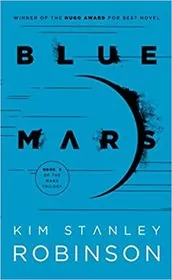
Blue Mars
by Kim Stanley Robinson
1996
In the trilogy's finale, Mars is largely terraformed, Earth reels from climate disasters, and Martian factions must negotiate independence, immigration pressures, and the ethics of extreme longevity as they expand human settlement throughout the solar system.
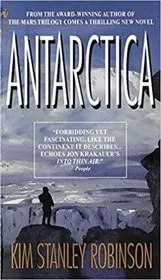
Antarctica
by Kim Stanley Robinson
1997
Blending adventure and reportage, this novel follows field assistants, guides, and visiting politicians at McMurdo Station, using their treks across the ice to explore Antarctic history, science, tourism, and the fragile treaties that protect the continent from exploitation.
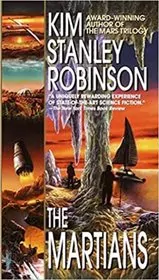
The Martians
by Kim Stanley Robinson
1999
This companion volume to the Mars Trilogy collects stories, essays, and vignettes that fill in side adventures, alternate timelines, and folklore, offering extra perspectives on the colonists and landscapes readers first met in Red Mars, Green Mars, and Blue Mars.
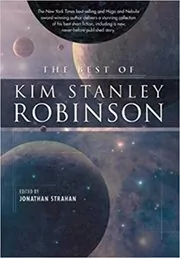
The Best of Kim Stanley Robinson
by Kim Stanley Robinson
2001
This retrospective collection gathers more than twenty stories from across Robinson's career, including award-winners like The Blind Geometer and Black Air, showcasing his interest in ecology, politics, history, and the quiet dramas of ordinary people.
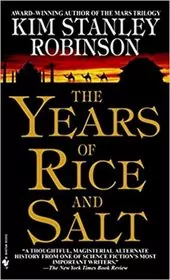
The Years of Rice and Salt
by Kim Stanley Robinson
2002
In this sweeping alternate history, the Black Death wipes out nearly all of Europe, and the story instead follows reincarnating characters across centuries of Islamic, Chinese, Indian, and Indigenous histories as they struggle toward more just and peaceful worlds.
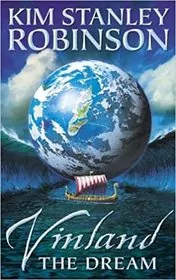
Vinland the Dream
by Kim Stanley Robinson
2002
This UK collection assembles fourteen key stories from earlier books, including the title's alternate Viking history, drowned-city tales, and Martian vignettes, offering a handy single volume of Robinson's short fiction about memory, exploration, and historical what-ifs.
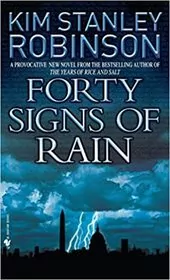
Forty Signs of Rain
by Kim Stanley Robinson
2004
Set in near-future Washington, D.C., the first Science in the Capital novel follows scientists Anna and Frank and policy aide Charlie as stalled politics meet abrupt climate shifts, culminating in catastrophic floods that force leaders to confront global warming.
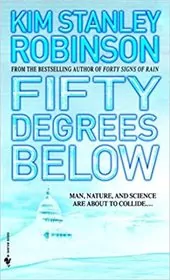
Fifty Degrees Below
by Kim Stanley Robinson
2005
After Washington's flood, climatologist Frank Vanderwal chooses to stay at the National Science Foundation, experimenting with a quasi Stone Age lifestyle while helping design risky geoengineering schemes as a deep freeze grips the Northern Hemisphere.
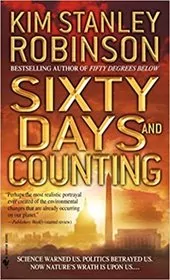
Sixty Days and Counting
by Kim Stanley Robinson
2007
In the trilogy's conclusion, a new U.S. administration takes office after an election fought on climate, and Frank, Anna, Charlie, and their allies race to stabilize weather systems and remake institutions while personal lives, politics, and spirituality collide.
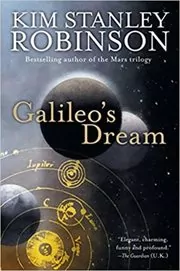
Galileo's Dream
by Kim Stanley Robinson
2009
Moving between seventeenth-century Italy and a utopian future society on Jupiter's moons, this novel follows Galileo as time travelers enlist him in their political struggles, weaving hard science, biography, and philosophical debates about memory, faith, and scientific change.
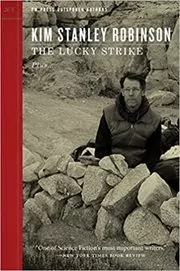
The Lucky Strike
by Kim Stanley Robinson
2009
This alternate-history novelette imagines what happens when the Enola Gay crashes before Hiroshima and a replacement bombardier must decide whether to drop the atomic bomb, turning one pilot's conscience into a turning point for global nuclear politics.

2312
by Kim Stanley Robinson
2012
In 2312, artist and terrarium designer Swan Er Hong teams with diplomat Fitz Wahram and investigator Jean Genette after a catastrophic attack on Mercury's mobile city, uncovering a conspiracy that spans the colonized solar system and the fate of a warming Earth.
Recommended by
1 person- Cory Doctorow recommended this book
Cory Doctorow
"My favorite KSR series." - Cory Doctorow
Cory Doctorow's recommendation of this book
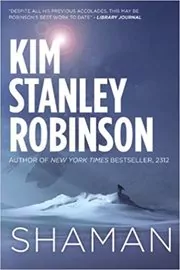
Shaman
by Kim Stanley Robinson
2013
Set in Ice Age Europe, the novel follows Loon, a young orphan apprenticed to irascible shaman Thorn, as he survives a harsh wilderness initiation, learns the stories and rituals of his people, and helps his small band endure a changing world.
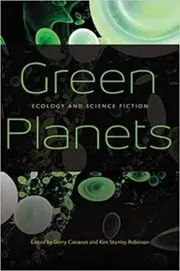
Green Planets
by Kim Stanley Robinson
2014
This critical anthology, coedited by Robinson, collects essays and interviews that read science fiction through ecology, examining how stories imagine extinction, utopia, environmental justice, and new ways of living with damaged planets.
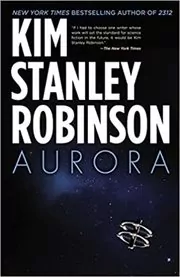
Aurora
by Kim Stanley Robinson
2015
A generation starship built as a spinning ring nears Tau Ceti after centuries in flight, but ecological systems are failing, and the ship's artificial intelligence gradually becomes a narrator, questioning whether interstellar colonization is possible without destroying its travelers.

Green Earth
by Kim Stanley Robinson
2015
This single-volume revision of the Science in the Capital trilogy compresses and updates Forty Signs of Rain, Fifty Degrees Below, and Sixty Days and Counting into one continuous near-future climate saga focused on Washington, D.C., politics and global environmental repair.
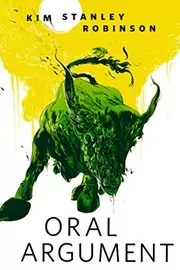
Oral Argument
by Kim Stanley Robinson
2015
Presented as a future Supreme Court transcript, this short story imagines a lawyer arguing that corporations should no longer hold patents on basic biological processes, sketching a playful but pointed picture of a greener legal and economic order.
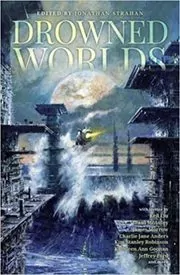
Drowned Worlds
by Kim Stanley Robinson
2016
This multi-author anthology of climate fiction gathers sixteen stories set after dramatic sea-level rise, including a contribution by Robinson, exploring how people adapt, grieve, and improvise new cultures in cities and coastlines transformed into watery landscapes.
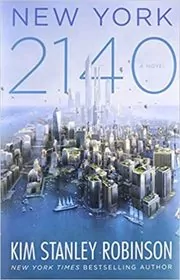
New York 2140
by Kim Stanley Robinson
2017
In a half-submerged New York turned 'SuperVenice,' an ensemble cast of co-op residents in the old Met Life tower, from quants and traders to activists and cops, navigate flooded streets, financial crashes, and bold schemes to reclaim the city.
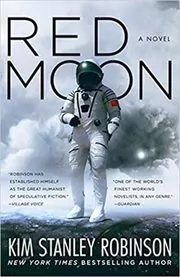
Red Moon
by Kim Stanley Robinson
2018
Set in 2047, this thriller follows quantum engineer Fred Fredericks and pregnant dissident Chan Qi as they flee across the Moon and China, caught between surveillance states, protest movements, and a power struggle over who will control lunar development.
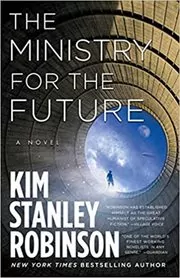
The Ministry for the Future
by Kim Stanley Robinson
2020
Beginning with a deadly Indian heat wave, this near-future novel tracks a new UN agency based in Zurich and traumatized survivor Frank May as they pursue carbon coins, legal reforms, and sometimes violent resistance in a desperate attempt to stabilize the climate.
Recommended by
3 people Ezra Klein recommended this book
Ezra Klein
"Near-future fiction about the world climate change is creating, and how it will change us, and we will change it." - Ezra Klein
Ezra Klein's recommendation of this book  Bill Gates recommended this book
Bill Gates
"Presents a stimulating and engaging story, spanning decades and continents." - Bill Gates
Bill Gates's recommendation of this book - Cory Doctorow recommended this book
Cory Doctorow
"An uncomfortable read. It's a brilliant book." - Cory Doctorow
Cory Doctorow's recommendation of this book

The High Sierra
by Kim Stanley Robinson
2022
Part memoir, part trail guide, this nonfiction book braids Robinson's decades of backpacking in California's Sierra Nevada with geology, history, and reflections on why time in high mountain country can reshape how we think about work, politics, and happiness.
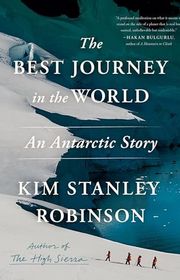
The Best Journey in the World
by Kim Stanley Robinson
2026
Robinson recounts his Antarctic travels alongside the disastrous winter journey chronicled by Apsley Cherry-Garrard. Following the earlier expedition’s traces, he reflects on exploration, companionship, and the fragile landscapes whose value lies beyond the achievement of reaching them.
Where to start with Kim Stanley Robinson
If you want big, idea-rich space adventures: Red Mars → Green Mars → Blue Mars → The Martians.
If you’re interested in climate politics on Earth: Forty Signs of Rain → Fifty Degrees Below → Sixty Days and Counting → The Ministry for the Future.
If you prefer standalones that sample his range: The Years of Rice and Salt → 2312 → Aurora.
If you like near-future California settings: The Wild Shore → The Gold Coast → Pacific Edge.
Kim Stanley Robinson sub-series and character series
Science In The Capital books in order
Explore this seriesScience In The Capital books in chronological order
Three Californias Triptych books in order
Explore this seriesThree Californias Triptych books in chronological order
Kim Stanley Robinson collections, short stories, and related book types
Short Story Collections
Mars Collections
Non-Fiction
Short Stories/Novellas
Standalone Kim Stanley Robinson books
Author bio
Kim Stanley Robinson was born in Waukegan, Illinois, in 1952 and grew up in Southern California, where aerospace jobs, freeways, and beach towns quietly shaped his sense of the future. As a kid he read widely and spent a lot of time outdoors, habits that echo through his later interest in landscapes and long walks.
In the 1970s he studied literature at the University of California, San Diego, then earned an MA in English from Boston University. He returned to UC San Diego for a PhD in English, writing a dissertation on the work of Philip K. Dick that was later published as The Novels of Philip K. Dick. That project set the tone for much of his career, treating science fiction as serious literature that can be read closely and argued with.
After graduate school Robinson taught writing at the University of California, Davis, and worked in bookstores, fitting his own fiction into the gaps around those jobs. In Davis he met environmental chemist Lisa Howland Nowell. They married in 1982 and eventually raised two sons, moving between California, Switzerland, and Washington, D.C., as her research career took them to new posts and as his novels began to find a wide readership.
By the mid 1980s Robinson had shifted into writing full time. His first published novel, The Wild Shore, opened the Three Californias triptych, three different futures for Orange County that range from post-nuclear ruin to car-choked sprawl to a hard-won ecological utopia. Even in these early books he focused on ordinary people, careful local detail, and the way politics and economics seep into daily life.
In the 1990s he turned outward to the solar system with the Mars trilogy, Red Mars, Green Mars, and Blue Mars. Across nearly two centuries of story, the books follow scientists, engineers, and organizers as they argue about whether and how to terraform Mars, how to win independence from Earth, and how to keep ecological limits in mind while building something new. The blend of meticulous research, big speculative leaps, and close attention to institutions helped make the trilogy a modern landmark.
Alongside the series work he kept publishing standalones that circle similar questions. The Years of Rice and Salt imagines a world where the Black Death wipes out most of Europe and history is carried instead by Asian and Islamic cultures, linked by characters who are reincarnated from age to age. Galileo's Dream braids a vivid portrait of Galileo’s life with time travel to the far future moons of Jupiter. Novels such as Icehenge, The Memory of Whiteness, Shaman, and Aurora explore deep time, art, consciousness, and the physical limits of human migration.
From the early 2000s onward, climate change moved to the center of Robinson’s work. The Science in the Capital trilogy, later revised and compressed as Green Earth, follows scientists and staffers in Washington, D.C., as floods, ice storms, and political gridlock push them toward new kinds of climate action. Later novels like Antarctica, New York 2140, Red Moon, 2312, and The Ministry for the Future imagine flooded cities, ambitious geoengineering schemes, new monetary tools, and social movements trying to steer a heating planet away from catastrophe.
Robinson still lives in Davis, California, in a planned, solar-oriented neighborhood that shares some DNA with the communities he writes about. When he is not at his desk he spends long stretches hiking in the Sierra Nevada, a landscape he celebrates directly in his nonfiction book The High Sierra: A Love Story.
Across all these books, certain traits stay constant. His stories are full of working scientists, co-ops, and committees rather than lone saviors, and he treats politics and ecology as things characters can argue about in detail. He has received major honors such as the Hugo, Nebula, Locus, and World Fantasy awards, yet the work remains grounded in the textures of real jobs and friendships, asking how people might build more sustainable and more decent futures together.



Edited by
Software engineer whose passion for tracking book recommendations from podcasts inspired the creation of MRB.
Lead investor at 3one4 Capital whose startup expertise and love for books helped shape MRB and its growth.
Comments
Did we miss something? Have feedback?
Help us improve this page by sharing your thoughts