
17 Best John Updike Books
The best John Updike books, ranked by expert source recommendations, with notes to help you choose the Rabbit novels, short stories, satire, criticism, and memoir.
Our take
John Updike writes closely about the textures of ordinary life: work, marriage, desire, belief, money, and the body. His fiction often follows people whose ability to notice the world exceeds their ability to understand or improve their own conduct. The pleasure of the prose can sit alongside considerable discomfort with his characters and their choices.
The Rabbit novels follow Harry Angstrom across several decades, beginning with Rabbit, Run. Couples concentrates on a suburban social circle, while In the Beauty of the Lilies expands into a multigenerational history of faith and entertainment. The Eastwick books introduce comic supernatural elements, and the Bech stories satirize literary life. Short-fiction readers can choose the broad The Early Stories, the focused Olinger Stories, or the linked marriage portrait in The Maples Stories. Hugging the Shore shows Updike as a critic; Self-Consciousness offers thematic memoir. Start with Rabbit, Run for the central sequence or Olinger Stories for a smaller commitment.
17 books · 9 sources · Last updated
As an Amazon Associate, we earn from qualifying purchases (at no extra cost to you).
Reading John Updike in order? See all John Updike books in order
How to choose from this list
Skip to the full rankingIf you want to begin the Rabbit novels: Rabbit, Run → Rabbit Redux → Rabbit Is Rich
If you want to finish the Rabbit sequence: Rabbit Is Rich → Rabbit at Rest
If you want short fiction: Olinger Stories → The Early Stories
If you want linked stories about a marriage: The Maples Stories
If you want supernatural satire: The Witches of Eastwick → The Widows of Eastwick
If you want nonfiction: Self-Consciousness → Hugging the Shore
The 17 books, ranked
Ranked by how many expert sources name each book. Ties go to the book more people recommend.
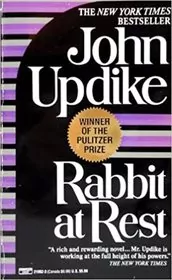
For readers following Rabbit into later life who want the series’ concerns with appetite and responsibility brought into focus. Its accumulation of family history gives the observations weight, though it is emotionally bleak and rewards reading the earlier volumes.
What it's about
Older now and troubled by his heart, Rabbit tries to coast on comfort, food, money, and habit. Instead he is pulled into family strain, old desires, and a final reckoning with time.
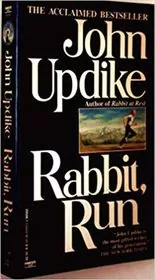
For readers who want to begin the Rabbit sequence and encounter Updike’s close observation of ordinary life. The restless perspective makes desire and evasion immediate, though spending time with a self-absorbed protagonist can be frustrating.
What it's about
Harry Angstrom, a onetime high school basketball star, impulsively abandons his wife and child and keeps trying to outrun responsibility. What follows is a restless, intimate portrait of desire, guilt, and a man who cannot stay put.
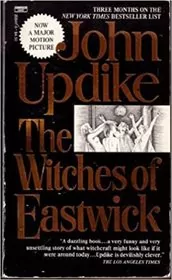
For readers who want comic fantasy rather than a strictly realistic domestic novel. Its supernatural satire gives Updike’s concerns with desire a different form, though the sexual politics and cruel humor can be uncomfortable.
What it's about
Three divorced women in a Rhode Island town discover their witchy powers just as the devilish Darryl Van Horne arrives. Updike mixes satire, sex, gossip, and dark magic with real bite.
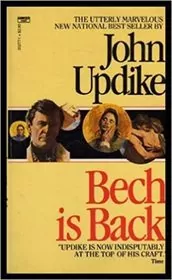
For readers who enjoyed Bech’s earlier literary misadventures and want another set of linked episodes. The satire of celebrity and cultural authority provides continuity, though its small professional world is less expansive than the Rabbit sequence.
What it's about
Henry Bech returns older, no steadier, and still caught between literary fame and private drift. These linked stories are funny about prizes, readings, travel, and the weary business of being a writer.
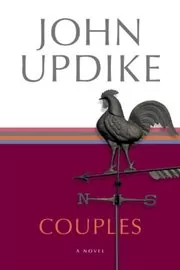
Couples
For readers who want a sustained examination of suburban intimacy and social performance. The close observation of a whole circle distinguishes it from the Rabbit novels, though the repetitive affairs and sexual perspective can become wearying.
What it's about
In the Massachusetts town of Tarbox, a circle of suburban couples drift through partner-swapping, gossip, and emotional fallout. Updike turns one community's sex lives into a broader story about the 1960s and its moral confusion.
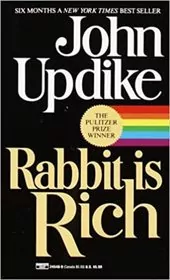
For readers interested in how prosperity changes a familiar character without settling his discontent. The precise attention to money and family makes it socially revealing, though much of its emotional force builds on the preceding Rabbit novels.
What it's about
Rabbit has money now, running a Toyota dealership and living comfortably in Brewer, but prosperity brings no lasting peace. Family tension, especially around his son Nelson, keeps cracking the good life open.
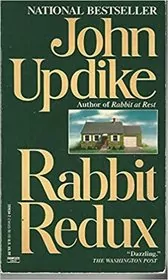
For readers continuing Rabbit’s life who want domestic fiction confronted by the upheavals of the 1960s. Its abrasive political tensions distinguish it from the first novel, though the racial language and confrontations can make it an uncomfortable experience.
What it's about
Ten years after *Rabbit, Run*, Harry Angstrom is older, heavier, and living through the upheaval of the late 1960s. When his home fills with unexpected guests, his shaky idea of order starts to come apart.
For readers who enjoy linked stories about literary reputations and the business of being a writer. Bech offers a lighter comic alternative to Rabbit, though the literary-world references and caricatures assume interest in a fairly narrow social milieu.
What it's about
Henry Bech, a blocked Jewish novelist from Manhattan, stumbles through literary celebrity, foreign travel, and private panic. These linked stories are comic, rueful, and very good on the absurdity of being a public writer.
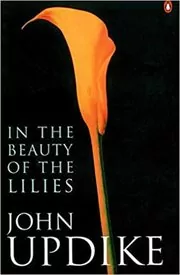
In the Beauty of the Lilies
For readers who want a multigenerational American novel rather than a closely bounded domestic story. Its connections among faith, entertainment, and aspiration create a broad historical perspective, though the shifting generations make it less immediately intimate.
What it's about
This sweeping multigenerational novel begins with a minister's loss of faith and follows an American family through the rise of the movies and the century they helped shape. It is one of Updike's broadest historical canvases.
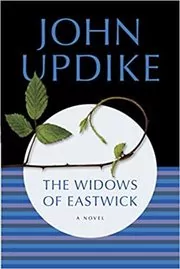
For readers returning to Eastwick who want its fantasy reframed through aging and memory. The later-life perspective gives the reunion a different emotional texture, though the reflective pace is quieter than the earlier novel’s comic energy.
What it's about
Thirty years after their wild Eastwick days, Alexandra, Jane, and Sukie are older, widowed, and drawn back into one another's orbit. The sequel keeps the wit and witchcraft, but adds age, memory, and regret.
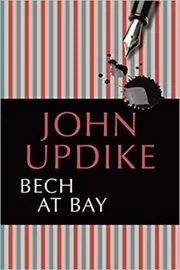
For readers already interested in Henry Bech who want literary satire viewed through aging and reputation. Its episodic form keeps the comedy nimble, though the exaggerated situations can feel broader and less intimate than Updike’s domestic stories.
What it's about
Henry Bech enters late life still half-surprised by fame, sex, domesticity, and his own continued existence. The linked episodes are comic, melancholy, and very good on aging in public.
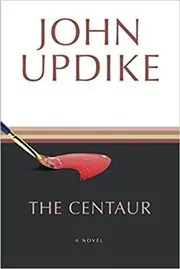
The Centaur
For readers who enjoy father-and-son stories with a formal experiment running beneath them. The mythological parallels enlarge ordinary experience, though the shifts between everyday realism and classical myth can initially be disorienting.
What it's about
A weary Pennsylvania schoolteacher and his teenage son move through a few winter days that echo the myth of Chiron and Prometheus. It is a tender, strange novel about fathers, sons, sacrifice, and ordinary heroism.
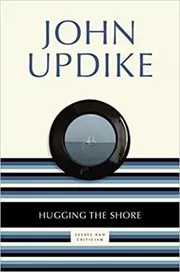
Hugging the Shore
For readers interested in Updike as a critic and an attentive reader of other writers. The range offers many entry points, though the substantial collection and occasional references reward browsing around familiar authors.
What it's about
A large gathering of essays and reviews on writers, books, art, and culture, mostly from Updike's years as a critic. It is wide-ranging, readable, and full of alert judgments.
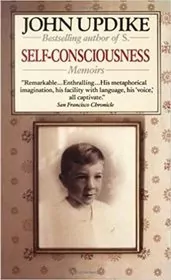
Self-Consciousness
For readers who want Updike’s personal reflections without a conventional cradle-to-career autobiography. The thematic essays are direct about bodily discomfort and self-awareness, though their selective structure leaves gaps for readers seeking a complete life story.
What it's about
In a set of memoir essays, Updike writes plainly about psoriasis, stuttering, family, mortality, and the odd burden of living inside your own body. It is one of his most direct and personal books.
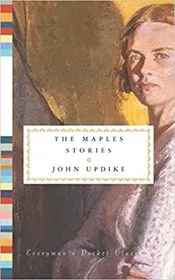
For readers who want linked domestic stories with a sustained emotional thread. Following one couple over time gives the short form unusual continuity, though the focus on marital strain and separation can feel deliberately narrow.
What it's about
Gathered together, the Richard and Joan Maple stories read like a broken marriage told in snapshots. The result is intimate, sad, and unusually sharp about what time does to love.
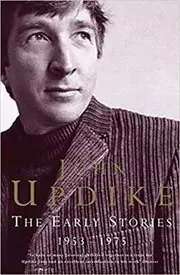
The Early Stories
For readers who want a substantial survey of Updike’s early short fiction. The breadth reveals recurring settings and subjects more fully than a small selection, though the size makes it better for gradual reading than a quick introduction.
What it's about
A major gathering of Updike's short fiction from 1953 to 1975, covering the years when his style was taking shape. It is the best way to see how broad and consistent his early story work was.
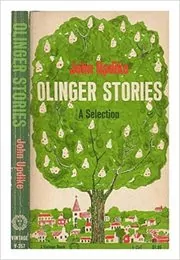
Olinger Stories
For readers who want a compact, focused selection of Updike’s early autobiographical fiction. The shared setting gives the stories continuity, though much of the material overlaps with the broader gathering in The Early Stories.
What it's about
These linked stories return to Olinger, Updike's fictional version of small-town Pennsylvania. They follow boys and young men through family life, sexual awakening, religious doubt, and the ache of wanting a larger world.
Sources
- 1
Recommended Reading
blogs.iwu.edu
- 2
The 10 Best John Updike Books
publishersweekly.com
- 3
John Updike’s best books – Ranked!
theguardian.com
- 4
The essential Updike
theguardian.com
- 5
The greatest books written by John Updike
thegreatestbooks.org
- 6
John Updike Books
goodreads.com
- 7
John Updike
fantasticfiction.com
- 8
Books by John Updike and Complete Book Reviews
publishersweekly.com
- 9
10 Best John Updike Books (2025) - Are They Worth Reading?
ereads.com




Edited by
Software engineer whose passion for tracking book recommendations from podcasts inspired the creation of MRB.
Lead investor at 3one4 Capital whose startup expertise and love for books helped shape MRB and its growth.
Comments
Spotted a missing book, a wrong order or a mistake? Tell us and we'll fix this page.
We're a reading guide, not the author or publisher, so we can't send books or pass on messages.