
11 Best Isaac Asimov Books
The best Isaac Asimov books, ranked by how many expert sources recommend each, with notes on robot mysteries, Foundation, standalones, and where to begin.
Our take
Isaac Asimov often builds fiction around a question: what happens when a rule, prediction, or apparently reliable system meets an exception? Robots, time travel, and galactic politics become settings for arguments and puzzles. The prose is direct and much of the action unfolds through conversation, so the strongest attraction is usually the working out of ideas rather than lush description or intimate character development.
You can begin without committing to a long reading order. I, Robot offers linked short stories, while The Caves of Steel combines a detective investigation with questions about human and robotic society; continue that partnership in The Naked Sun. For the original Foundation sequence, read Foundation, Foundation and Empire, then Second Foundation. The End of Eternity and The Gods Themselves provide self-contained alternatives. Nightfall is the expanded novel written with Robert Silverberg, distinct from the earlier short story. Start with I, Robot for a short sample or The Caves of Steel for a continuous narrative.
11 books · 8 sources · Last updated
As an Amazon Associate, we earn from qualifying purchases (at no extra cost to you).
Reading Isaac Asimov in order? See all Isaac Asimov books in order
How to choose from this list
Skip to the full rankingIf you want to sample his short fiction: I, Robot
If you enjoy detective stories: The Caves of Steel → The Naked Sun
If you want the original Foundation sequence: Foundation → Foundation and Empire → Second Foundation
If you want a self-contained time-travel story: The End of Eternity
If you want an unusual alien perspective: The Gods Themselves
If you want a society facing cosmic upheaval: Nightfall
The 11 books, ranked
Ranked by how many expert sources name each book. Ties go to the book more people recommend.
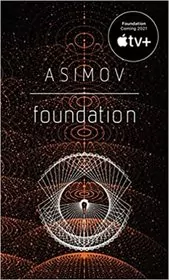
For readers interested in institutions, historical change, and strategy across generations. Its succession of crises gives ideas unusual scale, though the shifting cast and conversation-led solutions offer less emotional continuity than a conventional character-centered novel.
What it's about
Hari Seldon's science of psychohistory predicts the Galactic Empire's collapse. He establishes a Foundation on distant Terminus to preserve knowledge and shorten the coming dark age, leaving successive generations to face crises involving religion, trade and political power.
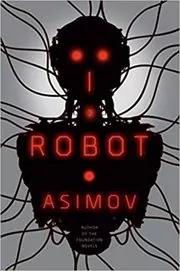
For readers who want compact logical puzzles about rules, responsibility, and machine behavior. The linked-story format makes it easy to sample Asimov's ideas, though the mid-century assumptions and lightly drawn characters can feel dated.
What it's about
Robopsychologist Susan Calvin recalls cases involving machines governed by the Three Laws of Robotics. These linked stories follow engineers and robots through apparent malfunctions, conflicting instructions and ethical puzzles as robotic intelligence becomes increasingly important to human society.
Also recommended by
3 people Lex Fridman recommended this book
Lex Fridman
"[My] previous favorite [book by this author]." - Lex Fridman
Lex Fridman's recommendation of this book  Shah Rukh Khan recommended this book
Shah Rukh Khan
"Very inspiring & relevant." - Shah Rukh Khan
Shah Rukh Khan's recommendation of this book  Sahil Lavingia recommended this book
Sahil Lavingia
Sahil Lavingia recommended this book on Notion.
Sahil Lavingia's recommendation of this book
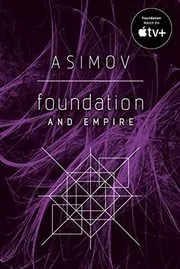
For readers continuing Foundation who want to see its central assumptions come under greater pressure. The linked episodes introduce more uncertainty into the historical scheme, though the effect depends on knowing the first book and accepting another shift in characters.
What it's about
The Foundation faces an ambitious general serving the declining Galactic Empire, then a mysterious conqueror called the Mule. As military power and an unpredictable individual threaten Seldon's plan, its defenders struggle to understand dangers psychohistory may not anticipate.
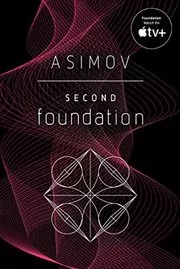
For readers ready to complete the original Foundation trilogy and reconsider who shapes its history. Its layered uncertainty rewards attention to motives and clues, though it relies heavily on the preceding books and on extended explanatory reversals.
What it's about
The Mule searches for the hidden Second Foundation, hoping to eliminate the force that might oppose him. Later, the First Foundation begins its own hunt, turning the fate of Seldon's plan into a contest of suspicion and mental power.
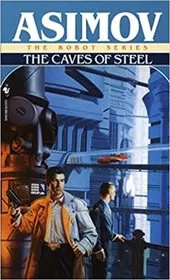
For readers who enjoy detective fiction and want a focused entry into Asimov's robot novels. The investigative partnership gives the ideas a clear narrative structure, though the explanation-heavy dialogue and dated social assumptions remain prominent.
What it's about
On an overcrowded Earth, detective Elijah Baley investigates the murder of a prominent Spacer scientist. Assigned the humanoid robot R. Daneel Olivaw as his partner, he must navigate hostility toward robots and tensions between Earthpeople and the Spacers.
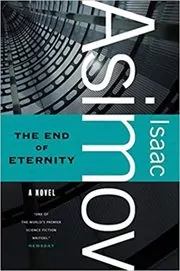
The End of Eternity
For readers who want a self-contained time-travel novel rather than a long series commitment. Its tension between planned safety and human possibility gives the puzzle moral weight, though the romance and gender roles reflect the period in which it was written.
What it's about
Andrew Harlan belongs to Eternity, an organization whose members alter history to manage humanity's future. When he falls in love, his determination to preserve that relationship puts him at odds with the system he has served.
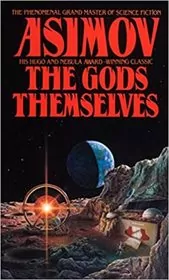
For readers who want a self-contained novel with an unusually imaginative treatment of alien life. Its changing perspectives broaden the scientific problem, though the segmented structure and explanatory conversations can interrupt narrative momentum.
What it's about
An exchange of matter with a parallel universe appears to offer Earth unlimited clean energy. A few people begin to suspect the process could have catastrophic consequences, confronting resistance from those invested in its success.
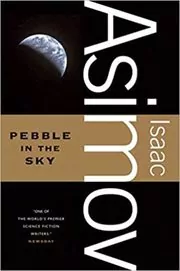
For readers who want an early standalone adventure about prejudice and political power in a galactic setting. Its outsider viewpoint makes the future accessible, though the pulp plotting and simplified social divisions are less subtle than Asimov's later work.
What it's about
A laboratory accident sends retired tailor Joseph Schwartz into Earth's distant future. Stranded on a radioactive world despised by the Galactic Empire, he becomes entangled in political tensions and a dangerous struggle over humanity's ancient home.
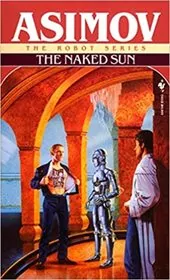
For readers who enjoyed the investigative partnership in The Caves of Steel and want a stranger social setting. The contrast between human isolation and robotic dependence sharpens the mystery, though it works better after the first Baley novel.
What it's about
Elijah Baley and his robot partner R. Daneel Olivaw investigate a murder on Solaria, where people avoid physical contact and rely on robots. The killing challenges the colony's social customs and assumptions about what its machines can do.
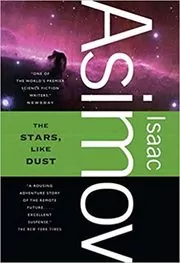
For readers who want a compact early space adventure centered on resistance and intrigue. Its brisk movement makes it easy to approach, though the conventional heroics and plot contrivances offer less conceptual depth than the robot mysteries or Foundation books.
What it's about
After learning that the Tyranni have killed his father, young Biron Farrill finds his own life threatened. His flight from Earth draws him into the politics of conquered planets and a search for resistance to their rulers.
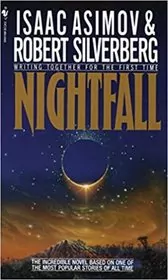
Nightfall
For readers drawn to a society confronting something outside its entire experience. The expanded novel gives the central premise more social context, though the coauthored treatment with Robert Silverberg is more extended than Asimov's original short story.
What it's about
On Kalgash, six suns keep the world in daylight until a rare alignment threatens darkness for the first time in two thousand years. Scientists and religious believers confront signs of a catastrophe their society scarcely understands.
Sources
- 1
The Best Isaac Asimov Books
fivebooks.com
- 2
Isaac Asimov reading guide
sfvr.io
- 3
7 of the Best Isaac Asimov Books Ranked
bookanalysis.com
- 4
11 Iconic Isaac Asimov Books That Are Necessary Sci-Fi Reading
theportalist.com
- 5
10 Best Isaac Asimov Books (2025)
ereads.com
- 6
Books by Isaac Asimov
goodreads.com
- 7
Rank the 5 best Asimov books
reddit.com
- 8
What of Asimov's books should I read first?
reddit.com
Edited by
Software engineer whose passion for tracking book recommendations from podcasts inspired the creation of MRB.
Lead investor at 3one4 Capital whose startup expertise and love for books helped shape MRB and its growth.
Comments
Spotted a missing book, a wrong order or a mistake? Tell us and we'll fix this page.
We're a reading guide, not the author or publisher, so we can't send books or pass on messages.