
10 Best George Orwell Books
The best George Orwell books, ranked by how many expert sources recommend each one, with notes to help you choose political novels, reportage, and essays.
Our take
George Orwell’s books look at power from several directions: the systems that control public life, the money that shapes private choices, and the gap between political language and lived experience. The famous novels are only one way into his writing. His reportage and earlier fiction give poverty, work, class, and imperial rule a more immediate setting.
Animal Farm offers a short political fable, while 1984 builds a much darker imagined society. For Orwell as an observer, Down and Out in Paris and London follows precarious work and hunger, and The Road to Wigan Pier combines social investigation with political argument. Homage to Catalonia brings personal experience into conflict with party loyalties. The earlier novels take a quieter route through ordinary ambitions, compromise, and disappointment.
Start with Animal Farm for a brief introduction, or Down and Out in Paris and London if you prefer nonfiction. Then choose between the political novels and the experiences that helped shape their concerns.
10 books · 8 sources · Last updated
As an Amazon Associate, we earn from qualifying purchases (at no extra cost to you).
Reading George Orwell in order? See all George Orwell books in order
How to choose from this list
Skip to the full rankingIf you want a short political novel: Animal Farm → 1984
If you want reportage about poverty: Down and Out in Paris and London → The Road to Wigan Pier
If you want war memoir and political conflict: Homage to Catalonia
If you want fiction about class and money: Keep the Aspidistra Flying → Coming Up for Air
If you want to examine colonial society: Burmese Days
If you want a short essay collection: Why I Write
The 10 books, ranked
Ranked by how many expert sources name each book. Ties go to the book more people recommend.

1984
For readers interested in how language, fear, and surveillance sustain political control. Its imagined society gives the argument a different force from the reportage, though the atmosphere is bleak and the violence can be disturbing.
What it's about
In a future dictatorship where Big Brother watches everyone, Winston Smith rewrites history for the Party but quietly begins to doubt the system. His search for truth and love becomes a struggle against torture, surveillance, and the erasure of reality.
Also recommended by
14 people Tristan Harris recommended this book
Tristan Harris
"[The author]'s dark vision." - Tristan Harris
Tristan Harris's recommendation of this book  Jordan Peterson recommended this book
Jordan Peterson
Recommended on Jordan Peterson's website.
Jordan Peterson's recommendation of this book  J. Cole recommended this book
J. Cole
J. Cole mentioned reading this book on The Fayetteville Observer.
J. Cole's recommendation of this book  Emma Watson recommended this book
Emma Watson
On the "books read" section of Emma Watson's GoodReads profile.
Emma Watson's recommendation of this book  Noam Chomsky recommended this book
Noam Chomsky
On the "Top 100 Books Referenced by Noam Chomsky" list.
Noam Chomsky's recommendation of this book  Richard Branson recommended this book
Richard Branson
Richard Branson recommended this book on his "70 must-read books" blog post.
Richard Branson's recommendation of this book +8
More recommendations
- Matt Mullenweg
Matt Mullenweg mentioned this book on "The Tim Ferriss Show" podcast.
- Christopher Hitchens
"We were all expected to read Animal Farm and [this book], which had been placed on the syllabus as part of the curriculum of the Cold War." - Christopher Hitchens
- Sahil Lavingia
Sahil Lavingia recommended this book on Notion.
- Jenn Im
"Highly recommend." - Jenn Im
- Winston Churchill
One of Winston Churchill's favorite books.
- Diane Rehm
"Examines the consequences of totalitarianism, mass surveillance and government repression." - Diane Rehm
- Anna Akana
Anna Akana recommended this book on Twitter.
- Brad Delong
Brad Delong recommended this book in his website.
- Matt Mullenweg
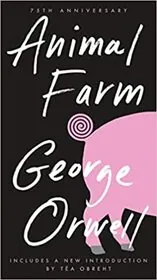
Animal Farm
For readers wanting a short introduction to Orwell’s political fiction. Its clear fable makes the corruption of revolutionary ideals easy to follow, though some historical references become richer with knowledge of the Russian Revolution.
What it's about
On a small farm, the animals overthrow their human master and promise equality, only to see new rulers rise in their place. This short, biting fable exposes how revolutions can be twisted into tyranny through fear, slogans, and lies.
Also recommended by
8 people- Jordan Peterson recommended this book
Jordan Peterson
Recommended on Jordan Peterson's website.
Jordan Peterson's recommendation of this book - J. Cole recommended this book
J. Cole
J. Cole mentioned reading this book on The Fayetteville Observer.
J. Cole's recommendation of this book  Whitney Cummings recommended this book
Whitney Cummings
Whitney Cummings mentioned this book on "The Tim Ferriss Show" podcast.
Whitney Cummings's recommendation of this book  Daniel Pink recommended this book
Daniel Pink
"I think that [this book] should be in every organizational behavior class in an MBA program." - Daniel Pink
Daniel Pink's recommendation of this book  Vlad Tenev recommended this book
Vlad Tenev
"When I was in sixth grade I remember being very upset by the ending of [this book]." - Vlad Tenev
Vlad Tenev's recommendation of this book  Christopher Hitchens recommended this book
Christopher Hitchens
"There is a timeless, even transcendent, quality to this little story." - Christopher Hitchens
Christopher Hitchens's recommendation of this book +2
More recommendations
- Sahil Lavingia
Sahil Lavingia recommended this book on Notion.
- Lex Fridman
Lex Fridman mentioned this book on Instagram.
- Sahil Lavingia
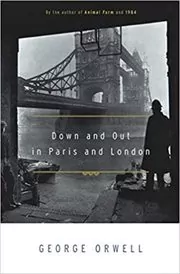
Down and Out in Paris and London
For readers who want Orwell observing work, hunger, and ordinary routines at close range. Its concrete detail makes an approachable entry into the nonfiction, though the personal perspective is neither a comprehensive survey nor dispassionate social research.
What it's about
Drawing on his own experiences, Orwell describes working as a kitchen hand in Paris and drifting through hostels and streets in London. The book offers clear eyed reporting on poverty, casual work, and the small routines that keep people going.
Also recommended by
1 person Alice Walker recommended this book
Alice Walker
"Hilarious, with a humor quite unexpected in the otherwise seemingly somber Brother Blair." - Alice Walker
Alice Walker's recommendation of this book
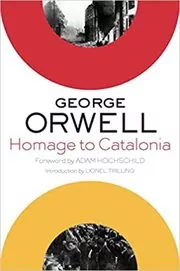
Homage to Catalonia
For readers interested in how direct experience complicates political loyalties. Its combination of soldiering and disputes within the left is unusually personal, though the factions and political explanations can require patience and historical context.
What it's about
Orwell's personal account of fighting with a militia in the Spanish Civil War, blending front line detail, political argument, and growing disillusion with party politics. It is both war memoir and a sharp study of propaganda and betrayal.
Also recommended by
4 people Ben Shapiro recommended this book
Ben Shapiro
"A lot of people have read Orwell's 1984, he actually wrote a book that's better. It's [this book]." - Ben Shapiro
Ben Shapiro's recommendation of this book - Christopher Hitchens recommended this book
Christopher Hitchens
"I was fairly soon immersed in [this book]." - Christopher Hitchens
Christopher Hitchens's recommendation of this book  Marc Andreessen recommended this book
Marc Andreessen
Marc Andreessen recommended this book on Twitter.
Marc Andreessen's recommendation of this book  Brad Delong recommended this book
Brad Delong
Brad Delong recommended this book in his website.
Brad Delong's recommendation of this book
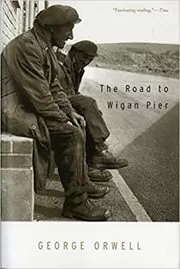
The Road to Wigan Pier
For readers who want social observation joined to an openly argued political position. Its contrast between northern working lives and Orwell’s self-examination is distinctive, though the shift from reportage to polemic can feel abrupt.
What it's about
Part travelogue, part social investigation, this book follows Orwell through boarding houses, mines, and streets in northern England. He describes working class life in vivid detail and wrestles openly with his own politics and the meaning of socialism.
Also recommended by
3 people- Jordan Peterson recommended this book
Jordan Peterson
Recommended on Jordan Peterson's website.
Jordan Peterson's recommendation of this book  David Heinemeier Hansson recommended this book
David Heinemeier Hansson
"It’s amazing how much of the abusive ideology revealed in his account of the miners is still present in today’s gig economy." - DHH
David Heinemeier Hansson's recommendation of this book - Brad Delong recommended this book
Brad Delong
Brad Delong recommended this book in his website.
Brad Delong's recommendation of this book
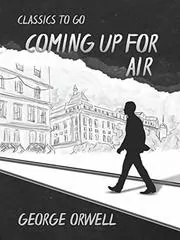
Coming Up for Air
For readers drawn to memory, ordinary English life, and anxiety about approaching war. Its reflective, conversational voice differs from the famous political novels, though its middle-aged narrator and nostalgia make for a slower, less eventful read.
What it's about
Middle aged salesman George Bowling flees London for the village of his childhood, hoping to recapture a vanished England. What he finds instead is a country on the brink of war and a painful gap between memory and reality.
Also recommended by
1 person- Christopher Hitchens recommended this book
Christopher Hitchens
"In these pages, I found some specimens of exactly the lower-middle-class family that was familiar to me from life." - Christopher Hitchens
Christopher Hitchens's recommendation of this book
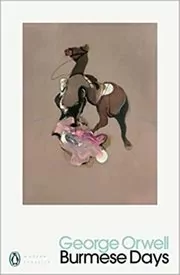
Burmese Days
For readers interested in the social habits and compromises that sustain colonial rule. Its confined expatriate world gives the critique a sharp focus, though the racism and cruelty depicted make the atmosphere consistently uncomfortable.
What it's about
Set in a British outpost in colonial Burma, this novel follows timber merchant John Flory as he navigates racism, corruption, and a fraught romance. The story exposes the pettiness and cruelty of imperial rule in a distant, uneasy community.
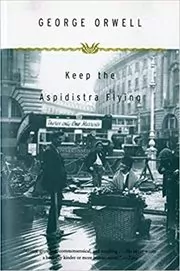
Keep the Aspidistra Flying
For readers interested in money, status, and the frustrations of trying to live by principle. Its small-scale social comedy offers another side of Orwell, though the central character’s repeated bitterness can make him difficult company.
What it's about
Gordon Comstock abandons a promising job in advertising to reject the worship of money, then discovers how poverty can grind people down. This novel follows his stubborn revolt against middle class respectability and the cost it exacts on love and self respect.
Also recommended by
1 person- Christopher Hitchens recommended this book
Christopher Hitchens
"In these pages, I found some specimens of exactly the lower-middle-class family that was familiar to me from life." - Christopher Hitchens
Christopher Hitchens's recommendation of this book
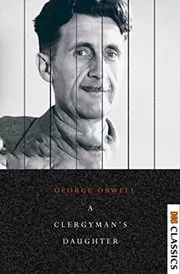
A Clergyman's Daughter
For readers exploring Orwell beyond his best-known work, especially his interest in duty and respectability. Its experimental shifts distinguish it from the later novels, though its uneven structure makes it a less reliable first introduction.
What it's about
Dorothy, the dutiful daughter of a penny pinching clergyman, suddenly loses her memory and is pitched into a series of new lives. The novel moves through hop fields, city slums, and classrooms to explore faith, respectability, and the limits of obedience.
Also recommended by
1 person- Christopher Hitchens recommended this book
Christopher Hitchens
"In these pages, I found some specimens of exactly the lower-middle-class family that was familiar to me from life." - Christopher Hitchens
Christopher Hitchens's recommendation of this book
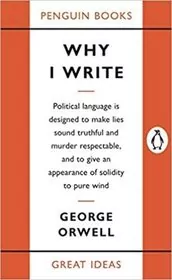
Why I Write
For readers wanting Orwell’s political and literary concerns in shorter pieces. This compact collection makes an accessible companion to the novels, though it offers only a small selection and overlaps with broader editions of his essays.
What it's about
Centred on the autobiographical essay Why I Write, this book adds key pieces on politics, language, and literary criticism. Orwell explains his motives for writing and argues that prose should aim for honesty rather than clever obscurity.
Sources
- 1
The Best George Orwell Books
fivebooks.com
- 2
Where to start reading George Orwell
penguin.co.uk
- 3
9 of George Orwell's Books Ranked in Order
bookanalysis.com
- 4
10 of the Best Works by George Orwell
interestingliterature.com
- 5
11 Best George Orwell Books You Have To Read
alonewithbooks.com
- 6
From Burma to Big Brother: George Orwell’s best books – ranked!
theguardian.com
- 7
George Orwell Books
goodreads.com
- 8
Best Orwell books other than 1984 and Animal Farm?
reddit.com




Edited by
Software engineer whose passion for tracking book recommendations from podcasts inspired the creation of MRB.
Lead investor at 3one4 Capital whose startup expertise and love for books helped shape MRB and its growth.
Comments
Spotted a missing book, a wrong order or a mistake? Tell us and we'll fix this page.
We're a reading guide, not the author or publisher, so we can't send books or pass on messages.