
23 Best Dystopian Books
The best dystopian books, ranked by how many expert sources recommend each one, with notes on political classics, literary fiction and young adult adventures.
Our take
Dystopian fiction imagines societies shaped by coercion, inequality or systems that make ordinary life frightening. Some books focus on surveillance and government, while others examine reproductive control, corporate power or the social consequences of catastrophe. The range here also includes stories set after collapse, where the question becomes what people preserve when institutions disappear. Tone matters as much as premise: a swift young adult adventure feels very different from a quiet literary novel or an unrelentingly bleak survival story.
1984, Brave New World and We offer different models of social control. The Handmaid's Tale makes oppression intimate, while The Testaments returns to the same regime through several perspectives. The Hunger Games provides a plot-driven entry point, and Noughts & Crosses connects structural injustice with a relationship story. For slower unease, try Never Let Me Go or The Memory Police. Station Eleven emphasizes memory and art after catastrophe, while The Road takes a much harsher route through survival. Start with the kind of pressure you want to examine and the level of intensity you're prepared to read.
23 books · 8 sources · Last updated
As an Amazon Associate, we earn from qualifying purchases (at no extra cost to you).
How to choose from this list
Skip to the full rankingIf you want political classics: We → 1984 → Brave New World
If you want an accessible shorter entry: Animal Farm → Fahrenheit 451
If you want reproductive control examined closely: The Handmaid's Tale → The Testaments
If you prefer young adult momentum: The Hunger Games → Noughts & Crosses
If you want quiet literary unease: Never Let Me Go → The Memory Police
If you want life after catastrophe: Station Eleven → The Road
The 23 books, ranked
Ranked by how many expert sources name each book. Ties go to the book more people recommend.

1984
For readers who want a concentrated political nightmare about surveillance, language and manufactured truth. Orwell makes the pressure on private thought unusually direct, though the relentless coercion and torture leave little room for relief or hopeful escape.
What it's about
In a future dictatorship where Big Brother watches everyone, Winston Smith rewrites history for the Party but quietly begins to doubt the system. His search for truth and love becomes a struggle against torture, surveillance, and the erasure of reality.
Also recommended by
14 people Tristan Harris recommended this book
Tristan Harris
"[The author]'s dark vision." - Tristan Harris
Tristan Harris's recommendation of this book  Jordan Peterson recommended this book
Jordan Peterson
Recommended on Jordan Peterson's website.
Jordan Peterson's recommendation of this book  J. Cole recommended this book
J. Cole
J. Cole mentioned reading this book on The Fayetteville Observer.
J. Cole's recommendation of this book  Emma Watson recommended this book
Emma Watson
On the "books read" section of Emma Watson's GoodReads profile.
Emma Watson's recommendation of this book  Noam Chomsky recommended this book
Noam Chomsky
On the "Top 100 Books Referenced by Noam Chomsky" list.
Noam Chomsky's recommendation of this book  Richard Branson recommended this book
Richard Branson
Richard Branson recommended this book on his "70 must-read books" blog post.
Richard Branson's recommendation of this book +8
More recommendations
- Matt Mullenweg
Matt Mullenweg mentioned this book on "The Tim Ferriss Show" podcast.
- Christopher Hitchens
"We were all expected to read Animal Farm and [this book], which had been placed on the syllabus as part of the curriculum of the Cold War." - Christopher Hitchens
- Sahil Lavingia
Sahil Lavingia recommended this book on Notion.
- Jenn Im
"Highly recommend." - Jenn Im
- Winston Churchill
One of Winston Churchill's favorite books.
- Diane Rehm
"Examines the consequences of totalitarianism, mass surveillance and government repression." - Diane Rehm
- Anna Akana
Anna Akana recommended this book on Twitter.
- Brad Delong
Brad Delong recommended this book in his website.
- Matt Mullenweg
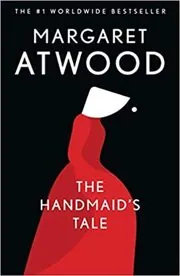
For readers who want authoritarian power examined through one woman's constrained daily experience. Offred's voice makes reproductive control intimate, though the fragmented recollections and atmosphere of sexual coercion make this a disturbing, deliberately claustrophobic read.
What it's about
In the theocratic Republic of Gilead, Offred is forced into servitude as a Handmaid, valued only for her fertility. Under constant surveillance, she clings to memories of her old life and tests the limits of quiet resistance.
Also recommended by
3 people- Emma Watson recommended this book
Emma Watson
On the "books read" section of Emma Watson's GoodReads profile.
Emma Watson's recommendation of this book  Daniel Pink recommended this book
Daniel Pink
"I loved [this book]." - Daniel Pink
Daniel Pink's recommendation of this book  Jenn Im recommended this book
Jenn Im
"I'll like you five times more if you have read this book." - Jenn Im
Jenn Im's recommendation of this book
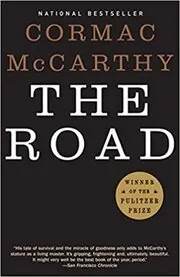
The Road
For readers who want an intimate survival story rather than a detailed account of government. The father-son bond carries the moral questions through a ruined landscape, though the violence, hunger and stripped-down prose make it exceptionally bleak.
What it's about
In a burned, ash-covered America, a father and his young son push a grocery cart south along ruined highways, scavenging for food and trying to avoid roving bands of cannibals while clinging to the fragile hope that they still "carry the fire."
Also recommended by
8 people Jocko Willink recommended this book
Jocko Willink
Jocko Willink covered this book in "Jocko Podcast" Ep. 97
Jocko Willink's recommendation of this book  Oprah Winfrey recommended this book
Oprah Winfrey
"Unlike any book I have chosen." - Oprah Winfrey
Oprah Winfrey's recommendation of this book  Aubrey Marcus recommended this book
Aubrey Marcus
"A bleak post-apocalyptic survival story about a father and his son." - Aubrey Marcus
Aubrey Marcus's recommendation of this book  Charlize Theron recommended this book
Charlize Theron
"[This book] changed my life." - Charlize Theron
Charlize Theron's recommendation of this book  Joel McHale recommended this book
Joel McHale
"No novel has ever captured the love a parent has for his child better than this book." - Joel McHale
Joel McHale's recommendation of this book  Sam Hinkie recommended this book
Sam Hinkie
"Unrepayable." - Sam Hinkie
Sam Hinkie's recommendation of this book +2
More recommendations
- Lex Fridman
Lex Fridman mentioned this book on Instagram.
- Ryan Holiday
"Read it when you have kids. When I finished this book, [I] walked into my son's room when he was asleep, sat on the floor, and I just wept." - Ryan Holiday
- Lex Fridman
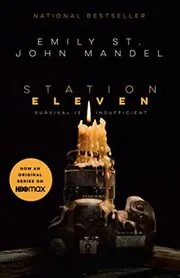
Station Eleven
For readers who want art, memory and human connection to matter after catastrophe. The shifting timelines build a network of lives rather than one survival mission, though the reflective structure offers less continuous action than an adventure-led dystopia.
What it's about
During a Toronto performance of King Lear, actor Arthur Leander dies just as a flu pandemic begins. Years later, Kirsten travels the ruined Great Lakes with the Traveling Symphony and faces a dangerous prophet while old connections surface.
Also recommended by
4 people Kathryn Minshew recommended this book
Kathryn Minshew
Most Recommended Books reached out to Kathryn Minshew directly.
Kathryn Minshew's recommendation of this book  Tyler Cowen recommended this book
Tyler Cowen
"[The author's] biggest-selling book to date." - Tyler Cowen
Tyler Cowen's recommendation of this book  George R. R. Martin recommended this book
George R. R. Martin
"Really blew me away." - George R. R. Martin
George R. R. Martin's recommendation of this book  Tim Urban recommended this book
Tim Urban
"Should be required reading to remind everyone that we all live in an incredible magical utopic civilization." - Tim Urban
Tim Urban's recommendation of this book
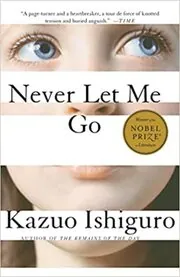
Never Let Me Go
For readers who prefer quiet unease and emotional restraint to overt rebellion. Ishiguro reveals the social order through memory, friendship and limited expectations, though the gradual pace and characters' constrained responses can frustrate readers seeking a resistance thriller.
What it's about
At an isolated English boarding school, three friends grow up believing they are special, only to discover they were created to donate their organs. Kathy’s calm memories slowly reveal a haunting story of love, friendship, and the cost of being human.
Also recommended by
1 person Jack Edwards recommended this book
Jack Edwards
"Has some great twists and turns." - Jack Edwards
Jack Edwards's recommendation of this book
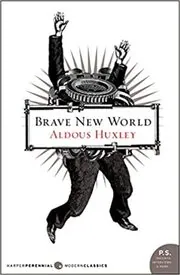
Brave New World
For readers interested in control through comfort and conditioning as much as overt violence. Huxley's managed society gives pleasure an unsettling political role, though the satirical distance and older social assumptions can feel less immediate than contemporary character-driven novels.
What it's about
In the World State, people are engineered, conditioned, and kept docile by pleasure. Huxley's classic dystopia follows a few uneasy outsiders as they discover the human cost of a perfectly managed society.
Also recommended by
10 people- Jordan Peterson recommended this book
Jordan Peterson
Recommended on Jordan Peterson's website.
Jordan Peterson's recommendation of this book  Yuval Noah Harari recommended this book
Yuval Noah Harari
"The best science fiction book ever, definitely the most prescient." - Yuval Noah Harari
Yuval Noah Harari's recommendation of this book - Tristan Harris recommended this book
Tristan Harris
"Slightly older and less well known [than 1984] but equally chilling vision." - Tristan Harris
Tristan Harris's recommendation of this book  Matt Mullenweg recommended this book
Matt Mullenweg
Matt Mullenweg mentioned this book on "The Tim Ferriss Show" podcast.
Matt Mullenweg's recommendation of this book  Stewart Brand recommended this book
Stewart Brand
Stewart Brand recommended this book on his "Selected Books for the Manual for Civilization" blog post.
Stewart Brand's recommendation of this book  Sam Altman recommended this book
Sam Altman
This book was on Sam Altman's bookshelf.
Sam Altman's recommendation of this book +4
More recommendations
- Christopher Hitchens
"In [this book], one can often detect strong hints of a vicarious approval of what is ostensibly being satirized." - Christopher Hitchens
- Sahil Lavingia
Sahil Lavingia recommended this book on Notion.
- Winston Churchill
One of Winston Churchill's favorite books.
- PewDiePie
"I love this book. I think it's a masterpiece." - PewDiePie
- Christopher Hitchens

The Power
For readers interested in how a shift in physical power changes institutions and intimate relationships. The multiple viewpoints broaden the experiment beyond one heroine, though the sexual and political violence make its reversal of expectations deliberately uncomfortable.
What it's about
Teenage girls around the world develop the ability to release electricity from their bodies, shifting the balance of fear and authority. Through four intertwined lives, the novel follows the political, personal, and violent consequences of a new global order.
Also recommended by
4 people Barack Obama recommended this book
Barack Obama
Barack Obama's favorite books of 2017 list.
Barack Obama's recommendation of this book - Kathryn Minshew recommended this book
Kathryn Minshew
Most Recommended Books reached out to Kathryn Minshew directly.
Kathryn Minshew's recommendation of this book  Bill Gates recommended this book
Bill Gates
"I gained a stronger and more visceral sense of the abuse and injustice many women experience today." - Bill Gates
Bill Gates's recommendation of this book  Olivia Wilde recommended this book
Olivia Wilde
"Believe the hype." - Olivia Wilde
Olivia Wilde's recommendation of this book

For readers who want an eerie literary meditation on memory and compliance. Ogawa's disappearing objects make loss feel both intimate and political, though the dreamlike logic and restrained pace offer fewer concrete explanations than a conventional dystopian thriller.
What it's about
Objects vanish from an isolated island, and most residents lose their memories of them. A novelist hides her editor, who can still remember, from the police charged with enforcing these disappearances, while trying to preserve a shrinking world through her writing.
Also recommended by
2 people Andy Greenwald recommended this book
Andy Greenwald
"This is one of the best books I've read in 2020." - Andy Greenwald
Andy Greenwald's recommendation of this book - Jack Edwards recommended this book
Jack Edwards
"Centers on a group of people who decide to rebel against the system." - Jack Edwards
Jack Edwards's recommendation of this book
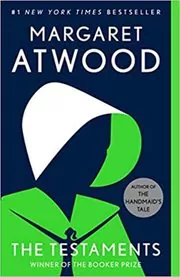
For readers who want to return to Gilead after The Handmaid's Tale. Three women's testimonies reveal more of the regime's workings, though the broader plot and multiple perspectives create a different experience from Offred's tightly confined narration.
What it's about
Set years after The Handmaid's Tale, this sequel uses multiple narrators, including Aunt Lydia and two young women shaped by Gilead in different ways. Secrets surface as cracks spread through the regime and its propaganda.
Also recommended by
1 person Jia Tolentino recommended this book
Jia Tolentino
"May surprise readers who wondered, when the sequel was announced, whether [the author] was making a mistake in returning to her earlier work." - Jia Tolentino
Jia Tolentino's recommendation of this book
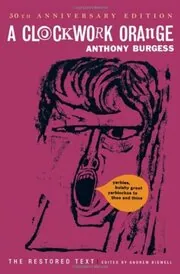
A Clockwork Orange
For readers willing to wrestle with the relationship between free choice and imposed goodness. Alex's invented slang gives the narrative a distinctive voice, though the language demands adjustment and the sexual violence makes the book especially abrasive.
What it's about
Teenage delinquent Alex narrates his violent life and the state's attempt to cure him through psychological conditioning. Burgess uses invented slang and black comedy to ask whether goodness means anything without choice.

For readers who want a short entry into questions about censorship and distracted public life. Bradbury gives those concerns a vivid central image, though the compressed, lyrical style and overt symbolism offer less institutional detail than longer political dystopias.
What it's about
Guy Montag burns books for a living in a society that discourages independent thought. Meeting a questioning young neighbor unsettles him, and his growing interest in forbidden reading places his work, marriage and safety in conflict.
Also recommended by
2 people Tim Ferriss recommended this book
Tim Ferriss
"If you wonder why some people take censorship so seriously, this book will give you the answer." - Tim Ferriss
Tim Ferriss's recommendation of this book  Ryan Holiday recommended this book
Ryan Holiday
Ryan Holiday mentioned this book on Twitter.
Ryan Holiday's recommendation of this book

The Time Machine
For readers curious about an early vision of the future shaped by class division. Wells makes the apparent utopia gradually unsettling, though the Victorian framing and compact adventure structure are less intimate than the contemporary literary novels here.
What it's about
A Victorian inventor travels far into the future and encounters the gentle Eloi and the underground Morlocks. What first seems a peaceful world conceals a disturbing relationship, forcing him to question humanity's progress and his own safety.
Also recommended by
2 people Sahil Lavingia recommended this book
Sahil Lavingia
Sahil Lavingia recommended this book on Notion.
Sahil Lavingia's recommendation of this book  Winston Churchill recommended this book
Winston Churchill
"A wonderful book." - Winston Churchill
Winston Churchill's recommendation of this book

Battle Royale
For readers who want an extreme survival contest that exposes authoritarian cruelty through fractured friendships. Its larger ensemble gives the violence many personal angles, though the graphic killings and relentless pressure make it harsher than most young adult dystopias.
What it's about
An authoritarian government takes a class of junior high students to an isolated island, supplies weapons, and forces them into a lethal survival contest. Friendships and loyalties fracture as the teenagers confront one another and the system controlling their lives.

For readers who want a young adult relationship story entangled with structural racism and power. The divided society makes inequality personal through two viewpoints, though the violence and tragic pressures challenge expectations of an uncomplicated romance.
What it's about
Childhood friends Sephy and Callum fall in love across a society divided between powerful Crosses and oppressed noughts. Their relationship challenges the prejudices governing their lives, drawing them into danger as personal loyalties collide with entrenched injustice.
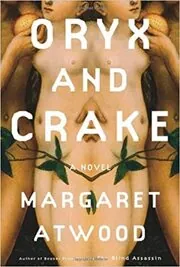
For readers who want corporate power and biotechnology at the center of the dystopian threat. Atwood joins a devastated present with memories of how it arose, though the sexual exploitation and grim satire make this a disturbing trilogy opener.
What it's about
After a engineered plague, Snowman lives among the ruins, caring for the gentle Crakers and haunted by the past. His memories of Crake and Oryx reveal how love, science, and greed helped end the world.

For readers interested in an early blueprint for totalitarian dystopia. The diary form brings collective order into conflict with private desire, though the stylized, symbolic prose feels stranger and less straightforward than Orwell's later treatment.
What it's about
In the regimented society of OneState, mathematician D-503 records his life in a diary intended to celebrate its collective order. An unexpected experience of love unsettles his convictions, exposing a conflict between individual desire and the demands of totalitarian control.
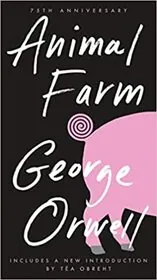
Animal Farm
For readers who want a brief political allegory they can discuss and revisit. Orwell makes the betrayal of revolutionary ideals easy to follow, though the deliberately simplified animal fable offers less psychological depth than a fully developed social novel.
What it's about
On a small farm, the animals overthrow their human master and promise equality, only to see new rulers rise in their place. This short, biting fable exposes how revolutions can be twisted into tyranny through fear, slogans, and lies.
Also recommended by
8 people- Jordan Peterson recommended this book
Jordan Peterson
Recommended on Jordan Peterson's website.
Jordan Peterson's recommendation of this book - J. Cole recommended this book
J. Cole
J. Cole mentioned reading this book on The Fayetteville Observer.
J. Cole's recommendation of this book  Whitney Cummings recommended this book
Whitney Cummings
Whitney Cummings mentioned this book on "The Tim Ferriss Show" podcast.
Whitney Cummings's recommendation of this book - Daniel Pink recommended this book
Daniel Pink
"I think that [this book] should be in every organizational behavior class in an MBA program." - Daniel Pink
Daniel Pink's recommendation of this book  Vlad Tenev recommended this book
Vlad Tenev
"When I was in sixth grade I remember being very upset by the ending of [this book]." - Vlad Tenev
Vlad Tenev's recommendation of this book  Christopher Hitchens recommended this book
Christopher Hitchens
"There is a timeless, even transcendent, quality to this little story." - Christopher Hitchens
Christopher Hitchens's recommendation of this book +2
More recommendations
- Sahil Lavingia
Sahil Lavingia recommended this book on Notion.
- Lex Fridman
Lex Fridman mentioned this book on Instagram.
- Sahil Lavingia

For readers who want a close view of social collapse and the effort to build community within it. Lauren's perspective connects survival with belief and leadership, though the violence and precarity are sustained and the story continues in another novel.
What it's about
In a collapsing near-future California, teenager Lauren Olamina can feel other people’s pain and sees disaster coming before her neighbors will. When her walled community falls, survival pushes her toward a new faith called Earthseed.
Also recommended by
2 people Levar Burton recommended this book
Levar Burton
One of Levar Burton's book recommendations.
Levar Burton's recommendation of this book  DeRay Mckesson recommended this book
DeRay Mckesson
"An incredible book." - DeRay Mckesson
DeRay Mckesson's recommendation of this book

For readers who want a fast-paced young adult entry into coercion, inequality and public spectacle. Katniss's immediate survival choices keep the political stakes concrete, though the arena violence and ongoing series arc make this more than a light adventure.
What it's about
Sixteen-year-old Katniss Everdeen volunteers to take her sister's place in a televised death match where twenty-four teens fight until one survives. In the arena she must outwit ruthless rivals, uneasy alliances, and the Capitol itself to keep both her family and her humanity intact.
Also recommended by
2 people- Bill Gates recommended this book
Bill Gates
List of books Bill Gates read in 2012.
Bill Gates's recommendation of this book  LeBron James recommended this book
LeBron James
"For me, it's relaxing honestly. You spend so much preparation for the games, sometimes you just need to get away from it for a little bit." - LeBron James
LeBron James's recommendation of this book
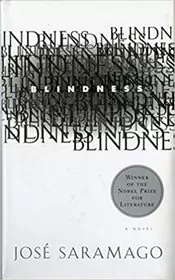
For readers who want an unsettling moral experiment about social breakdown and responsibility. Saramago's collective catastrophe pushes behavior into the foreground, though the sexual violence and unconventional punctuation make both the subject and the reading experience demanding.
What it's about
An unexplained epidemic of white blindness sweeps through an unnamed city, and society collapses with terrifying speed. Following a small group of survivors, Saramago asks what remains of decency when fear, hunger, and power strip away the rules.

For readers who want dystopian oppression expressed through epic fantasy and ecological catastrophe. Jemisin connects institutional cruelty with a fractured world, though the shifting perspectives, demanding opening and trilogy structure require more commitment than a standalone political novel.
What it's about
In a world where catastrophic Seasons regularly shatter civilization, an orogene named Essun comes home to a murdered son and missing daughter. Her search through a collapsing empire exposes the brutal cost of survival and control over the earth itself.
Also recommended by
1 person- Sahil Lavingia recommended this book
Sahil Lavingia
Sahil Lavingia recommended this book on Notion.
Sahil Lavingia's recommendation of this book

The Children of Men
For readers interested in how a society behaves when its future appears to have ended. James combines political stagnation with a small dissident story, though the reflective, morally focused approach moves more slowly than a conventional chase thriller.
What it's about
In 2021, a generation after the world’s last human birth, England drifts toward extinction under an authoritarian Warden. Disillusioned Oxford historian Theo Faron is drawn into a small band of dissidents—and into protecting the first pregnant woman anyone has seen in twenty‑five years.

Vox
For readers who want a direct feminist thriller built around the suppression of women's speech. The word limit makes control immediately tangible, though the high-concept premise and plot-driven style offer less ambiguity than the quieter literary novels.
What it's about
In a near-future America, women are restricted to one hundred spoken words a day. Neurolinguist Jean McClellan must protect her daughter and decide how far she'll go to reclaim a voice the government has taken away.
Sources
- 1
The best dystopian books of all time
penguin.co.uk
- 2
35 of the best dystopian novels of all time
panmacmillan.com
- 3
The best dystopian novels and works of fiction
thebookerprizes.com
- 4
Haunting Dystopian Books To Read Right Now
penguinrandomhouse.com
- 5
Best Dystopian Fiction of All Time
goodreads.com
- 6
41 Best Dystopian Novels Everyone Should Read
oprahdaily.com
- 7
suggestions for dystopian / sci-fi / or magical realism books?
reddit.com
- 8
Everything's going to sh*t. Here are 25 of the best dystopian novels
cityam.com


Edited by
Software engineer whose passion for tracking book recommendations from podcasts inspired the creation of MRB.
Lead investor at 3one4 Capital whose startup expertise and love for books helped shape MRB and its growth.
Comments
Did we miss something? Have feedback?
Help us improve this page by sharing your thoughts