
35 Best Apocalyptic Books
The best apocalyptic books, ranked by how many expert sources recommend each one, with notes on tone, scope, and which survival or rebuilding story suits you.
Our take
Apocalyptic fiction asks what happens when familiar systems stop working, and what people choose to preserve afterward. The catastrophe might be a pandemic, nuclear war, ecological damage, or something that remains unexplained. Some books stay close to hunger, shelter, and danger. Others follow the creation of communities or examine how language, art, faith, and political power survive the loss of an old world.
The reading experience varies as much as the cause. The Road is spare and intimate, while The Stand and Swan Song offer long horror epics with large casts. World War Z uses many testimonies to build a global picture. Station Eleven gives art and memory room beside survival, and A Canticle for Leibowitz follows knowledge across centuries. These stories often include violence and grief, so tone matters as much as premise. Start with Station Eleven for connected lives and rebuilding, World War Z for many perspectives, or The Road for a concentrated, bleak journey.
35 books · 8 sources · Last updated
As an Amazon Associate, we earn from qualifying purchases (at no extra cost to you).
How to choose from this list
Skip to the full rankingIf you want an intimate survival story: The Road → The Dog Stars
If you want a long supernatural epic: The Stand → Swan Song
If you want a global view of collapse: World War Z
If you want culture and rebuilding: Station Eleven → A Canticle for Leibowitz
If you want social collapse and new beliefs: Parable of the Sower
If you want an enclosed dystopian mystery: Wool
The 35 books, ranked
Ranked by how many expert sources name each book. Ties go to the book more people recommend.
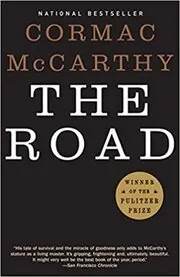
The Road
For readers who want the apocalypse reduced to an intimate question of care and survival. Its spare language keeps the father-son bond central, though the hunger, cruelty, and absence of explanations make it exceptionally bleak.
What it's about
In a burned, ash-covered America, a father and his young son push a grocery cart south along ruined highways, scavenging for food and trying to avoid roving bands of cannibals while clinging to the fragile hope that they still "carry the fire."
Also recommended by
8 people Jocko Willink recommended this book
Jocko Willink
Jocko Willink covered this book in "Jocko Podcast" Ep. 97
Jocko Willink's recommendation of this book  Oprah Winfrey recommended this book
Oprah Winfrey
"Unlike any book I have chosen." - Oprah Winfrey
Oprah Winfrey's recommendation of this book  Aubrey Marcus recommended this book
Aubrey Marcus
"A bleak post-apocalyptic survival story about a father and his son." - Aubrey Marcus
Aubrey Marcus's recommendation of this book  Charlize Theron recommended this book
Charlize Theron
"[This book] changed my life." - Charlize Theron
Charlize Theron's recommendation of this book  Joel McHale recommended this book
Joel McHale
"No novel has ever captured the love a parent has for his child better than this book." - Joel McHale
Joel McHale's recommendation of this book  Sam Hinkie recommended this book
Sam Hinkie
"Unrepayable." - Sam Hinkie
Sam Hinkie's recommendation of this book +2
More recommendations
- Lex Fridman
Lex Fridman mentioned this book on Instagram.
- Ryan Holiday
"Read it when you have kids. When I finished this book, [I] walked into my son's room when he was asleep, sat on the floor, and I just wept." - Ryan Holiday
- Lex Fridman
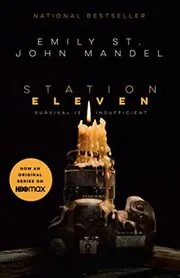
Station Eleven
For readers who care about art, memory, and the meaning of rebuilding. Its connections across pre-pandemic and later lives give the collapse emotional context, though the shifting timeline favors reflection over continuous survival action.
What it's about
During a Toronto performance of King Lear, actor Arthur Leander dies just as a flu pandemic begins. Years later, Kirsten travels the ruined Great Lakes with the Traveling Symphony and faces a dangerous prophet while old connections surface.
Also recommended by
4 people Kathryn Minshew recommended this book
Kathryn Minshew
Most Recommended Books reached out to Kathryn Minshew directly.
Kathryn Minshew's recommendation of this book  Tyler Cowen recommended this book
Tyler Cowen
"[The author's] biggest-selling book to date." - Tyler Cowen
Tyler Cowen's recommendation of this book  George R. R. Martin recommended this book
George R. R. Martin
"Really blew me away." - George R. R. Martin
George R. R. Martin's recommendation of this book  Tim Urban recommended this book
Tim Urban
"Should be required reading to remind everyone that we all live in an incredible magical utopic civilization." - Tim Urban
Tim Urban's recommendation of this book

On the Beach
For readers who want to consider how ordinary life continues under an approaching end. It gives routines and relationships more weight than escape or combat, though its fatalism offers little of the reassurance of rebuilding stories.
What it's about
After a nuclear war wipes out the Northern Hemisphere, the last American submarine and the people of Melbourne wait for the creeping cloud of radiation to reach them. Shute follows their routines, small romances, and hard choices as they face certain extinction.
Also recommended by
1 person Christopher Hitchens recommended this book
Christopher Hitchens
"[The author's] masterpiece." - Christopher Hitchens
Christopher Hitchens's recommendation of this book
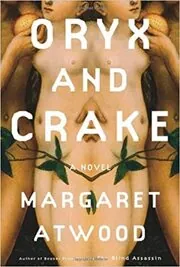
For readers who want the causes of catastrophe examined as closely as its aftermath. Its biotech satire and divided timeline connect private relationships with corporate power, though the cruelty and shifts between periods make it unsettling.
What it's about
After a engineered plague, Snowman lives among the ruins, caring for the gentle Crakers and haunted by the past. His memories of Crake and Oryx reveal how love, science, and greed helped end the world.

Swan Song
For readers who enjoy a long horror epic with a strong supernatural dimension. Its nuclear aftermath gives the struggle a different texture from The Stand, though the extreme violence and extended cast demand patience.
What it's about
After nuclear war shatters the world, a handful of survivors, including a girl with a gift for healing growing things, a haunted wrestler, and a former bag lady with a strange glass ring, must confront a demonic wanderer who thrives on ruin.
I Am Legend
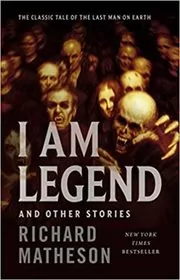
For readers who want a short, concentrated exploration of isolation and changing definitions of humanity. It gives the survivor’s assumptions unusual weight, though its claustrophobic atmosphere offers less community-building than the longer novels.
What it's about
Robert Neville lives alone in a world devastated by a vampire pandemic, hunting the undead by day and barricading his home at night. His search for an explanation unfolds against relentless attacks and the strain of isolation.
Also recommended by
2 people PewDiePie recommended this book
PewDiePie
"Very light and very gripping from the beginning to the end." - PewDiePie
PewDiePie's recommendation of this book  Feng Zhu recommended this book
Feng Zhu
"The book which started the entire zombie/vampire apocalypse genre." - Feng Zhu
Feng Zhu's recommendation of this book

For readers who want social breakdown tied to inequality, climate, and the creation of new beliefs. Its young narrator makes adaptation and community-building central, though the violence, exploitation, and ongoing collapse are difficult to sit with.
What it's about
In a collapsing near-future California, teenager Lauren Olamina can feel other people’s pain and sees disaster coming before her neighbors will. When her walled community falls, survival pushes her toward a new faith called Earthseed.
Also recommended by
2 people Levar Burton recommended this book
Levar Burton
One of Levar Burton's book recommendations.
Levar Burton's recommendation of this book  DeRay Mckesson recommended this book
DeRay Mckesson
"An incredible book." - DeRay Mckesson
DeRay Mckesson's recommendation of this book

Earth Abides
For readers interested in what communities preserve and forget over generations. It spends more time on civilization’s slow transformation than on fighting threats, though its measured pace and period assumptions can feel distant today.
What it's about
Returning from isolation in the mountains, Isherwood Williams discovers that a deadly epidemic has emptied much of the world. He searches for other survivors and tries to build a community while confronting the fragility of civilization and inherited knowledge.
Also recommended by
1 person Ben Shapiro recommended this book
Ben Shapiro
"A very depressing, but good book." - Ben Shapiro
Ben Shapiro's recommendation of this book

The Stand
For readers who want a large cast and the building of rival communities after catastrophe. It combines pandemic survival with supernatural conflict, though its considerable length and clear battle between good and evil will not suit every taste.
What it's about
An escaped laboratory virus devastates the population, leaving scattered survivors to rebuild. Drawn toward either Mother Abagail in Boulder or Randall Flagg in Las Vegas, they form rival communities preparing for a conflict with consequences beyond mere survival.
Also recommended by
1 person Liv Boeree recommended this book
Liv Boeree
"This was my fave book as a kid." - Liv Boeree
Liv Boeree's recommendation of this book
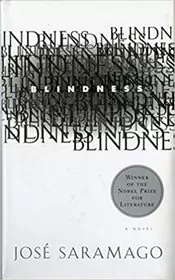
For readers who want a disturbing moral fable about dependence and power. The unnamed characters make the crisis feel universal, though the long sentences, unconventional dialogue punctuation, and sexual violence make this a demanding read.
What it's about
An unexplained epidemic of white blindness sweeps through an unnamed city, and society collapses with terrifying speed. Following a small group of survivors, Saramago asks what remains of decency when fear, hunger, and power strip away the rules.

Riddley Walker
For readers willing to work through language to see how catastrophe changes culture. Its invented dialect makes the loss and rebuilding of knowledge part of the reading experience, though that same feature creates a steep initial barrier.
What it's about
In an England long devastated by nuclear war, Riddley inhabits a society that has lost most technological knowledge. Told in an invented dialect, his story follows a young rebel confronting inherited myths, authority, and the dangerous remnants of progress.
The Postman
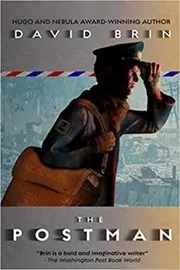
For readers who want a more hopeful account of rebuilding civic trust. Its central symbol makes institutions and shared belief as important as supplies, though the patriotic framing and adventure elements may feel too earnest for some tastes.
What it's about
After a devastating war, drifter Gordon pulls on a dead mail carrier's jacket and improvises a lie. That small act becomes a symbol of government, memory, and hope for people who have almost forgotten how to believe in a country.

For readers who want a global picture of how institutions and ordinary people respond to catastrophe. The interview format covers more perspectives than a single-survivor novel, though it limits sustained attachment to one central character.
What it's about
Framed as an oral history, the novel gathers survivor testimonies from the global zombie war. Soldiers, doctors, smugglers, and politicians piece together how civilization failed, adapted, and fought back.

The Dog Stars
For readers drawn to landscape, grief, and the possibility of companionship after disaster. Its small cast and pilot’s viewpoint make it more intimate than the ensemble epics, though the fragmented prose may take adjustment.
What it's about
In a near future Colorado emptied by a flu pandemic, small plane pilot Hig lives in an abandoned airport with his dog and a volatile survivalist partner. A faint radio call tempts him to risk everything searching for other survivors and a reason to keep going.
Also recommended by
2 people Caroline Paul recommended this book
Caroline Paul
"I really love [this book]. I picked it up because I love the stars, basically." - Caroline Paul
Caroline Paul's recommendation of this book  Patrick O'Shaughnessy recommended this book
Patrick O'Shaughnessy
"A beautifully written post-apocalyptic novel." - Patrick O'Shaughnessy
Patrick O'Shaughnessy's recommendation of this book

Alas, Babylon
For readers who want cooperation and practical adaptation after nuclear war. Its town-sized focus gives rebuilding more room than the bleakest survival stories, though Cold War politics and social assumptions clearly mark its era.
What it's about
Nuclear war devastates the United States, leaving a small Florida community struggling to survive. Randy Bragg and his neighbors must find food, establish security, and adapt to isolation as familiar institutions collapse and everyday decisions acquire urgent consequences.
Also recommended by
1 person- Ben Shapiro recommended this book
Ben Shapiro
"A classic of the genre. Nuclear war hits, how do people survive it afterward?" - Ben Shapiro
Ben Shapiro's recommendation of this book

For readers who want survival inside a tightly controlled society rather than a journey through open ruins. Its underground setting turns information and institutional trust into the main dangers, though the gradual revelations make the opening deliberately patient.
What it's about
This fix‑up novel collects the original Wool novellas into one volume about an underground silo where going outside is a capital crime. When Sheriff Holston and later mechanic‑turned‑sheriff Juliette start questioning the rules, they uncover secrets that shake the entire buried society.
Also recommended by
1 person Ev Williams recommended this book
Ev Williams
On the "books read" section of Ev Williams' GoodReads profile.
Ev Williams's recommendation of this book

A Canticle for Leibowitz
For readers interested in knowledge, religion, and civilization across long spans of time. Its monastery-centered structure offers a broader historical cycle than the immediate-survival books, though the ideas and large jumps can keep characters at a distance.
What it's about
After nuclear war devastates civilization, monks in an isolated monastery preserve remnants of scientific knowledge as sacred relics. Across centuries of rebuilding, their efforts raise questions about faith, progress, and humanity’s tendency to repeat its destructive mistakes.

One Second After
For readers who want the loss of infrastructure explored through a small community’s daily needs. Its attention to shortages makes survival concrete, though the political perspective is pronounced and technical plausibility should not be confused with a preparedness manual.
What it's about
An electromagnetic pulse attack disables modern technology across the United States. In a small North Carolina town, a widowed history professor struggles to protect his family as shortages, failing infrastructure, and social disorder threaten the community.

The Children of Men
For readers who prefer political and moral questions to monsters or action. The extinction scenario exposes the tension between security, authority, and hope, though its reflective viewpoint and religious themes make it slower than a chase-driven thriller.
What it's about
In 2021, a generation after the world’s last human birth, England drifts toward extinction under an authoritarian Warden. Disillusioned Oxford historian Theo Faron is drawn into a small band of dissidents—and into protecting the first pregnant woman anyone has seen in twenty‑five years.

The Girl With All the Gifts
For readers who want a horror journey that questions where humanity begins and ends. The child-centered perspective complicates familiar infected-versus-survivor loyalties, though the violence and scientific experimentation make it emotionally difficult.
What it's about
Melanie is a gifted child who attends lessons under armed guard and spends the rest of her time confined to a cell. In a ruined civilization, her affection for her teacher becomes entangled with questions of survival and humanity.

For readers who want a long, character-driven epic that bridges the outbreak and a much later society. Its vampire-like threat gives survival a horror framework, though the major time shift and trilogy opening require commitment.
What it's about
Amy Harper Bellafonte becomes the key test subject in Project Noah, a secret experiment that unleashes catastrophe. As society collapses, Agent Brad Wolgast tries to save her, and Amy's journey stretches far beyond the fall of the old world.

Eternity Road
For readers who enjoy exploring ruins and recovering knowledge more than witnessing the disaster itself. The expedition structure makes it a discovery story, though the distant aftermath offers less urgency than an outbreak or collapse narrative.
What it's about
Centuries after plague ends civilization, Chaka and a small band of explorers follow fragile clues up the ruined Mississippi toward Haven, a legendary cache of lost knowledge. Their trek through ghostly cities tests loyalty, courage, and the myths their new world lives by.

Into the Forest
For readers who want a domestic view of collapse centered on sisters and their changing relationship to the land. It gives dependence and adaptation more space than large-scale conflict, though its violence and emotional intensity are substantial.
What it's about
Teenage sisters Nell and Eva live alone in a remote Northern California home as society collapses. With supplies dwindling and electricity gone, they must reconsider their dreams, their bond, and their dependence on the surrounding forest.
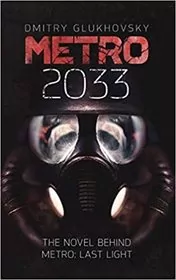
For readers who want a confined, atmospheric journey through rival surviving societies. The subway setting makes politics and belief feel physically close, though the episodes and philosophical discussions can slow the central mission.
What it's about
After nuclear war drives Moscow’s survivors underground, young Artyom leaves VDNKh to warn the Metro of a strange new threat. His journey turns the subway into a maze of fear, politics, faith, and hard choices.

For readers who want an accessible classic combining immediate danger with debate about rebuilding. Its competing survival arrangements give the story more substance than the monster premise suggests, though the gender roles and social assumptions are dated.
What it's about
After a dazzling night sky event leaves most people blind, Bill Masen wakes in a wrecked London where mobile, venomous plants are on the loose. He must lead a handful of sighted survivors through a world slipping into chaos.

The Death of Grass
For readers who want the food system’s collapse to drive a fast, morally uncomfortable survival story. It follows choices made while order is breaking down, though its ruthless decisions and period attitudes can make the characters difficult company.
What it's about
A virus destroys grasses and food crops, driving Britain toward famine and social collapse. John Custance and his family attempt to reach his brother's secluded farm, confronting violence and choices that test their remaining sense of humanity.
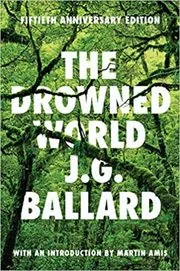
For readers interested in an altered environment’s pull on the mind. It treats the flooded world as a psychological transformation rather than a practical survival problem, though the dreamlike pace offers little conventional action or resolution.
What it's about
As solar heat melts the ice caps and tropical lagoons swallow London, biologist Robert Kerans is pulled toward the altered planet rather than away from it. Ballard turns climate disaster into a strange, hypnotic inward journey.
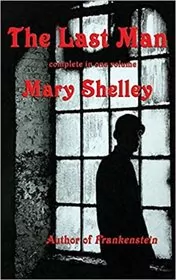
The Last Man
For readers interested in the early roots of apocalyptic fiction and the experience of grief. Its long decline gives political ideals and personal loss unusual space, though the nineteenth-century style is slower than modern genre fiction.
What it's about
In a future world swept by plague, Lionel Verney watches friends, nations, and hopes fall away until he stands almost alone. Part apocalypse, part grief novel, it feels vast and painfully personal at once.

The Slynx
For readers who enjoy grotesque satire about books, power, and cultural memory. Its distorted future gives language and inherited knowledge an unusual role, though the Russian literary references and deliberately strange world can be disorienting.
What it's about
Two centuries after the Blast, Benedikt copies old literature as propaganda for a tyrannical ruler. In a world of mutations, forbidden thought, and feared creatures, his encounters with books expose the possibilities and dangers of knowledge.

For readers who want an adventure driven by loyalty to a dog. The close narrative voice gives the journey a personal focus rather than a sweeping account of collapse, though withholding and isolation shape how the story unfolds.
What it's about
In a near-empty future, Griz lives quietly on a remote island until a visitor steals his dog. He sets out across abandoned Britain to get her back, facing danger, isolation, and troubling truths about the people he loves.

Afterland
For readers who want a mother-child flight story shaped by a radically changed gender balance. It foregrounds control, family loyalty, and bodily autonomy, though the pursuit structure gives less space to a full account of the new society.
What it's about
Three years after a plague kills almost all men, Cole is fleeing America with her twelve-year-old son, one of the last boys left. Disguised on the road and hunted by family and fanatics, they are trying to reach home alive.

For readers who prefer dread built from limited perception. The unseen threat makes listening and trust central to survival, though the deliberate lack of explanation will frustrate readers who want a fully worked-out cause.
What it's about
In a world where seeing a mysterious presence drives people violently mad, Malorie attempts a blindfolded escape with two small children. The terror comes from what stays unseen and from the people trapped together indoors.

For readers who want the apocalypse to reshape memory and identity rather than simply remove technology. Its speculative premise gives intimate relationships unusual stakes, though the expanding magical elements require acceptance of dreamlike logic.
What it's about
A mysterious phenomenon makes people lose their shadows, then their memories, while acquiring strange powers. As the disaster spreads, ordinary survivors risk everything for loved ones in a world increasingly transformed by what its inhabitants forget.

For readers who enjoy fictional world-building presented as a straight-faced manual. Its lists and invented case histories offer a different kind of zombie entertainment, though it provides little of a novel’s character development or sustained plot.
What it's about
Written like a dead-serious field manual, this cult favorite explains how to prepare for, fight, and outlast the living dead. Brooks mixes practical advice, dark humor, and invented history so convincingly it almost feels useful.

Things We Didn't See Coming
For readers who want to see a life repeatedly reshaped by disaster. The connected stories emphasize improvisation and changing relationships over one defining catastrophe, though the gaps between episodes can keep the wider world deliberately uncertain.
What it's about
Nine connected stories follow an unnamed man through three decades of environmental disasters, unstable governments, and pandemic. As the world repeatedly changes around him, he navigates family, relationships, and improvised ways of making a living.
Sources
- 1
The 10 Best Post-Apocalyptic Books to Read Before the World Ends
reedsy.com
- 2
23 Best Modern Post-apocalyptic Books
best-sci-fi-books.com
- 3
The 50 Greatest Apocalypse Novels
lithub.com
- 4
The Best Post-Apocalyptic Novels
fivebooks.com
- 5
Best Post-Apocalyptic Fiction
goodreads.com
- 6
Apocalyptic/Post-Apocalyptic Books?
reddit.com
- 7
Seven Booker Prize-nominated post-apocalyptic books
thebookerprizes.com
- 8
Five Books to read if you like apocalyptic fiction
open.ac.uk






Edited by
Software engineer whose passion for tracking book recommendations from podcasts inspired the creation of MRB.
Lead investor at 3one4 Capital whose startup expertise and love for books helped shape MRB and its growth.
Comments
Spotted a missing book, a wrong order or a mistake? Tell us and we'll fix this page.
We're a reading guide, not the author or publisher, so we can't send books or pass on messages.