
10 Best Deer Hunting Books
The best deer hunting books, ranked by how many expert sources recommend each one, with notes on who each book suits and where different hunters can start.
Our take
Deer hunting books are most useful when their setting resembles the country you hunt. Much of this selection concerns North American whitetails, but the approaches differ sharply. A northern woods tracker, a bowhunter on crowded public land, and a landowner improving habitat have different questions to answer. These books offer experience and perspective, with many older titles reflecting the equipment and assumptions of their time.
Mapping Trophy Bucks suits readers who want to understand terrain, while Bowhunting Pressured Whitetails concentrates on the problems of hunting wary deer around other people. Hunting Big Woods Bucks and How to Bag the Biggest Buck of Your Life belong to the northern tracking tradition. White-tailed Deer Management and Habitat Improvement makes most sense when you control a property, and Whitetail Savvy offers a broader understanding of the species. Start with the book that matches your habitat and access, then use the others to widen your perspective.
10 books · 7 sources · Last updated
As an Amazon Associate, we earn from qualifying purchases (at no extra cost to you).
How to choose from this list
Skip to the full rankingIf you want to understand terrain: Mapping Trophy Bucks
If you bowhunt pressured ground: Bowhunting Pressured Whitetails → Precision Bowhunting
If you want northern woods tracking: How to Bag the Biggest Buck of Your Life → Hunting Big Woods Bucks
If you manage your own land: White-tailed Deer Management and Habitat Improvement
If you want deer behavior and hunting history: Whitetail Savvy → Shots at Whitetails
The 10 books, ranked
Ranked by how many expert sources name each book. Ties go to the book more people recommend.

Mapping Trophy Bucks
For hunters who struggle to connect a map with what they see outdoors. Its diagrams make terrain easier to understand, though the paper-map examples need translating to whichever digital tools you use.
What it's about
Brad Herndon shows deer hunters how to interpret topographic maps and aerial photographs before scouting on foot. He explains how terrain influences travel routes and how mapped features, deer sign, stand locations, and wind direction can inform hunting plans.

For bowhunters sharing ground with plenty of other hunters. The focus on pressure gives it a clearer purpose than a general deer manual, though its demanding preparation and scent-control approach will not suit everyone.
What it's about
John and Chris Eberhart focus on bowhunting mature whitetails in areas where heavy hunting pressure makes deer wary. Their guide covers scouting, interpreting sign, preparing hunting sites, scent control, and using equipment while minimizing evidence of human presence.
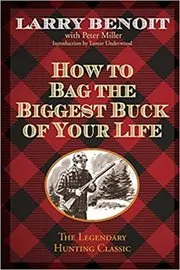
How to Bag the Biggest Buck of Your Life
For hunters drawn to the tradition of following deer on foot. Benoit combines personal experience with a clear hunting philosophy, though its northern climate and older equipment references limit its usefulness as a universal handbook.
What it's about
Larry Benoit shares his approach to pursuing whitetail deer through northern forests, drawing on decades of tracking in Vermont. Written with Peter Miller, the book combines hunting stories with discussions of fitness, reading tracks, equipment, and handling harvested deer.

Giant Whitetails: A Lifetime of Lessons
For hunters who prefer lessons attached to individual hunting experiences. The case-based format makes the reasoning memorable, though its concentration on exceptional mature bucks gives it a narrower purpose than a general introduction.
What it's about
Mark and Terry Drury share accounts of pursuing mature whitetails, with Michael Hanback helping present their experience. Individual hunts lead into lessons about deer behavior, observation, and the decisions that shape a season in the field.
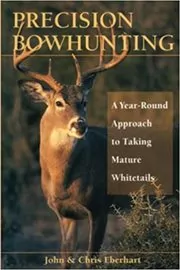
For bowhunters who want preparation to have a place throughout the year. The calendar structure makes the workload easier to organize, though it assumes more sustained time and commitment than an occasional hunter may have.
What it's about
John and Chris Eberhart organize whitetail bowhunting around a full year of preparation. They connect offseason scouting, fitness, and planning with fall tactics, including scent control, hunting the rut, and adapting to rain, suburban settings, and heavily hunted areas.

Shots at Whitetails: A Deer Hunting Classic
For readers who enjoy deer-camp traditions as much as practical hunting literature. Its historical voice offers something the more specialized manuals lack, though equipment discussions reflect an earlier era and should be read in that context.
What it's about
Lawrence R. Koller draws on deer hunting in New York to explore woodland experience, camp customs, and whitetail behavior. This expanded edition includes historical photographs and commentary by Patrick Durkin alongside the original hunting writing.
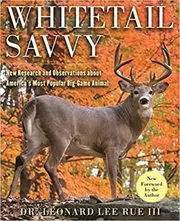
Whitetail Savvy
New Research and Observations about the Deer, America's Most Popular Big-Game Animal
For hunters and naturalists who want to understand the animal before concentrating on hunting methods. The photographs and breadth of observations reward browsing, though it is less direct than a focused hunting handbook.
What it's about
Leonard Lee Rue III combines wildlife research, personal observations, and photography in a reference on white-tailed deer. He explores their behavior, physiology, and daily lives, offering material for hunters, naturalists, photographers, and others seeking a better understanding of the species.

For readers who learn best through hunting stories and family experience. Towsley brings the Benoit approach into focus through observation, though the northern forest setting transfers less directly to small agricultural properties.
What it's about
Bryce Towsley recounts hunting with the Benoit family in Maine and documents their approach to tracking mature whitetail bucks. Photographs and field experiences explain how the family's methods extend beyond snow tracking to reading deer movements throughout the season.
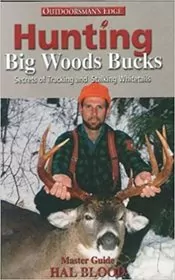
Hunting Big Woods Bucks
For hunters with access to extensive northern woodland. Blood offers a sustained big-woods perspective rather than scattered general tips, though readers hunting small parcels or consistently snowless country will need a different starting point.
What it's about
Maine guide Hal Blood explains how to find and follow mature whitetail bucks in extensive woodland. Hunting stories accompany guidance on reading tracks, rubs, and scrapes, interpreting deer behavior, and choosing between tracking, stalking, still hunting, and stand hunting.
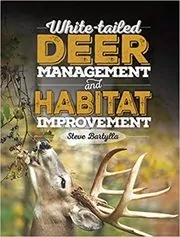
White-tailed Deer Management and Habitat Improvement
For landowners who can change the habitat they hunt. Its property-management focus fills a gap left by tracking and bowhunting books, though readers restricted to public land cannot put many of its recommendations into practice.
What it's about
Steve Bartylla explains how hunters and landowners can manage property for whitetail deer. The guide covers improving food sources and cover, shaping deer movement, managing populations, and arranging hunting access to reduce disturbance, with approaches for properties of different sizes.
Sources
- 1
5 Best Deer Hunting Books (That work in 2023) - HuntingSage
huntingsage.com
- 2
Must Read Deer Hunting Books
huntinggeardeals.com
- 3
10 Best Deer Hunting Books Of All Time
deerhuntingguide.net
- 4
Must-Read Books for Deer Hunters
bowhunting.com
- 5
Deer hunting books for a newbie
reddit.com
- 6
Recommendations for white-tailed hunting books
reddit.com
- 7
Best Deer Hunting Books Every Hunter Should Read in 2026
theoutdoorhunter.com




Edited by
Software engineer whose passion for tracking book recommendations from podcasts inspired the creation of MRB.
Lead investor at 3one4 Capital whose startup expertise and love for books helped shape MRB and its growth.
Comments
Spotted a missing book, a wrong order or a mistake? Tell us and we'll fix this page.
We're a reading guide, not the author or publisher, so we can't send books or pass on messages.