
7 Best Systems Thinking Books
The best systems thinking books, ranked by how many expert sources recommend each one, with notes for beginners, managers and readers ready to build models.
Our take
Systems thinking asks how relationships, feedback and delays shape what happens over time. It helps explain why an apparently sensible fix can create another problem, or why a team keeps producing results nobody intended. These books suit readers trying to understand organizations, public problems and everyday decisions as parts of larger patterns.
Thinking in Systems offers a manageable introduction to stocks, flows and feedback. The Fifth Discipline connects systems thinking with how organizations learn, while The Systems Thinking Playbook turns ideas into group activities. The Systems Bible takes a humorous look at failure. For more demanding study, Business Dynamics develops simulation modeling, and Systems Thinking, Systems Practice explores situations where people disagree about what the problem even is.
Start with Thinking in Systems, then choose a book tied to your setting. Managers can continue with The Fifth Discipline; readers working on community or public issues can turn to Systems Thinking for Social Change.
7 books · 8 sources · Last updated
As an Amazon Associate, we earn from qualifying purchases (at no extra cost to you).
How to choose from this list
Skip to the full rankingIf you are new to systems thinking: Thinking in Systems
If you want to improve organizational learning: The Fifth Discipline → The Systems Thinking Playbook
If you want to build simulation models: Thinking in Systems → Business Dynamics
If you work on community problems: Systems Thinking for Social Change
If people disagree about the problem: Systems Thinking, Systems Practice
The 7 books, ranked
Ranked by how many expert sources name each book. Ties go to the book more people recommend.

Thinking in Systems
For beginners who want a clear vocabulary for feedback, stocks, flows and delays. Its everyday examples make the core ideas approachable, but it introduces one influential tradition rather than covering every systems methodology.
What it's about
Donella Meadows introduces systems thinking as a way to understand connected problems from everyday life to global crises. Edited by Diana Wright, the primer explains why isolated fixes can fail and encourages attention to relationships within a larger whole.
Also recommended by
3 people Tobi Lütke recommended this book
Tobi Lütke
Mentioned on "The Knowledge Project" podcast.
Tobi Lütke's recommendation of this book  Patrick O'Shaughnessy recommended this book
Patrick O'Shaughnessy
"If you want a new way to think about yourself, your business, the market, or any other system of parts and interactions, this is the book for you." - Patrick O'Shaughnessy
Patrick O'Shaughnessy's recommendation of this book  Ryan Shea recommended this book
Ryan Shea
Ryan Shea recommended this book on his website.
Ryan Shea's recommendation of this book

For managers who want systems thinking connected to teamwork and organizational learning. It links individual assumptions with collective habits, but its broad management framework requires interpretation before it becomes a plan for your own workplace.
What it's about
Peter M. Senge examines how organizations can improve their capacity to learn and address barriers to collective thinking. This revised edition draws on practitioners' experiences to connect his learning-organization approach with leadership, assumptions, teamwork, and organizational change.

Business Dynamics
For serious students ready to move from recognizing feedback to building and testing simulation models. Its depth supports sustained study, but the textbook demands considerably more time and technical effort than the introductory books.
What it's about
John D. Sterman introduces system dynamics as a method for analyzing business strategy and public policy. The textbook develops systems thinking and simulation modeling to examine feedback, complex behavior, and the unintended consequences that can follow attempts to solve organizational problems.

The Systems Thinking Playbook
For facilitators and teachers who want people to experience systems ideas through activities. Its exercises make a useful companion to conceptual reading, but many depend on a group and thoughtful discussion afterward.
What it's about
Linda Booth Sweeney and Dennis Meadows present interactive exercises for learning systems thinking. Activities use games and shared experiences to explore assumptions, communication, feedback and cooperation, with guidance for facilitators on setting up sessions and discussing what participants notice.
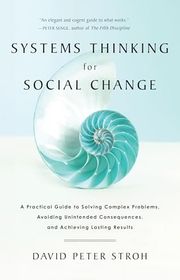
Systems Thinking for Social Change
For nonprofit leaders and community practitioners who want systems thinking tied to social problems. Its practical cases connect diagnosis with collective action, but the work still depends on engaging stakeholders and understanding local circumstances.
What it's about
David Peter Stroh applies systems thinking to complex social problems and the unintended effects of attempted solutions. He describes ways to map relationships, work with stakeholders and identify changes that address the structures sustaining a problem.
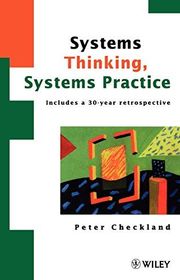
Systems Thinking, Systems Practice
For readers dealing with organizational problems that look different to different people. It develops soft systems methodology rather than assuming one agreed objective, but its conceptual argument is more demanding than a beginner’s primer.
What it's about
Peter Checkland traces the development of soft systems methodology through research on organizational problems. He examines how people can use models of purposeful activity to explore conflicting perspectives and discuss improvements when a problem lacks a single agreed definition.

For readers who learn through memorable warnings about how organizations and other systems fail. Its humor makes unintended consequences easy to remember, but the aphorisms offer less systematic instruction than a modeling textbook.
What it's about
This expanded revision of Systemantics collects Gall's humorous principles and examples of organizational failure. He explores how systems acquire their own priorities, generate unintended consequences, and become difficult to manage, advocating modest beginnings and attention to feedback.
Also recommended by
1 person- Patrick O'Shaughnessy recommended this book
Patrick O'Shaughnessy
"A clear, incredibly well thought out message: don’t build systems unless you absolutely need to." - Patrick O'Shaughnessy
Patrick O'Shaughnessy's recommendation of this book
Sources
- 1
The Best Books on Systems Thinking, and How They Connect
hikara.io
- 2
Required Reading
tamesystems.org
- 3
Systems Thinking (52 books)
goodreads.com
- 4
12 Systems Thinking Resources We Love: Books, Articles, and More to Get Started
ideou.com
- 5
Favorite Systems Thinking Books?
reddit.com
- 6
What book would you recommend?
reddit.com
- 7
Top 15 Systems Thinking Books
dzone.com
- 8
A Systems Reading List
grounded.systems









Edited by
Software engineer whose passion for tracking book recommendations from podcasts inspired the creation of MRB.
Lead investor at 3one4 Capital whose startup expertise and love for books helped shape MRB and its growth.
Comments
Spotted a missing book, a wrong order or a mistake? Tell us and we'll fix this page.
We're a reading guide, not the author or publisher, so we can't send books or pass on messages.