
7 Best Criminology Books
The best criminology books, ranked by how many expert sources recommend each one, with notes on who they suit, from new students to readers exploring criminal justice.
Our take
Criminology asks how crime is defined, why it occurs, how it is studied, and what societies do in response. That makes it broader than accounts of a notorious offender or a detective's career. The books here include academic introductions, an illustrated case collection, narrative reporting, and arguments about the consequences of criminal justice policy.
For a structured grounding, Introduction to Criminology connects theory with research methods and patterns of offending. Tim Newburn's Criminology provides another substantial route into the field, while Peter Joyce's shorter introduction is a more compact starting point. The Crime Book makes individual cases easy to browse. In Cold Blood is useful for considering the methods and limits of narrative true crime. The New Jim Crow and Just Mercy turn toward American incarceration and justice, through an extended argument and personal advocacy respectively. Start with an academic introduction if you want the discipline itself, then use the case-based books to test and complicate what you learn.
7 books · 7 sources · Last updated
As an Amazon Associate, we earn from qualifying purchases (at no extra cost to you).
How to choose from this list
Skip to the full rankingIf you're beginning academic study: Introduction to Criminology
If you want a visual introduction through cases: The Crime Book
If you want to examine American justice: Just Mercy → The New Jim Crow
If you want to study narrative true crime: In Cold Blood
The 7 books, ranked
Ranked by how many expert sources name each book. Ties go to the book more people recommend.
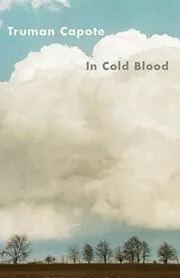
In Cold Blood
For readers who want to examine a famous example of narrative true crime. Capote gives individual lives and social setting unusual attention, though reconstructed scenes and novelistic techniques deserve scrutiny alongside the book's reporting.
What it's about
Capote’s nonfiction novel reconstructs the 1959 murder of the Clutter family in rural Kansas, following the investigation and the lives of killers Perry Smith and Dick Hickock. Combining immersive reporting with novelistic detail, it helped define the modern true crime book.
Also recommended by
3 people Ben Shapiro recommended this book
Ben Shapiro
"Truman Capote's best book. It's a really, really good book." - Ben Shapiro
Ben Shapiro's recommendation of this book  Sam Harris recommended this book
Sam Harris
"If you just want to forget about the future and lose yourself in the book that forever changed how narrative nonfiction is written, read [this book]." - Sam Harris
Sam Harris's recommendation of this book  Tim Draper recommended this book
Tim Draper
"My [mother] recommended [this book]." - Tim Draper
Tim Draper's recommendation of this book
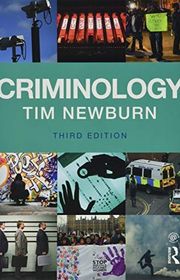
Criminology
For students who want a substantial map of the discipline before choosing a specialization. Newburn brings theory, research, and criminal justice into one broad reference, though the scale and UK-centered context make it less casual reading.
What it's about
Tim Newburn surveys criminological theories, research methods, patterns of offending, and institutions of criminal justice. The textbook connects explanations of crime with policing, punishment, prevention, and policy debates, using examples and study material to organize a wide academic field.
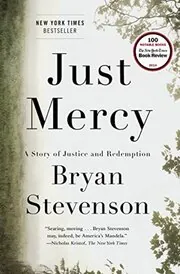
For readers who want legal advocacy and individual cases to make justice-system failures tangible. Stevenson provides an accessible companion to broader arguments about incarceration, though the American case-based perspective is not a general criminology textbook.
What it's about
As a young lawyer in Alabama, Bryan Stevenson takes on the case of Walter McMillian, a Black man wrongly sentenced to death. From that case, he builds a humane, unsettling portrait of bias, punishment, and the people crushed by the justice system.
Also recommended by
4 people Howard Schultz recommended this book
Howard Schultz
"Perhaps one of the most powerful and important stories of our time." - Howard Schultz
Howard Schultz's recommendation of this book  Cory Booker recommended this book
Cory Booker
"Takes you out of where you probably are and lets you look into a window of aspects of our society that are really important." - Cory Booker
Cory Booker's recommendation of this book  Richard Branson recommended this book
Richard Branson
Richard Branson recommended this book on his "70 must-read books" blog post.
Richard Branson's recommendation of this book  Kathryn Minshew recommended this book
Kathryn Minshew
"A wildly good book." - Kathryn Minshew
Kathryn Minshew's recommendation of this book

For readers interested in how criminal justice policy can reproduce racial inequality. Alexander offers a sustained argument about American incarceration rather than a general survey, though its US focus needs complementing with other countries and competing explanations.
What it's about
Michelle Alexander argues that mass incarceration and the War on Drugs perpetuate racial caste in America. Her analysis examines how a formally colorblind criminal justice system targets Black communities and creates lasting barriers after conviction.
Also recommended by
4 people J. Cole recommended this book
J. Cole
J. Cole mentioned reading this book on The Fayetteville Observer.
J. Cole's recommendation of this book  Mark Zuckerberg recommended this book
Mark Zuckerberg
"I've been interested in learning about criminal justice reform for a while, and this book was highly recommended by several people I trust." - Mark Zuckerberg
Mark Zuckerberg's recommendation of this book  Bill Gates recommended this book
Bill Gates
"Offers an eye-opening look into how the criminal justice system unfairly targets communities of color, and especially Black communities." - Bill Gates
Bill Gates's recommendation of this book  Sunny Hostin recommended this book
Sunny Hostin
Sunny Hostin recommended this book on Twitter.
Sunny Hostin's recommendation of this book

For students who want theories, methods, and types of offending introduced as part of one course. Hagan and Daigle connect explanations with evidence and policy, though the textbook structure asks more sustained study than case-based reading.
What it's about
Frank Hagan and Leah Daigle introduce criminological theory, research methods, and patterns of criminal behavior. The text examines organized, political, environmental, and white-collar crime while connecting explanations of offending to social consequences and policy choices.

For readers who want an illustrated route into notable crimes and investigative ideas. Its diagrams and short entries are easier to browse than a textbook, though individual cases provide less grounding in theory and research methods.
What it's about
This illustrated reference explores notorious crimes and the people involved, from historic outlaws to modern cybercriminals. Accounts of cons, heists, and murders are supported by diagrams, timelines, and summaries that introduce key ideas in crime and criminology.

For newcomers who want the subject organized around theories, institutions, and prevention. Joyce provides a wider conceptual entry than the true-crime narratives here, though a concise overview cannot match a full course textbook's depth.
What it's about
Peter Joyce introduces definitions of crime, explanations of offending, and approaches to prevention and detection. The book also examines police, courts, and prisons, comparing criminal justice and criminological questions across Britain, the United States, and elsewhere.
Sources
- 1
25 Most Influential Criminal Justice and Criminology Books
academicinfluence.com
- 2
The 10 Best Criminology Books
findthisbest.com
- 3
Criminology Books
goodreads.com
- 4
Criminology: Recommended Books for Level One
uwe.ac.uk
- 5
Recommend me a book about criminology
reddit.com
- 6
Criminology Book Recs
reddit.com
- 7
15 Best Criminology Books To Help You Understand Criminal Behavior
probinism.com






Edited by
Software engineer whose passion for tracking book recommendations from podcasts inspired the creation of MRB.
Lead investor at 3one4 Capital whose startup expertise and love for books helped shape MRB and its growth.
Comments
Spotted a missing book, a wrong order or a mistake? Tell us and we'll fix this page.
We're a reading guide, not the author or publisher, so we can't send books or pass on messages.