
9 Best Bioinformatics Books
The best bioinformatics books, ranked by expert source recommendations, with notes to help you choose biology overviews, data skills, and algorithm-focused texts.
Our take
Bioinformatics connects biological questions with computation, statistics, and large datasets. A useful starting book depends on which part of that combination you already know. Biologists may need help with programming and data organization, while programmers may need more molecular biology and a clearer sense of what an analysis can establish. A broad survey and a practical computing book often serve different needs.
Lesk’s Introduction to Bioinformatics introduces the landscape, while Bioinformatics and Functional Genomics develops a wider biological framework. Bioinformatics Data Skills focuses on reliable work with research data. For a more theoretical route, Bioinformatics Algorithms builds methods through exercises, and Biological Sequence Analysis examines probabilistic models in depth. The Perl books suit readers working with that language, but their examples should be checked against the tools available in your environment. Start with the gap in your own background, then pair conceptual reading with small analyses you can reproduce.
9 books · 9 sources · Last updated
As an Amazon Associate, we earn from qualifying purchases (at no extra cost to you).
How to choose from this list
Skip to the full rankingIf you need a biological overview: Introduction to Bioinformatics → Bioinformatics and Functional Genomics
If you need reliable data-handling habits: Bioinformatics Data Skills
If you want guided database tasks: Bioinformatics For Dummies
If you want to build algorithms: Bioinformatics Algorithms → Biological Sequence Analysis
If you work with Perl-based applications: Beginning Perl for Bioinformatics → Building Bioinformatics Solutions
If you want computational thinking through biology: Bioinformatics for Biologists
The 9 books, ranked
Ranked by how many expert sources name each book. Ties go to the book more people recommend.
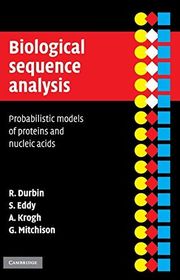
Biological Sequence Analysis: Probabilistic Models of Proteins and Nucleic Acids
For readers ready to understand the probabilistic models behind sequence analysis. The unified mathematical treatment connects algorithms with their assumptions, though it requires more comfort with probability and formal reasoning than a tools-first introduction.
What it's about
Richard Durbin and his coauthors explain probabilistic approaches to analyzing biological sequences. Topics include sequence alignment, hidden Markov models, RNA structure, and evolutionary relationships, with algorithms and statistical reasoning showing how models can address molecular biology questions.
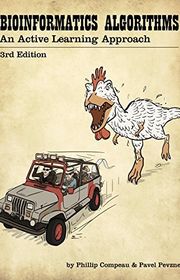
Bioinformatics Algorithms: An Active Learning Approach
For students who want to learn algorithms by solving biological problems and implementing solutions. Embedded exercises make the reasoning active, though readers seeking ready-made analysis pipelines will need a more practical computing companion.
What it's about
Phillip Compeau and Pavel Pevzner introduce bioinformatics algorithms through biological questions, developing computational ideas as the problems become more demanding. Exercises and programming challenges encourage readers to test their understanding and build solutions rather than only follow explanations.

Bioinformatics and Functional Genomics
For students who want a broad biological framework linking computational methods with genome-scale questions. The range helps connect separate techniques, though its textbook size and breadth require more sustained study than a short introductory survey.
What it's about
Jonathan Pevsner introduces bioinformatics and functional genomics through biological research problems, illustrations, and exercises. The text connects computational tools with proteins, genome sequencing across diverse organisms, and the investigation of human disease.

For researchers who need reliable habits for working with biological datasets. The emphasis on files, command-line tools, organization, and reproducibility fills a practical gap left by theory texts, though individual software details may require checking.
What it's about
Vince Buffalo teaches the computational practices needed to analyze biological datasets reproducibly. Unix tools, shell scripting, pipelines, and exploratory analysis in R are presented alongside habits for organizing, checking, and documenting research data.

Introduction to Bioinformatics
For biology students who want an overview before committing to programming or algorithm design. The biological context makes unfamiliar methods easier to place, though the survey needs practical exercises and specialist reading to support research work.
What it's about
Arthur Lesk introduces methods for retrieving and analyzing biological information, writing for readers without extensive programming knowledge. Topics connect bioinformatics with molecular biology and its applications, including protein structures, metabolic pathways, gene expression, and regulation.

Bioinformatics For Dummies
For biologists who prefer guided tasks using databases and analysis tools before writing programs. The accessible format lowers the entry barrier, though changing interfaces mean you may need to translate instructions to current tools.
What it's about
Jean-Michel Claverie and Cedric Notredame explain how to investigate biological questions using online databases and analysis tools. Step-by-step tasks cover finding and comparing sequences, studying gene functions, predicting structures, and conducting phylogenetic analysis.

For biologists who need to read or maintain Perl scripts and want a gradual programming introduction. Biological examples give the coding a purpose, though its language focus makes it a specialized choice rather than a general computing roadmap.
What it's about
James Tisdall introduces Perl programming to biologists with little coding experience. Chapters build from simple tasks toward more complex bioinformatics problems, treating the manipulation of biological data as a practical laboratory skill.

Bioinformatics for Biologists
For biologists who want to understand the computational reasoning behind research questions. The problem-centered chapters offer several routes into the subject, though the edited collection is less continuous than a single-author introductory course.
What it's about
This edited textbook introduces computational thinking through biological problems rather than tool lists alone. Self-contained chapters use intuitive explanations to explore disease genetics, genome reconstruction and evolution, phylogeny, gene regulation, and biological networks.

For readers who need to connect programming, statistics, and databases into bioinformatics applications. The integrated examples help show how components work together, though the Perl, R, and MySQL emphasis suits particular projects rather than every modern workflow.
What it's about
Conrad Bessant and his coauthors introduce Perl, R, and MySQL as tools for building bioinformatics applications. Examples show how to manage biological data, automate analysis pipelines, visualize results, and provide access through web services.
Sources
- 1
100 Best Bioinformatics Books of All Time
shortform.com
- 2
Computational biology books
wanggroup.org
- 3
Books and references for bioinformatics:
cs.columbia.edu
- 4
Are there any bioinformatics (text)-books?
bioinfodlsu.com
- 5
Bioinformatics Books
goodreads.com
- 6
Best book Titles for Learning Bionformatics
bioinformaticsonline.com
- 7
I want some books on this field
reddit.com
- 8
Are there any go-to books for your field? Bioinformatics, programming or statistics book recommendation thread
reddit.com
- 9
Bioinformatics - BioList
biocordlist.org







Edited by
Software engineer whose passion for tracking book recommendations from podcasts inspired the creation of MRB.
Lead investor at 3one4 Capital whose startup expertise and love for books helped shape MRB and its growth.
Comments
Spotted a missing book, a wrong order or a mistake? Tell us and we'll fix this page.
We're a reading guide, not the author or publisher, so we can't send books or pass on messages.