
10 Best Auditing Books
The best auditing books, ranked by how many expert sources recommend each one, with notes on who each suits, from students to working auditors.
Our take
Auditing books serve different jobs. Financial statement auditing asks whether reported information is supported by evidence. Corporate internal auditing examines risk, controls, and governance, while ISO management-system audits address another set of processes and requirements. A useful starting book depends on which of these you need to understand and whether you are studying concepts or preparing for an engagement.
Auditing For Dummies introduces financial audit work in accessible language. Auditing & Assurance Services offers a more systematic course of study, while Auditing Cases gives students situations in which to practice judgment. Internal auditors can turn to The Internal Auditing Handbook for breadth or The Internal Auditing Pocket Guide for a shorter process reference. The specialist books address fraud, healthcare, ISO audits, and report writing. Several editions here are older, so read them alongside the standards and rules relevant to your work. Start with the guide that matches your audit setting, then add the narrower reference you need.
10 books · 7 sources · Last updated
As an Amazon Associate, we earn from qualifying purchases (at no extra cost to you).
How to choose from this list
Skip to the full rankingIf you're new to financial statement auditing: Auditing For Dummies → Auditing & Assurance Services
If you want to practice audit judgment: Auditing & Assurance Services → Auditing Cases
If you work in corporate internal audit: The Internal Auditing Handbook → Auditing That Matters
If you audit ISO management systems: Internal Auditing in Plain English → The Internal Auditing Pocket Guide
If you want to specialize in fraud: Fraud Examination → Healthcare Fraud
If you need clearer reports: Report Writing For Internal Auditors
The 10 books, ranked
Ranked by how many expert sources name each book. Ties go to the book more people recommend.

Auditing For Dummies
For newcomers who need the vocabulary and sequence of a financial statement audit explained plainly. Its accessible examples ease the first encounter, though it cannot replace a course text or up-to-date professional requirements.
What it's about
Maire Loughran introduces auditing through explanations and sample business records. The guide covers audit risk, gathering evidence, examining financial statements, and writing an opinion, following the work from preliminary investigation through reporting and additional client services.

For employees asked to conduct internal audits of ISO management systems. Its practical language suits readers outside accounting, though this is a different setting from financial statement auditing and requires the applicable management-system standard alongside it.
What it's about
Craig Cochran explains how to establish and run an internal audit program for a management system. Examples and frequently asked questions cover auditor selection, interviews, planning, reporting, and follow-up, making the process accessible to employees and auditors.

The Internal Auditing Handbook
For internal auditors who want a substantial reference on governance, risk, and the audit function. Its organizational perspective goes beyond individual engagements, though older standards coverage needs checking against current professional requirements.
What it's about
K. H. Spencer Pickett examines internal auditing in relation to corporate governance, risk management, and professional standards. This handbook discusses the responsibilities of audit leaders, boards, and committees, combining practical guidance with chapter questions for reviewing the material.

For accounting students who want audit judgments organized around risk, materiality, and evidence. The structured textbook approach supports deeper study than an introductory guide, though it expects accounting knowledge and sustained work with the material.
What it's about
This auditing textbook organizes the audit process around materiality, risk, and evidence. It connects an understanding of a business and its environment with assessment of controls, helping students develop professional judgment when evaluating financial information.

For students who know the basic concepts and want practice making audit judgments. Cases encourage discussion and application more directly than a reference handbook, though they work best alongside instruction rather than as a first introduction.
What it's about
This casebook takes students through the major activities of an audit using situations largely based on real companies. Cases involving financial reporting fraud and other accounting issues provide opportunities to practice critical thinking, professional judgment, and collaborative analysis.
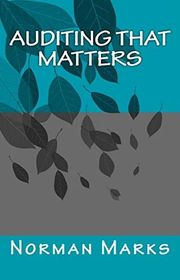
Auditing That Matters
For experienced internal auditors questioning how their work serves leadership. Marks emphasizes selecting significant risks and communicating useful conclusions, though his practitioner perspective offers less technical instruction than the textbooks and procedural guides here.
What it's about
Norman D. Marks examines how internal audit can provide assurance, advice, and insight that organizational leaders can use. Drawing on audit leadership experience, he discusses risk-based priorities, communication, team development, and the practical value of audit work.

Fraud Examination
For readers concentrating on detecting and investigating financial fraud. Its dedicated focus offers more depth than general audit introductions, though fraud examination extends beyond routine auditing and legal details depend on jurisdiction and edition.
What it's about
This textbook examines how financial fraud is committed, detected, investigated, and prevented. Business examples and actual cases accompany discussions of forensic analysis, technology's role in fraud, and the legal options available to people and organizations affected.

For auditors who want a compact reminder of the engagement process. The portable format supports preparation, reporting, and follow-up without handbook length, though it leaves less room for complex cases and detailed interpretation of standards.
What it's about
J. P. Russell follows an internal audit from its initial assignment through preparation, evidence gathering, reporting, and follow-up. Charts and examples illustrate the process, while discussion of audit principles emphasizes conduct, objectives, and verification of corrective actions.

For auditors working with healthcare organizations or health plans. Its industry focus makes fraud risks more concrete than a general casebook, though healthcare rules and information systems have changed since the edition represented here.
What it's about
Rebecca S. Busch examines fraud risks across healthcare providers and company health plans. The guide discusses warning signs, auditing techniques, data privacy, transparency, and risk management, connecting detection work with the structure and changing information systems of healthcare.

Report Writing For Internal Auditors
For internal auditors who need clearer written findings and reports for management. Its attention to structure and tone addresses a skill broader handbooks can underplay, though the banking focus and older examples limit direct transfer.
What it's about
Angela J. Maniak provides a writing guide for internal auditors working in banks. She explains how to structure reports, choose tone and style, and adapt findings to management's needs, with attention to drafts and reader engagement.
Sources
- 1
5 Great Books for Auditors
topaccountingdegrees.org
- 2
Top Best Auditing Books
wallstreetmojo.com
- 3
The 6 Best Auditing Books
conqueryourexam.com
- 4
65 Best Auditing Books of All Time
shortform.com
- 5
What are some books that changed how you look at audit or refer to often?
reddit.com
- 6
Internal Audit Books: Reading List by Theme and Career Stage
internalauditguide.com
- 7
Best Internal Audit Books
reddit.com









Edited by
Software engineer whose passion for tracking book recommendations from podcasts inspired the creation of MRB.
Lead investor at 3one4 Capital whose startup expertise and love for books helped shape MRB and its growth.
Comments
Spotted a missing book, a wrong order or a mistake? Tell us and we'll fix this page.
We're a reading guide, not the author or publisher, so we can't send books or pass on messages.