
14 Best Stanislaw Lem Books
The best Stanislaw Lem books, ranked by how many expert sources recommend each one, with notes on who each suits and where to begin with his varied fiction.
Our take
Stanislaw Lem writes about the difficulty of understanding minds, societies and technologies that refuse to behave as people expect. That can lead to a sober first-contact novel, a robot fairy tale or a satire in which every explanation creates another problem. His books reward curiosity, but their differences in tone matter as much as their shared interest in science and philosophy.
Solaris combines the limits of knowledge with grief and memory. The Invincible gives those questions an expedition narrative, while His Master's Voice spends more time with scientific argument. On the comic side, The Cyberiad follows robot inventors, and The Star Diaries sends Ijon Tichy through absurd voyages. The Pirx stories offer a fallible human pilot, while A Perfect Vacuum replaces ordinary stories with reviews of imaginary books.
Start with Solaris for an emotionally serious novel, The Cyberiad for comic invention, or Tales of Pirx the Pilot for approachable space stories.
14 books · 8 sources · Last updated
As an Amazon Associate, we earn from qualifying purchases (at no extra cost to you).
Reading Stanislaw Lem in order? See all Stanislaw Lem books in order
How to choose from this list
Skip to the full rankingIf you want a serious first-contact path: Solaris → The Invincible → Fiasco
If you prefer comic invention: The Cyberiad → The Star Diaries
If you want human-scale space stories: Tales of Pirx the Pilot
If you enjoy dense philosophical fiction: His Master's Voice → A Perfect Vacuum
If you like unsettling satire: The Futurological Congress → Memoirs Found in a Bathtub
The 14 books, ranked
Ranked by how many expert sources name each book. Ties go to the book more people recommend.
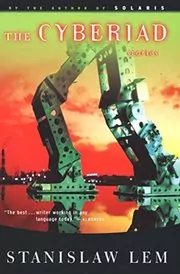
For readers who prefer Lem playful, inventive and packed with verbal jokes. Its robot fables combine philosophical puzzles with comic storytelling more freely than the serious novels, though the elaborate wordplay can make casual reading surprisingly demanding.
What it's about
The robot constructors Trurl and Klapaucius roam a mechanical cosmos solving problems and making bigger ones. Lem turns fables, wordplay, and engineering jokes into stories that are hilarious on the surface and unexpectedly serious underneath.
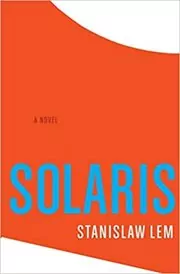
Solaris
For readers who want first contact to become an intimate test of grief and understanding. Its emotional pressure offers a strong entry into Lem, though long accounts of scientific speculation deliberately interrupt the human drama.
What it's about
Psychologist Kris Kelvin arrives at a research station above the sentient planet Solaris and finds its crew unraveling. The ocean seems to answer human curiosity with living embodiments of memory and guilt, turning first contact into something intimate and frightening.

Tales of Pirx the Pilot
For readers who want human-scale space stories built around fallibility, technical problems and practical judgment. Pirx is a warmer entry than Lem’s abstract thinkers, though the early space-age settings and episodic mysteries can feel old-fashioned.
What it's about
Pirx is no superman, just a capable space pilot learning on the job as each mission goes sideways. These stories mix technical problems, quiet suspense, and questions about what fallible humans can still do better than machines.
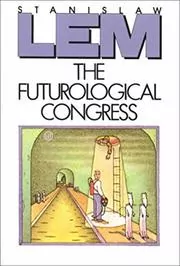
For readers who want a short, disorienting satire of comfort, perception and social control. Its shifting realities move faster than Lem’s sober contact novels, but the relentless instability gives you little solid ground to hold onto.
What it's about
Ijon Tichy heads to a future-studies congress in a country on the brink of chaos and wakes into an even stranger future. Hallucination, politics, and social engineering blur together in one of Lem's sharpest and funniest dystopias.
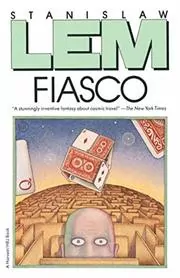
Fiasco
For readers ready for Lem’s bleakest examination of humanity’s wish to make contact. It brings technical speculation and moral failure together on a large scale, but the lengthy opening and dense passages make it a demanding starting point.
What it's about
A human expedition tries to make contact with the civilization of Quinta, armed with enormous power and very little patience. As signals fail and pressure rises, Lem pushes the dream of interstellar understanding toward one of his bleakest conclusions.

His Master's Voice
For readers who enjoy science fiction as an inquiry into what knowledge can mean. Its reflective account of scientific interpretation goes deeper into uncertainty than the adventure novels, though argument and digression take precedence over narrative momentum.
What it's about
Scientists intercept what may be a message from the stars and gather in secrecy to decode it. The deeper they go, the less certain they become, and the novel turns first contact into a searching inquiry about knowledge, pride, and interpretation.
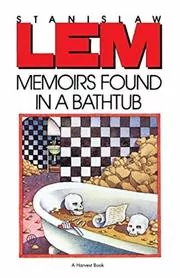
For readers who like claustrophobic satire and bureaucratic nightmares. Its obsession with secret messages makes it more paranoid than the cosmic comedies, though the circular confusion is deliberate and offers little conventional progress or reassurance.
What it's about
A manuscript from a vanished age tells of an unnamed agent trapped inside a vast underground bureaucracy, chasing a mission he can never quite understand. It is spy fiction turned claustrophobic nightmare, funny, paranoid, and deeply unsettling.
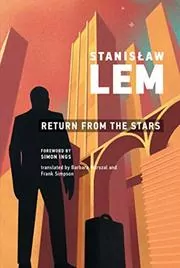
Return from the Stars
For readers interested in estrangement within a future human society rather than an alien encounter. Its tension between safety and exploration gives Lem’s ideas an everyday setting, though its gender attitudes and relationships can be uncomfortable.
What it's about
Astronaut Hal Bregg comes home from a long mission to find that 127 years have passed on Earth. The future he returns to is safe, prosperous, and deeply alien to him, forcing a painful rethink of freedom, violence, and belonging.
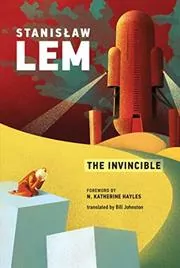
The Invincible
For readers who want a clear expedition narrative alongside questions about the limits of human power. Its compact planetary mystery is more action-oriented than His Master’s Voice, though the scientific explanations sometimes outweigh character development.
What it's about
A powerful space cruiser lands on Regis III to learn what destroyed its sister ship. The crew finds a world where evolution has taken a mechanical turn, and survival depends less on firepower than on understanding an alien form of life.
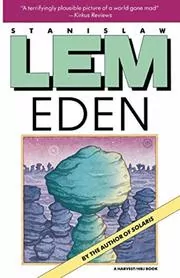
Eden
For readers drawn to exploration that becomes a problem of interpretation rather than conquest. Its strange civilization makes uncertainty unusually tangible, but the expedition framework and lightly developed crew can feel more conventional than Lem’s later work.
What it's about
After crash-landing on the planet Eden, six explorers piece together a baffling civilization they cannot fully read. Discovery, danger, and political unease build together as Lem turns planetary adventure into a study of failed understanding.

Mortal Engines
For readers who want more of Lem’s machine-centered imagination after The Cyberiad. The stories widen the emotional and philosophical range of his robots, but the collection changes tone enough that it is less cohesive than a single novel.
What it's about
In these robot fairy tales, inventors, kings, and mechanical beings chase power, perfection, and impossible schemes. Lem keeps the tone light and mischievous, but the stories land with sharp thoughts about ambition, folly, and how societies break.
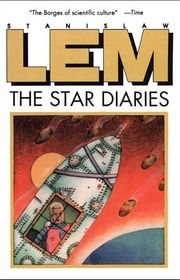
The Star Diaries
For readers who enjoy absurd voyages, time paradoxes and satire in short installments. Ijon Tichy provides a more human comic guide than the robot inventors, though the episodic structure offers little continuous character development.
What it's about
Space traveler Ijon Tichy records encounters with bizarre societies, unruly technology and versions of himself. These comic voyages turn the conventions of exploration into thought experiments about rationality, faith, history and the contradictions of human behavior.

A Perfect Vacuum
For readers who enjoy literary games and ideas compressed into unusual forms. Its reviews of nonexistent books let Lem pursue possibilities a conventional novel could not, but readers wanting sustained characters or plot may feel held at a distance.
What it's about
Lem reviews books that do not exist, and somehow makes each fake review feel like a complete intellectual adventure. The jokes are sharp, but so are the questions about authorship, criticism, and the kinds of novels nobody could ever finish writing.

For readers who want Ijon Tichy’s comic voice applied to military technology and divided identity. Its arms-race satire gives the adventures a sharper political focus, though the fragmented recollections and speculative machinery require patient attention.
What it's about
With Earth's weapons exiled to the Moon, Ijon Tichy is sent to investigate the self-evolving military machines left behind. He returns physically alive but mentally divided, and the mission becomes a sly, uneasy look at war, technology, and identity.
Sources
- 1
Stanisław Lem Books: Solaris, The Cyberiad, His Master’s Voice, and Where to Start
rehnwriter.com
- 2
Stanislaw Lem
oaklawnlibraryfriends.com
- 3
Stanislaw Lem in English
goodreads.com
- 4
10 Best Stanislaw Lem Books (2025)
ereads.com
- 5
Five Favorite Stanisław Lem Books
kevinbrockmeier.com
- 6
Stanisław Lem - novels
english.lem.pl
- 7
What are the best Lem Stanislaw books? I read Solaris and it's now in my top 5 books all time.
reddit.com
- 8
Best Stanislaw Lem books
reddit.com










Edited by
Software engineer whose passion for tracking book recommendations from podcasts inspired the creation of MRB.
Lead investor at 3one4 Capital whose startup expertise and love for books helped shape MRB and its growth.
Comments
Spotted a missing book, a wrong order or a mistake? Tell us and we'll fix this page.
We're a reading guide, not the author or publisher, so we can't send books or pass on messages.