
Aldous Huxley Books in Order
Browse Aldous Huxley books in order, with concise summaries, major themes, and a few clear suggestions on where to start with his fiction and essays.
Last updated:
As an Amazon Associate, we earn from qualifying purchases (at no extra cost to you).
Aldous Huxley books in publication order
68 books
The Burning Wheel
by Aldous Huxley
1916
Huxley's first poetry collection is full of youthful wit, formal control, and restless thought. It offers an early look at the intelligence and irony that would later shape his fiction and essays.
Limbo
by Aldous Huxley
1918
Huxley's first short story collection mixes satire, performance, and dark comedy. The pieces are clever, often unsettling, and already interested in the masks people wear.
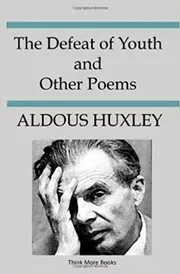
The Defeat of Youth and Other Poems
by Aldous Huxley
1918
An early collection that balances melancholy, elegance, and sly observation. These poems show Huxley testing themes of beauty, disappointment, and modern unease before his novels took center stage.
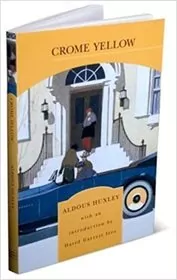
Crome Yellow
by Aldous Huxley
1921
Young poet Denis Stone spends a weekend at an English country house full of talkative, eccentric guests. Huxley uses the house party to skewer fashion, intellect, and romantic self-delusion.
Mortal Coils
by Aldous Huxley
1922
This collection moves from social comedy to something darker, especially in The Gioconda Smile. Huxley plays with vanity, desire, and cruelty, while keeping his prose quick and razor sharp.
Antic Hay
by Aldous Huxley
1923
After the First World War, Theodore Gumbril drifts through London chasing love, reinvention, and absurd schemes. It is funny on the surface and quietly bleak about a culture that has lost its center.
On the Margin
by Aldous Huxley
1923
A lively early essay collection on poetry, painting, books, and modern taste. Huxley is already witty, combative, and very good at turning criticism into entertainment.
Young Archimedes
by Aldous Huxley
1924
The title story follows a gifted boy whose brilliance shines out in an ordinary rural world. Huxley turns genius, innocence, and class difference into something moving and deeply uneasy.
Along the Road
by Aldous Huxley
1925
Part travel book, part notebook, this volume turns journeys into quick observations on people, places, and habits. Huxley is curious, amused, and rarely content with the obvious view.

Selected Poems
by Aldous Huxley
1925
This volume gathers poems from Huxley's early collections, giving a compact view of his poetic range. Nature, desire, memory, and intellectual play all sit side by side.
Those Barren Leaves
by Aldous Huxley
1925
A group of wealthy, cultured people gather at an Italian palace and discover how empty their talk can be. Huxley's satire is elegant, funny, and hard on self-important modern life.

Essays New and Old
by Aldous Huxley
1926
A collection that brings together literary criticism, social observation, and cultural argument from different stages of Huxley's early career. It is varied, readable, and unmistakably his.
Two Or Three Graces
by Aldous Huxley
1926
Built around a long title novella and shorter pieces, this collection studies performance, desire, and shifting identities. Huxley is playful, but he never loses sight of vanity and emotional damage.
Point Counter Point
by Aldous Huxley
1928
A large cast of artists, thinkers, lovers, and opportunists collide in this sharp London satire. The book trades a single plot for clashing voices, making modern life feel like an argument set to music.
Recommended by
1 person Jordan Peterson recommended this book
Jordan Peterson
Recommended on Jordan Peterson's website.
Jordan Peterson's recommendation of this book
Proper Studies
by Aldous Huxley
1928
A set of essays on literature, society, and the problem of understanding human beings. Huxley mixes sharp criticism with the kind of big questions that run through all his work.

Arabia Infelix and Other Poems
by Aldous Huxley
1929
This later poetry collection keeps Huxley's intelligence and irony, but with a drier, more traveled voice. The poems look outward at place, history, and inward at disillusion.
Do What You Will
by Aldous Huxley
1929
A brisk essay collection on culture, belief, and modern life. Huxley is skeptical, funny, and always pushing readers to notice the assumptions behind fashionable ideas.

Holy Face and Other Essays
by Aldous Huxley
1929
These essays move between religion, art, ethics, and modern habits of mind. Huxley writes as a skeptic who is also genuinely searching.
Leda
by Aldous Huxley
1929
This early poetry collection is more polished and varied than the debut, with myth, city life, and private feeling all in the mix. It shows Huxley moving toward a cooler, more controlled voice.
Brief Candles
by Aldous Huxley
1930
These stories and novellas catch people at moments of vanity, boredom, and private collapse. The tone shifts from comic to cutting, with Huxley taking aim at the thinness of civilized manners.
Vulgarity in Literature
by Aldous Huxley
1930
A set of literary essays that argues about taste, style, and what makes writing cheap or alive. Even when you disagree, Huxley is clear, provocative, and hard to ignore.
The Cicadas and Other Poems
by Aldous Huxley
1931
Later poems, often drier and more reflective, from a writer already known for prose. The collection keeps his wit, but adds a stronger sense of time, weariness, and distance.
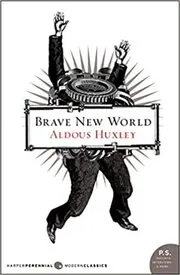
Brave New World
by Aldous Huxley
1932
In the World State, people are engineered, conditioned, and kept docile by pleasure. Huxley's classic dystopia follows a few uneasy outsiders as they discover the human cost of a perfectly managed society.
Recommended by
10 people- Jordan Peterson recommended this book
Jordan Peterson
Recommended on Jordan Peterson's website.
Jordan Peterson's recommendation of this book  Yuval Noah Harari recommended this book
Yuval Noah Harari
"The best science fiction book ever, definitely the most prescient." - Yuval Noah Harari
Yuval Noah Harari's recommendation of this book  Tristan Harris recommended this book
Tristan Harris
"Slightly older and less well known [than 1984] but equally chilling vision." - Tristan Harris
Tristan Harris's recommendation of this book  Matt Mullenweg recommended this book
Matt Mullenweg
Matt Mullenweg mentioned this book on "The Tim Ferriss Show" podcast.
Matt Mullenweg's recommendation of this book  Stewart Brand recommended this book
Stewart Brand
Stewart Brand recommended this book on his "Selected Books for the Manual for Civilization" blog post.
Stewart Brand's recommendation of this book  Sam Altman recommended this book
Sam Altman
This book was on Sam Altman's bookshelf.
Sam Altman's recommendation of this book +4
More recommendations
- Christopher Hitchens
"In [this book], one can often detect strong hints of a vicarious approval of what is ostensibly being satirized." - Christopher Hitchens
- Sahil Lavingia
Sahil Lavingia recommended this book on Notion.
- Winston Churchill
One of Winston Churchill's favorite books.
- PewDiePie
"I love this book. I think it's a masterpiece." - PewDiePie
- Christopher Hitchens
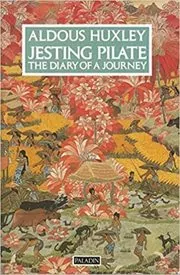
Jesting Pilate
by Aldous Huxley
1932
Drawn from Huxley's travels around the world, this book mixes diary, travel writing, and social commentary. He watches closely and writes with equal parts curiosity and impatience.

Rotunda
by Aldous Huxley
1932
A massive one-volume sampler of Huxley's fiction, poems, essays, travel writing, and drama. It is a good way to see how widely he ranged across forms and subjects.
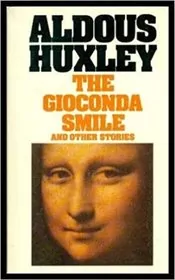
The Gioconda Smile
by Aldous Huxley
1932
A controlled, sinister tale of marriage, desire, and murder suspicion. Huxley strips away polite surfaces until the emotional cruelty underneath comes into view.
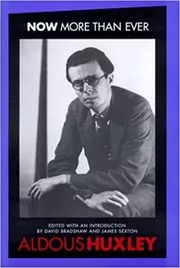
Now More Than Ever
by Aldous Huxley
1933
This rediscovered play responds to the political and economic strain of the early 1930s. It brings Huxley's wit to the stage while asking what responsibility people owe one another in hard times.
Texts and Pretexts
by Aldous Huxley
1933
An anthology of poems and passages chosen by Huxley, with his comments alongside them. It doubles as a map of his tastes and a lively guide to reading closely.
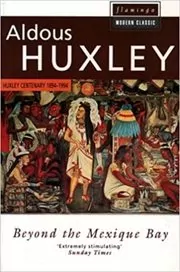
Beyond the Mexique Bay
by Aldous Huxley
1934
Travel pieces from the Caribbean and Central America become essays on empire, landscape, and human oddity. Huxley is alert to beauty, but even more alert to contradiction.
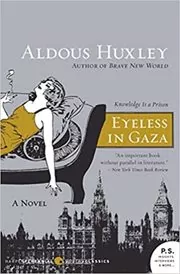
Eyeless in Gaza
by Aldous Huxley
1936
Told out of order, this novel follows Anthony Beavis from childhood through disillusionment toward a search for meaning. Love affairs, grief, and politics all feed its restless inner life.
The Olive Tree and Other Essays
by Aldous Huxley
1936
A wide-ranging essay collection on politics, ethics, art, and modern civilization. Huxley keeps moving between public questions and the habits of mind that shape them.
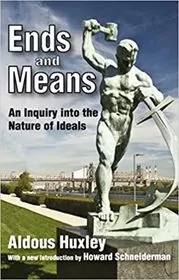
Ends and Means
by Aldous Huxley
1937
Written in the shadow of war, this book asks how good ends can be pursued without corrupting the means. Huxley takes up peace, power, religion, and social change in a serious, searching voice.
The Elder Peter Bruegel
by Aldous Huxley
1938
A short study of the painter Peter Bruegel the Elder, seen through Huxley's eye for detail and human folly. It is as much about ways of seeing as it is about art history.
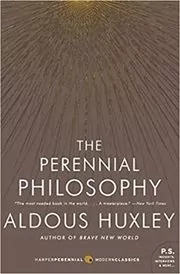
The Perennial Philosophy
by Aldous Huxley
1938
Huxley gathers passages from many religious traditions to argue that mystics keep arriving at similar truths. It is part anthology, part commentary, and a key book for his spiritual side.
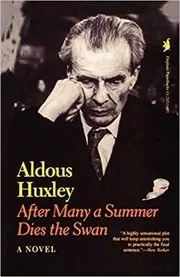
After Many a Summer Dies the Swan
by Aldous Huxley
1939
Hollywood millionaire Jo Stoyte is terrified of death and willing to chase immortality at any cost. Huxley turns that fear into a dark California satire about money, appetite, and decay.
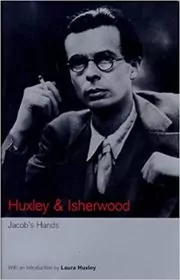
Jacob's Hands
by Aldous Huxley
1939
Co-written with Christopher Isherwood, this fable follows a shy Mojave ranch hand whose touch seems to heal. The story mixes innocence, greed, and spiritual hunger in a very Hollywood-shaped parable.
Words and Their Meanings
by Aldous Huxley
1940
A compact book about language, clarity, and the trouble caused by vague or loaded words. Huxley treats communication as a moral problem, not just a technical one.
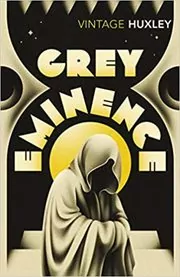
Grey Eminence
by Aldous Huxley
1941
A biography of Father Joseph, the Capuchin friar who served Cardinal Richelieu. Huxley uses one historical life to think about sanctity, power, and the way ideals get entangled with politics.
Stories, Essays, and Poems
by Aldous Huxley
1942
A generous cross-section of Huxley's work across genres. If you want a single book that shows his range, this sampler does the job well.
The Art of Seeing
by Aldous Huxley
1942
After years of eye trouble, Huxley wrote this personal account of visual re-education. It is part self-help experiment, part reflection on perception and the habits we bring to looking.
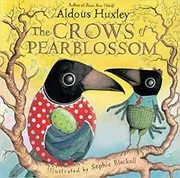
The Crows of Pearblossom
by Aldous Huxley
1944
A sly children's story about a pair of crows who need to outwit a hungry snake. It is warm, funny, and much lighter on its feet than readers may expect from Huxley.
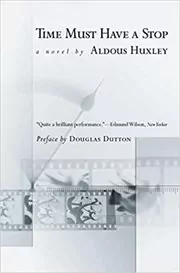
Time Must Have a Stop
by Aldous Huxley
1944
Seventeen-year-old Sebastian Barnack is pulled between appetite, art, family pressure, and spiritual questions. Set partly in Florence, the novel turns a coming-of-age story into a philosophical search.
Science, Liberty And Peace
by Aldous Huxley
1946
In these postwar essays, Huxley weighs scientific progress against freedom, violence, and social control. The questions feel close to the ones that animate Brave New World.
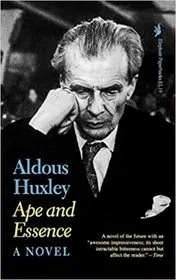
Ape and Essence
by Aldous Huxley
1948
A century after global catastrophe, a New Zealand expedition finds a brutal society living among the ruins of California. Huxley turns post-apocalyptic fiction into a savage satire of war and dehumanization.
Little Mexican
by Aldous Huxley
1948
This collection of stories moves from comic observation to moral unease, with sharp portraits of vanity and self-deception. The title piece and Young Archimedes are especially memorable.
Themes And Variations
by Aldous Huxley
1950
A collection of essays on politics, religion, psychology, and everyday modern absurdities. Huxley ranges widely, but the central concern is how people think, and fail to think, under pressure.
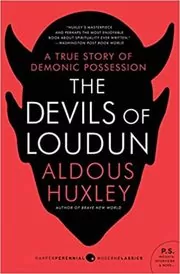
The Devils of Loudun
by Aldous Huxley
1952
Huxley reconstructs the 1630s Loudun possession case, where hysteria, religion, and state power destroy a priest named Urbain Grandier. It reads like history, but feels uncomfortably current.

The Doors of Perception
by Aldous Huxley
1954
Huxley's famous account of his mescaline experiment becomes a larger meditation on art, perception, and the filtering habits of the mind. It is short, strange, and hugely influential.
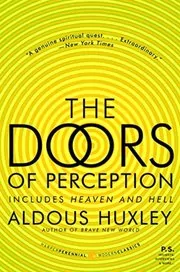
The Doors of Perception and Heaven and Hell
by Aldous Huxley
1954
These paired essays begin with Huxley's mescaline experiment and widen into a meditation on art, mysticism, and altered consciousness. Together they ask how much of reality the ordinary mind leaves out.
Recommended by
4 people Dr. Andrew Weil recommended this book
Dr. Andrew Weil
"Came first [in terms of my interests]." - Dr. Andrew Weil
Dr. Andrew Weil's recommendation of this book  Michael Pollan recommended this book
Michael Pollan
"A very famous book about what were not then known as psychedelics." - Michael Pollan
Michael Pollan's recommendation of this book  Ryan Shea recommended this book
Ryan Shea
Ryan Shea recommended this book on his website.
Ryan Shea's recommendation of this book  Douglas Murray recommended this book
Douglas Murray
"About something really interesting and dangerous." - Douglas Murray
Douglas Murray's recommendation of this book
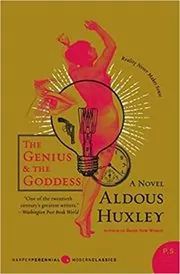
The Genius and the Goddess
by Aldous Huxley
1955
John Rivers looks back on his time as assistant to a brilliant physicist and his growing attraction to the scientist's wife, Katy. The novel is brief, intimate, and haunted by guilt.
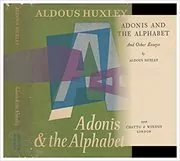
Adonis and the Alphabet
by Aldous Huxley
1956
A late essay collection on language, art, time, education, and the strains of modern life. Huxley is reflective here, but still quick with a sharp aside.

Heaven and Hell
by Aldous Huxley
1956
A follow-up to The Doors of Perception, this essay explores visionary experience through art, religion, psychology, and altered states. Huxley asks why ecstasy and terror can feel so close together.
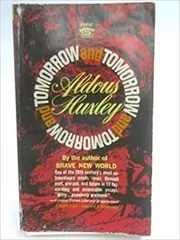
Tomorrow and Tomorrow
by Aldous Huxley
1956
This essay collection circles around time, knowledge, culture, and the ways modern people distract themselves. It shows late Huxley thinking across science, literature, and belief.
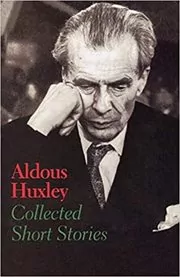
Collected Short Stories
by Aldous Huxley
1957
A one-volume gathering of Huxley's best short fiction from several earlier books. It is the easiest way to sample his range, from elegant comedy to quietly vicious psychological tales.

Brave New World Revisited
by Aldous Huxley
1958
More than two decades after his novel, Huxley returned to its warnings in nonfiction form. He examines propaganda, overpopulation, distraction, and chemical persuasion in the real world.
The Human Situation
by Aldous Huxley
1959
These Santa Barbara lectures move from education and population to art, religion, language, and hidden human potential. It feels like a guided tour through Huxley's late thinking.
On Art and Artists
by Aldous Huxley
1960
Essays on literature, painting, architecture, and music by a writer who cared deeply about how art changes perception. Huxley is accessible, opinionated, and often very funny.
Island
by Aldous Huxley
1962
Shipwrecked journalist Will Farnaby lands on Pala, an island that has built a humane society by blending science, mindfulness, and practical politics. As outside pressures close in, Huxley tests whether a good society can survive the real world.
Recommended by
2 people- Jordan Peterson recommended this book
Jordan Peterson
Recommended on Jordan Peterson's website.
Jordan Peterson's recommendation of this book  Aubrey Marcus recommended this book
Aubrey Marcus
"The beauty of [this book] was seeing how a system could work en masse, and it was my first exposure to rewriting the rules of how everything could be and understanding that we can just change everything." - Aubrey Marcus
Aubrey Marcus's recommendation of this book
Literature And Science
by Aldous Huxley
1963
One of Huxley's last books, this essay collection asks what the sciences and humanities can still say to each other. It is short, clear, and full of late-career perspective.
Aldous Huxley: A Collection of Critical Essays
by Aldous Huxley
1968
This volume gathers criticism on Huxley's novels and ideas from several perspectives. It is most useful for readers who want context after finishing the fiction.
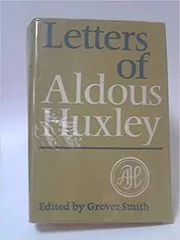
Letters of Aldous Huxley
by Aldous Huxley
1969
A selection of correspondence that shows Huxley at work in public and private thought. The letters reveal the same curiosity about art, politics, science, and spirituality found in his books.
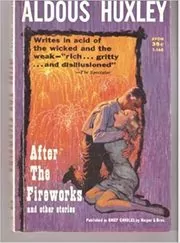
The Collected Poetry of Aldous Huxley
by Aldous Huxley
1971
This volume brings together the major poetry collections in one place. It lets readers see the continuity between Huxley's early verse and the concerns of his later prose.
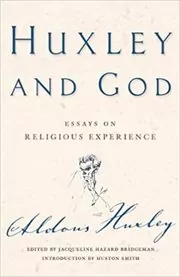
Huxley and God
by Aldous Huxley
1992
Posthumously collected essays, many first printed in a spiritual magazine, on religion, contemplation, and the search for the divine. It offers a clear window into Huxley's mature mystical interests.
Oxford Poetry
by Aldous Huxley
2012
A volume tied to Huxley's Oxford years and the literary magazine he helped edit. It is mainly of interest to readers curious about his early poetic and editorial world.

A Teacher's Guide to Brave New World
by Aldous Huxley
2014
A classroom companion that helps teachers and students approach Huxley's novel through themes, structure, context, and discussion prompts. It is designed for study rather than casual reading.

Psychedelics
by Aldous Huxley
2017
A collected volume of Huxley's writings on altered consciousness, visionary experience, and the uses and risks of psychedelic drugs. It gives a compact view of one important side of his late thought.
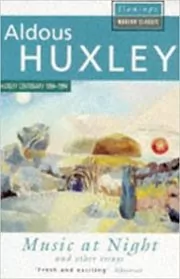
Music at Night
by Aldous Huxley
2020
An essay collection that moves through literature, politics, aesthetics, and the odd habits of modern society. The tone is urbane, skeptical, and easy to dip into.
The World of Light
by Aldous Huxley
2020
A comedy in three acts about modern relationships and the gap between bright surfaces and private motives. Huxley brings his satirical eye to the stage.
Where to start with Aldous Huxley
If you want the essential dystopia: Brave New World → Brave New World Revisited
If you want the sharp early satires: Crome Yellow → Antic Hay → Point Counter Point
If you want the inward, serious novels: Eyeless in Gaza → Time Must Have a Stop → Island
If you want the spiritual and visionary side: The Perennial Philosophy → The Doors of Perception → Heaven and Hell
Aldous Huxley collections, short stories, and related book types
Short Stories/Novellas
Short Story Collections
Picture Books
Non-Fiction
Standalone Aldous Huxley books
Author bio
Aldous Huxley was born in Godalming, Surrey, on July 26, 1894, and grew up in a family where books, science, and argument were ordinary parts of life. His father, Leonard Huxley, was a writer and editor. His mother, Julia Arnold, ran a school, and his grandfather was Thomas Henry Huxley, the scientist nicknamed Darwin's Bulldog.
Then his eyesight changed everything.
As a teenager at Eton, Huxley developed keratitis punctata, an eye disease that left him nearly blind for several years. He had imagined a future in medicine or science, but that path suddenly closed. He recovered enough vision to read with difficulty, studied English at Balliol College, Oxford, edited Oxford Poetry, and published his first book, The Burning Wheel, in 1916.
His early fiction made him famous as a satirist of clever people behaving badly. In books like Crome Yellow, Antic Hay, and Point Counter Point, he wrote about artists, intellectuals, and social climbers with a dry smile and very little sentimentality. Readers who like Huxley often like that double effect, the wit is bright, but the judgment underneath can sting.
Brave New World changed the scale of his reputation.
Published in 1932, it took his gift for satire and pushed it into a terrifying future built on conditioning, engineered pleasure, and the surrender of freedom. He never stopped worrying about what science and technology might do when joined to politics, mass culture, and the human wish to be comfortable at any cost. That same concern runs through later books like Brave New World Revisited, Ape and Essence, and, in a very different key, Island.
His work did not stay in one lane. He wrote short stories, poems, plays, travel books, criticism, and essays on war, education, art, religion, and language. Some readers come to him for the sharp social comedy. Others stay for the more inward books, especially Eyeless in Gaza, The Perennial Philosophy, and The Doors of Perception, where he turns toward pacifism, mysticism, consciousness, and the possibility that human beings might live less mechanically.
California widened the frame.
In 1937 Huxley moved to Southern California with his wife Maria Nys and their son Matthew, and he spent the rest of his life largely in the United States. He worked in Hollywood, wrote screenplays, made close friendships with figures like Gerald Heard and Jiddu Krishnamurti, and became increasingly interested in Vedanta, meditation, and the shared ground between Eastern and Western spiritual traditions. His essays from these years can feel calmer than the early satires, but the questions are just as tough.
What ties the whole career together is his habit of asking what kind of people modern systems are making us. He kept returning to the pressure points, language that blurs truth, institutions that reward passivity, appetites that become substitutes for meaning, and the fragile spaces where attention, freedom, and inner life can still survive. Even when he sounds severe, there is usually a practical moral question behind the severity.
Huxley married Laura Archera in 1956, after Maria's death, and kept writing through serious illness in his final years. Diagnosed with cancer in 1960, he finished Island, his last novel, and continued giving lectures on human potential and education. He died in Los Angeles on November 22, 1963, leaving behind one of the strangest and widest-ranging bodies of work of the twentieth century, part satire, part warning, part search.





Edited by
Software engineer whose passion for tracking book recommendations from podcasts inspired the creation of MRB.
Lead investor at 3one4 Capital whose startup expertise and love for books helped shape MRB and its growth.
Comments
Did we miss something? Have feedback?
Help us improve this page by sharing your thoughts