
Zecharia Sitchin Books in Order
See Zecharia Sitchin’s books in order, with Earth Chronicles reading order, summaries, and background on his ancient astronaut ideas for new readers.
Last updated:
As an Amazon Associate, we earn from qualifying purchases (at no extra cost to you).
Zecharia Sitchin books in publication order
16 books
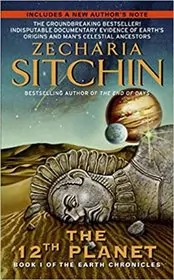
The 12th Planet
by Zecharia Sitchin
1976
Sitchin argues that Sumerian tablets describe a long-lost planet, Nibiru, whose visiting inhabitants—the Anunnaki—shaped Earth’s early history. Drawing on myths and archaeology, he links their gold-mining mission to the genetic engineering of humanity.
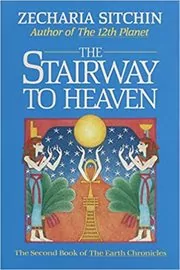
The Stairway to Heaven
by Zecharia Sitchin
1980
The second Earth Chronicles volume follows humanity’s search for immortality to a “Land of the Gods” on Earth. Sitchin connects Mesopotamian and Egyptian texts, the pyramids, the Sphinx, and Sinai to an ancient spaceport where mortals hoped to join the gods after death.
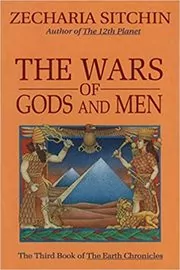
The Wars of Gods and Men
by Zecharia Sitchin
1985
Here Sitchin reads myths of divine conflict as records of real wars among the Anunnaki. He traces battles from Mesopotamia to Canaan and the Indus Valley, arguing that nuclear weapons destroyed a Sinai spaceport and echo in tales such as Sodom and Gomorrah.
Genesis Revisited
by Zecharia Sitchin
1990
A companion to the main series, this book sets modern astronomy, genetics, and space exploration beside ancient creation stories. Sitchin contends that new scientific findings mirror Sumerian accounts of engineered humans, vanished planets, and catastrophic weapons.
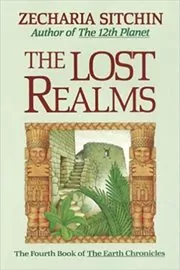
The Lost Realms
by Zecharia Sitchin
1990
This volume moves the Anunnaki story to the Americas, examining Olmec heads, Mayan cities, Andean monuments, and pre-Columbian myths. Sitchin argues that transoceanic gods and sailors carried Old World astronomy and calendars to build “lost realms” in the New World.
When Time Began
by Zecharia Sitchin
1993
Sitchin focuses on calendars, zodiacs, and megalithic sites. From Sumerian temples to Stonehenge and Mesoamerican monuments, he argues that ancient builders encoded celestial cycles and that a shift to the Age of Aries marked a turning point in divine rule and human history.
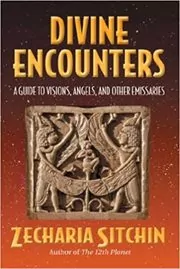
Divine Encounters
by Zecharia Sitchin
1995
Re-examining the Bible and Near Eastern myths, Sitchin treats visions, angels, and fiery chariots as literal encounters with the Anunnaki. He follows prophetic experiences from Eden to Sinai, asking how these “divine emissaries” shaped religion and humanity’s sense of destiny.
The Cosmic Code
by Zecharia Sitchin
1998
In this volume Sitchin explores the idea that a hidden “cosmic code” links human DNA, the Hebrew alphabet, and sacred numbers. Drawing on Sumerian and biblical texts, he looks for messages allegedly embedded in scriptures about humanity’s origins and future.
The Lost Book of Enki
by Zecharia Sitchin
2001
Written as the memoirs of the god Enki, this narrative retells Sitchin’s Earth Chronicles from an insider’s voice. It covers the arrival from Nibiru, the search for gold, genetic experiments that produced humans, rivalries among the gods, and the coming Flood.
Journeys to the Mythical Past
by Zecharia Sitchin
2007
In this follow-up travelogue, Sitchin recounts dangerous moments inside the Great Pyramid, visits to Vatican archives, the Iceman of the Alps, the Antikythera mechanism, Malta’s temples, and the Nazca lines, presenting them as clues to lost technology and Anunnaki departures.
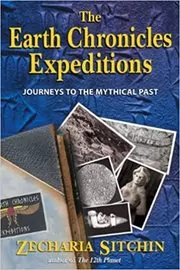
The Earth Chronicles Expeditions
by Zecharia Sitchin
2007
This autobiographical book tracks Sitchin’s field trips to Mayan temples, Olmec sites, Istanbul museums, Jerusalem tunnels, Sinai, and more. He describes artifacts and ruins he believes support his ancient-astronaut reading of myths and show links between Old and New Worlds.
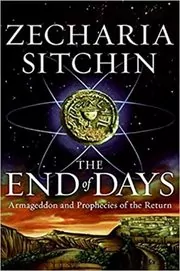
The End of Days
by Zecharia Sitchin
2007
The final Earth Chronicles volume compares turmoil in the twenty-first century with upheavals four millennia ago. Sitchin links prophecies in Daniel and Revelation to his Anunnaki timeline, arguing for a cyclical “celestial time” and a future return of the gods.
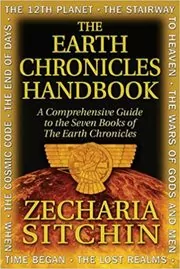
The Earth Chronicles Handbook
by Zecharia Sitchin
2009
Designed as a reference guide, this handbook summarizes gods, people, places, and concepts from all seven Earth Chronicles volumes and related books. Alphabetical entries, cross-references, and brief commentaries help readers navigate Sitchin’s sprawling alternative history.
There Were Giants Upon the Earth
by Zecharia Sitchin
2010
Sitchin focuses here on the “giants” and demigods born of unions between Anunnaki and humans. Combining biblical verses with Mesopotamian epics and the Royal Tombs of Ur, he speculates about remains and DNA that might link modern people to these hybrid ancestors.
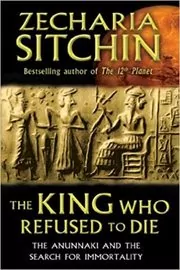
The King Who Refused to Die
by Zecharia Sitchin
2013
This novel reimagines the Epic of Gilgamesh through both ancient and modern lenses. A present-day woman is drawn into the orbit of a man claiming to be Gilgamesh’s avatar, and their story intersects with Sumerian rituals, Anunnaki politics, and a quest for immortality.
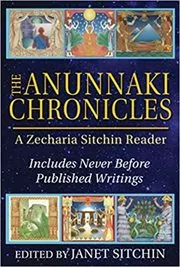
The Anunnaki Chronicles
by Zecharia Sitchin
2015
Edited after Sitchin’s death, this anthology gathers key chapters from his books along with letters, lectures, and essays. It offers a concise overview of his Nibiru and Anunnaki theories, plus behind-the-scenes glimpses of how his ideas developed over decades.
Where to start with Zecharia Sitchin
If you want the core Anunnaki story: The 12th Planet → The Stairway to Heaven → The Wars of Gods and Men → The Lost Realms.
If you’re curious about science vs scripture: The 12th Planet → Genesis Revisited → The Cosmic Code.
If you’re drawn to visions and spiritual encounters: Divine Encounters → The End of Days.
If you like travel and real-world sites: The Earth Chronicles Expeditions → Journeys to the Mythical Past.
If you prefer story-style retellings: The Lost Book of Enki → The King Who Refused to Die.
Zecharia Sitchin sub-series and character series
Earth Chronicles Companion books in order
Explore this series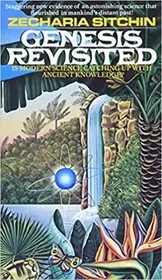
by Zecharia Sitchin
2009A Comprehensive Guide to the Seven Books of The Earth Chronicles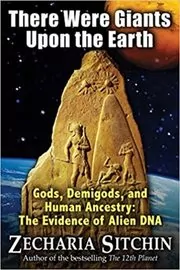
Earth Chronicles Expeditions books in order
Explore this seriesEarth Chronicles Expeditions books in chronological order
Standalone Zecharia Sitchin books
Author bio
Zecharia Sitchin was born in 1920 in Baku, in what is now Azerbaijan, and grew up in a Jewish family in Mandatory Palestine. There he moved between modern schooling and religious study, absorbing Bible stories alongside the fast-changing politics of the region.
As a young man he developed a deep interest in languages. In Palestine he learned modern and ancient Hebrew along with other Semitic and European tongues, read the Hebrew Bible in the original, and followed reports of new archaeological discoveries in the Near East.
After his early education he went to London, studying economic history at the London School of Economics and graduating from the University of London. Returning to the Middle East, he worked for years as a journalist and editor in Israel before relocating to New York in 1952, where he also served as an executive in the shipping industry.
In his free time he taught himself Sumerian cuneiform and pored over museum tablets that most visitors barely noticed.
That private study eventually led to The 12th Planet, published in 1976. In it Sitchin proposed that Mesopotamian texts preserve the story of a distant member of the solar system, Nibiru, whose long orbit periodically brings an advanced race, the Anunnaki, to Earth to mine gold and engineer humanity as a worker species.
The book became the first volume in what he called the Earth Chronicles, a seven-book sequence that also includes The Stairway to Heaven, The Wars of Gods and Men, The Lost Realms, When Time Began, The Cosmic Code, and The End of Days. Across these volumes he stitches together Sumerian myths, biblical passages, and archaeology into a single narrative about gods-as-astronauts, lost spaceports, ancient wars, and a cosmic timetable governing history.
Alongside the main sequence, Sitchin wrote companion works that circle the same ideas from different angles. Genesis Revisited sets modern astronomy and genetics beside ancient creation stories; Divine Encounters rereads visions and angelic visits as direct meetings with the Anunnaki; The Lost Book of Enki imagines the saga told in the first person by the god Enki; There Were Giants Upon the Earth focuses on demigods and alleged traces of alien DNA; The King Who Refused to Die reworks the Epic of Gilgamesh as a novel; and The Anunnaki Chronicles collects key chapters, lectures, and letters edited after his death by his niece.
His core claim stayed simple: myth is memory, the Bible is a technical report, and our “gods” were visitors from a twelfth planet.
Scholars of ancient languages, astronomy, and archaeology have strongly rejected his translations and celestial mechanics, yet his books found a wide audience outside academia. They have sold millions of copies, been translated into more than two dozen languages, and helped seed popular interest in ancient-astronaut themes in radio, television, and documentaries.
In his later decades Sitchin continued to travel to sites that fascinated him—Mayan temples, stone circles, and Middle Eastern ruins—folding new details into lectures and into field-report books such as The Earth Chronicles Expeditions and Journeys to the Mythical Past. He lived and wrote in New York City until his death on October 9, 2010, leaving a sprawling, controversial body of work that still draws curious readers into debates about humanity’s oldest stories and what they might conceal.








Edited by
Software engineer whose passion for tracking book recommendations from podcasts inspired the creation of MRB.
Lead investor at 3one4 Capital whose startup expertise and love for books helped shape MRB and its growth.
Comments
Did we miss something? Have feedback?
Help us improve this page by sharing your thoughts