
Worthing Books in Order
Part ofOrson Scott Card Books in OrderExplore the Worthing books by Orson Scott Card in order, with summaries and background on Capitol, Jason Worthing and the overlapping stories of a distant future.
Last updated:
As an Amazon Associate, we earn from qualifying purchases (at no extra cost to you).
Worthing books in publication order
3 books
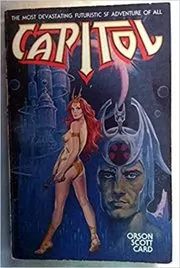
Capitol
by Orson Scott Card
1979
These interconnected science fiction stories explore life on Capitol, the center of a spacefaring empire. Artificial sleep, altered memories and political power shape the choices of people living within a civilization struggling with its own weaknesses.
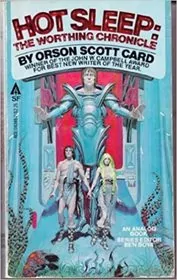
Hot Sleep
by Orson Scott Card
1979
Jason Worthing possesses a forbidden ability to read minds in a society that executes telepaths. His dangerous gift brings him to Abner Doon's attention and draws him into plans involving interstellar travel, suspended animation and colonization.
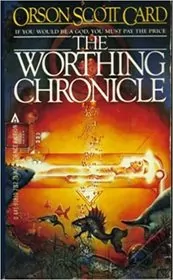
The Worthing Chronicle
by Orson Scott Card
1983
Telepath Jason Worthing leads settlers toward a world he hopes will escape his former civilization's stagnation. Suspended animation stretches his life across generations, confronting him with the consequences of the society he helped to establish.
Series background & context
The Worthing books are Orson Scott Card's connected science-fiction stories about a future civilization shaped by suspended life, unequal power and the possibility of guiding human development across generations. The group includes Capitol, Hot Sleep and The Worthing Chronicle. These books share material and ideas, so their relationship is more complicated than three consecutive adventures about a character moving from one mission to the next.
The central technology is somec, which allows people to sleep through long stretches of time without aging through them normally. Those with access can spread their lives across decades that other people must experience continuously. The arrangement creates a sharp division between ordinary lifespans and the extended influence available to the powerful. What looks like a personal advantage also changes how institutions work, because the same people can remain present across periods that would otherwise bring generational change.
Time becomes another form of privilege.
Capitol explores the imperial society through linked short fiction. Its capital world rules over a wider civilization, while the stories examine lives shaped by that concentration of authority and technology. The collection provides different angles on the setting instead of following one continuous journey. Private desires and social arrangements connect the pieces, showing how a system that promises extraordinary control over life can still leave people struggling with familiar fears and ambitions.
Hot Sleep develops the story of Jason Worthing, a young man whose telepathic ability makes him dangerous in the eyes of his society. His path brings him into contact with Abner Doon and eventually with the responsibility of leading a colony away from the old civilization. Establishing another community creates an opportunity to build something different, but it also raises questions about the influence of a gifted individual over people who depend on him. The ability to survive across generations complicates that responsibility further.
The Worthing Chronicle revisits and expands material from the earlier work. Its frame brings Jason and Justice to a village, where a boy named Lared is asked to record a history. That act of telling connects a small community with a much larger past. The perspective allows the books' concerns about power and protection to become questions about memory: what people know of those who shaped their lives, and how understanding that history might affect what they believe about their present.
Publication order shows how the setting developed, but readers should expect overlapping versions and revised material, particularly between Hot Sleep and The Worthing Chronicle. The tone combines future history with questions about responsibility, suffering and the limits of benevolent control. Space travel and unusual mental abilities create the possibilities, while human communities bear their consequences. The continuing interest lies in whether people with exceptional knowledge and longevity can help others without making those other lives dependent on decisions they cannot see or challenge.

Edited by
Software engineer whose passion for tracking book recommendations from podcasts inspired the creation of MRB.
Lead investor at 3one4 Capital whose startup expertise and love for books helped shape MRB and its growth.
Comments
Spotted a missing book, a wrong order or a mistake? Tell us and we'll fix this page.
We're a reading guide, not the author or publisher, so we can't send books or pass on messages.