
William Landay Books in Order
This page has William Landay's books in order, with short summaries, reading guidance, and simple suggestions on where to start with his best-known novels.
Last updated:
As an Amazon Associate, we earn from qualifying purchases (at no extra cost to you).
William Landay books in publication order
4 books

Mission Flats
by William Landay
2003
When a top Boston prosecutor is found murdered in a cabin in western Maine, police chief Ben Truman is drawn into a brutal city manhunt. The deeper he digs, the less convincing the obvious suspect looks.
Recommended by
1 person Stephen King recommended this book
Stephen King
"Great." - Stephen King
Stephen King's recommendation of this book
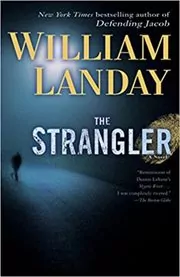
The Strangler
by William Landay
2007
Boston, 1963. As panic over the Boston Strangler spreads, three Daley brothers, a cop, a thief, and a prosecutor, get pulled into the city's violence, corruption, and fear. It is a dark crime story with a strong family core.
Recommended by
1 person- Stephen King recommended this book
Stephen King
"Great." - Stephen King
Stephen King's recommendation of this book

Defending Jacob
by William Landay
2012
Assistant district attorney Andy Barber sees his careful life implode when his teenage son is accused of murdering a local boy. The courtroom suspense is sharp, but the real pull is the family's fear, doubt, and loyalty.
Recommended by
1 person- Stephen King recommended this book
Stephen King
"Great." - Stephen King
Stephen King's recommendation of this book

All That Is Mine I Carry with Me
by William Landay
2023
In 1975, ten-year-old Miranda Larkin comes home to a silent house and a missing mother. When the case resurfaces decades later, the children must decide what they believe about the father who may have killed her.
Where to start with William Landay
If you want his breakout legal thriller: Defending Jacob
If you want a family mystery that unfolds over decades: All That Is Mine I Carry with Me
If you want to read from the beginning: Mission Flats → The Strangler → Defending Jacob
Standalone William Landay books
Author bio
William Landay was born in Boston in 1963 and grew up in Brookline, Massachusetts. He attended Roxbury Latin, then went on to Yale and Boston College Law School. That route, local roots, strong schools, and a long stretch around courthouses, put him close to the Boston world that later became the natural home for much of his fiction.
Before he was a full-time novelist, Landay spent seven years as an assistant district attorney in Middlesex County. He has said that the job gave him a close view of how criminal cases really unfold, not as neat puzzles but as messy contests shaped by judgment, luck, fear, and competing stories. That practical understanding of the law, and of the people moving through it, gives his novels a solid floor.
He did not set out with some grand plan to become a career writer.
He is also unusually open about wanting to stay a little hidden. On his website, Landay explains that he prefers the old idea that a novelist should stay offstage and let the work speak for itself. That reserve fits the books, which are interested less in tidy confession than in what people choose not to say.
While practicing law, he kept writing. It was a long apprenticeship. He worked through failed manuscripts, wrote in the margins of a demanding job, and stayed with it long enough for Mission Flats to break through. In interviews, he has recalled getting the call that the book had sold while he and his wife were at a doctor's appointment, waiting for news about their first child. The timing could not have been much sharper.
That debut, published in 2003, follows small-town Maine police chief Ben Truman into a Boston murder case and won the Dagger Award for best first crime novel. The Strangler came next, set in Boston in 1963, with the fear around the Boston Strangler hanging over a story about three very different brothers. Both books show Landay's interest in crime as a way to talk about class, family, and the hidden bargains people make.
He likes pressure, but he also likes doubt.
Then came Defending Jacob, the book that carried him to a much wider audience. Its premise is simple and brutal: a prosecutor's teenage son is accused of murder. The novel mixes courtroom pressure with the quieter panic of marriage and parenthood, won the Strand Critics Award for best mystery novel, and later became a television miniseries. Many readers come to Landay for the suspense, but stay for the uncertainty beneath it. He is very good at asking what love looks like when loyalty and truth stop pointing in the same direction.
After a gap of more than a decade, he returned with All That Is Mine I Carry with Me. The book begins in 1975, when a mother vanishes and her children are left with doubt that lasts into adulthood. It is a crime story, but it is also a family story about memory, silence, and the long afterlife of suspicion. That balance, between investigation on the surface and emotional damage underneath, is one of Landay's trademarks.
Boston and its nearby towns matter a lot in his work. So do prosecutors, cops, fathers, sons, marriages under strain, and secrets that refuse to stay buried. Even when the plots twist, the emotional engine is usually simple: someone loves someone, someone is hiding something, and the law may not be enough to sort either thing out. Landay keeps his personal life fairly private, but he has spoken about being a father, and he still lives in Boston.














Edited by
Software engineer whose passion for tracking book recommendations from podcasts inspired the creation of MRB.
Lead investor at 3one4 Capital whose startup expertise and love for books helped shape MRB and its growth.
Comments
Did we miss something? Have feedback?
Help us improve this page by sharing your thoughts