
William L Shirer Books in Order
Browse William L Shirer's books in order, from Berlin reporting and memoir to major history, with quick summaries, related series, and tips on where to start.
Last updated:
As an Amazon Associate, we earn from qualifying purchases (at no extra cost to you).
William L Shirer books in publication order
14 books
Berlin Diary: The Journal of a Foreign Correspondent 1934-1941
by William L Shirer
1941
Drawn from Shirer's wartime journal, this book follows Nazi Germany from the inside as propaganda, censorship, and intimidation tighten their grip. The day-by-day reporting gives the road to war an unnerving immediacy.
End of a Berlin Diary
by William L Shirer
1947
This sequel picks up in the last stretch of the war and follows Europe into surrender, occupation, and the Nuremberg Trials. Shirer watches the ruins of Germany and asks what defeat really changed.

Midcentury Journey
by William L Shirer
1952
Shirer travels through postwar Europe and reflects on what two world wars have done to its politics, culture, and confidence. Part travel book and part argument, it measures old nations against a damaged new age.

The Challenge of Scandinavia
by William L Shirer
1955
Shirer surveys Norway, Sweden, Denmark, and Finland in the postwar years, looking at their politics, war memories, and rebuilding. It is a broad, clear portrait of a region often treated as quieter than it really was.

The Rise and Fall of the Third Reich
by William L Shirer
1960
Shirer's best-known history tracks the rise, rule, and destruction of Nazi Germany, from Hitler's climb to the regime's collapse in 1945. It combines captured documents with the perspective of a reporter who watched much of the story unfold.
Recommended by
2 people Jordan Peterson recommended this book
Jordan Peterson
Recommended on Jordan Peterson's website.
Jordan Peterson's recommendation of this book  Lex Fridman recommended this book
Lex Fridman
"I've read it twice." - Lex Fridman
Lex Fridman's recommendation of this book

The Rise and Fall of Adolf Hitler
by William L Shirer
1961
This shorter account follows Hitler from failed agitator to dictator to a leader dragging Germany into ruin. Shirer distills his reporting and later research into a direct, readable narrative.

The Sinking of the Bismarck
by William L Shirer
1962
After the German battleship Bismarck destroys HMS Hood, the Royal Navy launches a relentless hunt across the Atlantic. Shirer turns the pursuit and final battle into a tight, fast-moving piece of wartime history.

The Collapse of the Third Republic
by William L Shirer
1969
Shirer examines why France collapsed so quickly in 1940, tracing the political divisions, weak leadership, and military failures that left it exposed. It is both a history of defeat and an argument about how democracies wear down.

The Start: 1904-30
by William L Shirer
1976
In the first volume of his memoir, Shirer traces his path from Chicago and Cedar Rapids to Paris, Vienna, and India. It is the story of a young reporter finding his trade while the old world between the wars still feels open.
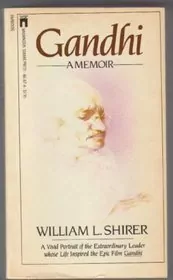
Gandhi
by William L Shirer
1980
Based on the time Shirer spent in India as a foreign correspondent, this memoir remembers Gandhi at close range. It shows the independence leader as both public symbol and difficult, intensely human presence.
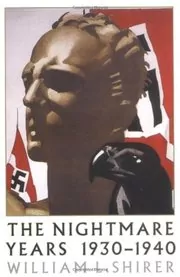
The Nightmare Years: 1930-40
by William L Shirer
1984
Shirer recounts the decade he spent reporting from Europe as Hitler rose, democracies faltered, and war closed in. The book mixes newsroom life, family strain, censorship, and eyewitness history in real time.
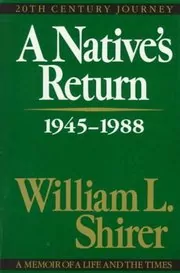
A Native's Return: 1945-1988
by William L Shirer
1990
In the final memoir volume, Shirer returns to ruined Europe, loses his CBS career, and fights through the hard politics of postwar America. It is his most reflective book, looking at success, disappointment, and the long shadow of history.

Love and Hatred
by William L Shirer
1994
Using letters, diaries, and family history, Shirer explores the long, stormy marriage of Leo and Sonya Tolstoy. The book moves between private quarrels, literary labor, and the emotional cost of living beside greatness.

This Is Berlin
by William L Shirer
2014
This collection gathers Shirer's CBS broadcasts from Nazi Germany between 1938 and 1940. Read together, they show how events sounded in the moment, and how a correspondent tried to tell the truth under censorship.
Where to start with William L Shirer
If you want his landmark Nazi Germany history: The Rise and Fall of the Third Reich
If you want firsthand reporting from inside Hitler's Europe: Berlin Diary → End of a Berlin Diary → This Is Berlin
If you want his memoirs in order: The Start: 1904-30 → The Nightmare Years: 1930-40 → A Native's Return: 1945-1988
If you want a shorter entry point on Hitler: The Rise and Fall of Adolf Hitler
If you want France and postwar Europe beyond Germany: The Collapse of the Third Republic → Midcentury Journey → The Challenge of Scandinavia
William L Shirer sub-series and character series
20th Century Journey books in order
Explore this series20th Century Journey books in chronological order
Berlin Diary books in order
Explore this series
Berlin Diary: The Journal of a Foreign Correspondent 1934-1941
by William L Shirer
1941Berlin Diary, Book 1
Berlin Diary books in chronological order
Berlin Diary: The Journal of a Foreign Correspondent 1934-1941
by William L Shirer
1941Berlin Diary, Book 1
William L Shirer collections, short stories, and related book types
Non-Fiction
Standalone William L Shirer books
Author bio
William L Shirer was born in Chicago in 1904, but the place that shaped him most was Cedar Rapids, Iowa. After his father died when Shirer was still a boy, his mother moved the family there to live with relatives. He grew up far from the European capitals he would later cover, in a household where money was tight and work mattered.
At Coe College he edited the student paper and reported sports for the local newspaper. Those jobs were more than campus practice. They taught him how to notice a room, chase a detail, and get words on the page fast, habits that stayed with him for the rest of his life.
He wanted a bigger world.
In 1925 he worked his way to Europe on a cattle boat, expecting a short adventure and hoping to break into journalism. Instead he landed in Paris and, not long after, found work with the Chicago Tribune. That opened the door to the life he had wanted. He reported from Paris and Vienna, watched Charles Lindbergh arrive in France after his flight across the Atlantic, and traveled widely through Europe and beyond.
India was one of the stops that stayed with him. Sent there to cover the independence movement, he met Mohandas Gandhi and saw him at close range, not just as a public symbol but as a working political and spiritual leader. Much later, Shirer returned to that period in Gandhi, a memoir that has the same quality many readers like in his best work, a clear eye for the person in front of him, not just the legend.
Then Germany pulled him in.
By the mid-1930s Shirer was reporting from Berlin as fascism hardened into power. He worked for Hearst services and then, in 1937, Edward R. Murrow hired him for CBS radio. Shirer became one of the first voices many Americans associated with direct reporting from a dangerous Europe. He was there for the Anschluss, the Munich crisis, the opening of the war, and the fall of France. He also dealt every day with censorship, pressure, and the problem that defined much of his writing, how to tell the truth when a regime is trying to manage every word.
After leaving Germany in late 1940, he turned the notes he had carried out with him into Berlin Diary. The book made his name as an author. A much larger success came later with The Rise and Fall of the Third Reich, which won the National Book Award and became the work most closely tied to him. Readers still come to Shirer for the same reason, he writes large events in a way that keeps people, rooms, and choices in view.
That plain, eyewitness style runs through The Collapse of the Third Republic, This Is Berlin, and the memoir volume The Nightmare Years. Again and again, Shirer returns to a few hard subjects: propaganda, democratic weakness, political self-deception, and the way ordinary lives are bent by public catastrophe. He was not interested in treating history as something distant and sealed off. He wanted to show how it felt while it was still happening.
He kept writing deep into later life. His three-part memoir, beginning with The Start and ending with A Native's Return, let him look back over the century he had spent chasing across Europe and America. He spent his later years in Massachusetts and died in Boston in 1993. What lasts in his books is the sense that a skeptical reporter is still in the room, taking notes while the world changes.












Edited by
Software engineer whose passion for tracking book recommendations from podcasts inspired the creation of MRB.
Lead investor at 3one4 Capital whose startup expertise and love for books helped shape MRB and its growth.
Comments
Did we miss something? Have feedback?
Help us improve this page by sharing your thoughts