
20th Century Journey Books in Order
Part ofWilliam L Shirer Books in OrderSee the 20th Century Journey books by William L Shirer in order, with short summaries, series background, and help choosing where to start.
Last updated:
As an Amazon Associate, we earn from qualifying purchases (at no extra cost to you).
20th Century Journey books in publication order
3 books

The Start: 1904-30
by William L Shirer
1976
In the first volume of his memoir, Shirer traces his path from Chicago and Cedar Rapids to Paris, Vienna, and India. It is the story of a young reporter finding his trade while the old world between the wars still feels open.
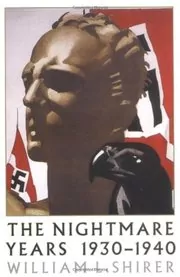
The Nightmare Years: 1930-40
by William L Shirer
1984
Shirer recounts the decade he spent reporting from Europe as Hitler rose, democracies faltered, and war closed in. The book mixes newsroom life, family strain, censorship, and eyewitness history in real time.
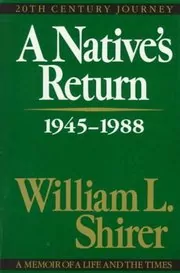
A Native's Return: 1945-1988
by William L Shirer
1990
In the final memoir volume, Shirer returns to ruined Europe, loses his CBS career, and fights through the hard politics of postwar America. It is his most reflective book, looking at success, disappointment, and the long shadow of history.
20th Century Journey books in chronological order
Series background & context
20th Century Journey is William L Shirer's three-volume autobiography, but it does not feel like a neat, polished victory lap. It feels more like a reporter going back through his own notebooks and memory, trying to understand how one life got tangled up with so much of the twentieth century. The books are personal, but they are also full of politics, journalism, travel, and the everyday texture of living through events that later became history.
The series opens with The Start: 1904-30. That first volume takes Shirer from childhood in Chicago and Cedar Rapids to Coe College, newspaper work, and then the leap to Europe as a very young reporter. Paris matters here. So do Vienna and India. The book shows him learning how to observe people, how to file copy under pressure, and how to build a life far from home. It also has the mood of a world that still seems open, even if trouble is already building in the background.
Then the pace changes.
The Nightmare Years: 1930-40 is the volume most readers gravitate to first, and it is easy to see why. Shirer is reporting from Europe as Hitler rises, the democracies hesitate, and war closes in. Because he was there, the book works on two levels at once. It gives you the big events, rallies, invasions, diplomatic failures, censorship, broadcasts, and also the smaller pressures of day-to-day life, including money worries, family strain, and the constant problem of how to keep telling the truth when powerful people are policing language.
The final volume, A Native's Return: 1945-1988, shifts again. Here Shirer comes back to the United States and into the long second half of his life. He returns to ruined Europe after the war, loses his place at CBS, struggles through the political chill of the McCarthy years, and eventually sees The Rise and Fall of the Third Reich change his standing as a writer. This last book is more reflective and sometimes more intimate than the earlier two. It is interested not just in public events, but in cost, disappointment, aging, and the awkward business of looking back.
That change in tone is part of the point.
Across all three books, the real subject is not only Shirer himself. It is the way private lives are pushed around by public forces. He keeps returning to propaganda, fear, democratic weakness, and the strange mix of chance and decision that shapes a career and a century. If you like memoirs that also explain the world around them, this series does that very well. The books work best in order, because each one carries the next stage of his life forward, but each has its own feel: youthful discovery, gathering catastrophe, and later-life reckoning.
















Edited by
Software engineer whose passion for tracking book recommendations from podcasts inspired the creation of MRB.
Lead investor at 3one4 Capital whose startup expertise and love for books helped shape MRB and its growth.
Comments
Did we miss something? Have feedback?
Help us improve this page by sharing your thoughts