
William Golding Books in Order
Explore William Golding's books in order, with short summaries, related series, and clear guidance on where to start with his fiction and nonfiction.
Last updated:
As an Amazon Associate, we earn from qualifying purchases (at no extra cost to you).
William Golding books in publication order
18 books
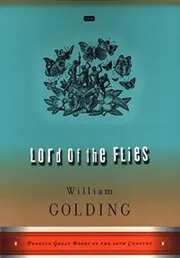
Lord of the Flies
by William Golding
1954
A group of schoolboys crash on a deserted island and try to govern themselves without adults. Fear, power struggles, and the fantasy of a beast slowly turn play into savagery.
Recommended by
4 people Jordan Peterson recommended this book
Jordan Peterson
Recommended on Jordan Peterson's website.
Jordan Peterson's recommendation of this book  Scott Belsky recommended this book
Scott Belsky
Scott Belsky mentioned this book on "The Tim Ferriss Show" podcast.
Scott Belsky's recommendation of this book  Ev Williams recommended this book
Ev Williams
On the "books read" section of Ev Williams' GoodReads profile.
Ev Williams's recommendation of this book  Douglas Murray recommended this book
Douglas Murray
"The first book that absolutely threw me." - Douglas Murray
Douglas Murray's recommendation of this book
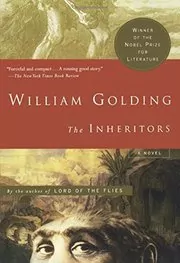
The Inheritors
by William Golding
1955
Golding imagines the last days of a small Neanderthal group as a new kind of human enters their world. Seen from the older people's side, the story is tense, tragic, and unexpectedly tender.
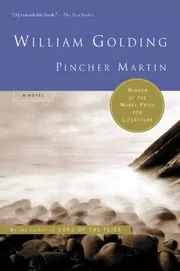
Pincher Martin / The Two Deaths of Christopher Martin
by William Golding
1956
After his ship is torpedoed in the North Atlantic, Christopher Martin claws his way onto a barren rock. Survival becomes a brutal inward struggle as memory, hunger, and fear close in.

Sometime, Never
by William Golding
1957
This shared volume includes Golding's Envoy Extraordinary, a witty ancient-world tale about invention gone wrong, alongside imaginative stories by John Wyndham and Mervyn Peake.

The Brass Butterfly
by William Golding
1958
In imperial Rome, inventor Phanocles arrives with devices that promise comfort, speed, and military power. Golding turns the clash between invention and authority into a lively, satirical stage comedy.
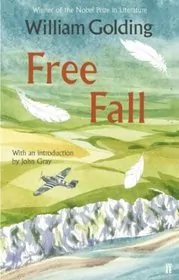
Free Fall
by William Golding
1959
Artist Sammy Mountjoy looks back over his life to ask when he lost his freedom. Childhood, desire, war, and imprisonment all feed Golding's searching novel about choice and self-knowledge.
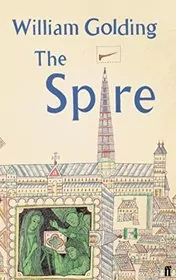
The Spire
by William Golding
1964
Dean Jocelin is convinced God wants a great spire built above his cathedral, even though the structure has no proper foundation. His vision becomes a story of obsession, pride, and mounting ruin.
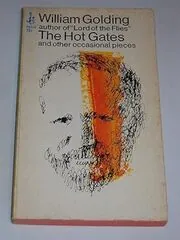
The Hot Gates and Other Occasional Pieces
by William Golding
1965
This essay collection moves through travel, books, war, childhood, and the classical world. It shows Golding thinking on the page, sometimes serious, sometimes funny, and often sharply personal.
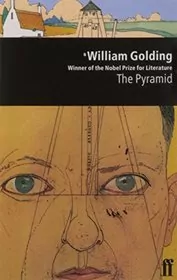
The Pyramid
by William Golding
1967
In 1920s Stilbourne, Oliver tries to grow up, fall in love, and escape the town's rigid class lines. Golding turns small embarrassments and local gossip into a sharp coming-of-age story.

The Scorpion God
by William Golding
1971
Three novellas set in ancient Egypt, a prehistoric community, and imperial Rome let Golding play with history, power, and human absurdity, often with dark humor.
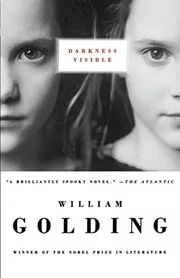
Darkness Visible
by William Golding
1979
A scarred child walks out of a London Blitz fire and grows into the mysterious Matty. His life becomes entangled with two unsettling twins in a dark, modern fable of evil and redemption.
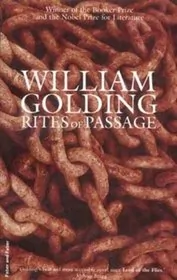
Rites of Passage
by William Golding
1980
Young aristocrat Edmund Talbot keeps a journal aboard a ship bound for Australia. What begins as clever social observation darkens into a cruel portrait of class, shame, and life in close quarters at sea.
A Moving Target
by William Golding
1982
This collection gathers Golding's essays and lectures on places, books, and ideas. Travel writing sits beside reflections on storytelling, reading, memory, and the habits of a working writer.
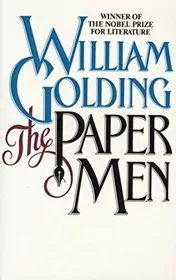
The Paper Men
by William Golding
1984
Successful novelist Wilfred Barclay wants to be left alone. Instead he is stalked across Europe by Rick Tucker, an ambitious academic determined to write his biography, and their struggle turns nasty, comic, and dangerous.
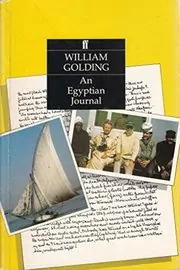
An Egyptian Journal
by William Golding
1985
Golding records a Nile journey through Egypt with sharp eyes and a dry sense of humor. Ancient monuments matter, but so do the mishaps, frustrations, and vivid encounters of travel in the present.
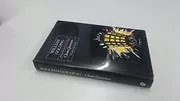
Close Quarters
by William Golding
1987
Becalmed halfway to Australia, Talbot and his fellow passengers drift into flirtation, drink, jealousy, and fear. As the heat closes in, the old ship itself begins to feel unstable and alive.
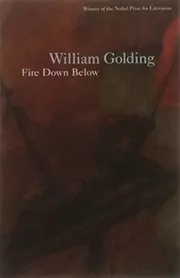
Fire Down Below
by William Golding
1989
On the last leg to Australia, Talbot's battered ship is barely holding together. Storm damage, rivalry, desire, and a hidden fire below deck turn the voyage into a slow-moving catastrophe.
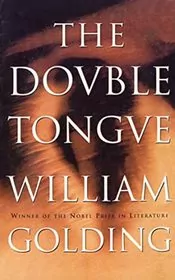
The Double Tongue
by William Golding
1995
Golding's final novel follows Arieka, an unwanted girl who becomes one of the last priestesses of Apollo at Delphi. As Roman power grows, faith, performance, and survival become tangled in her voice.
Where to start with William Golding
If you want the classic starting point: Lord of the Flies
If you want the sea trilogy: Rites of Passage → Close Quarters → Fire Down Below
If you want darker psychological fiction: Free Fall → The Spire → Darkness Visible
If you want early Golding beyond the best known novel: The Inheritors → Pincher Martin / The Two Deaths of Christopher Martin
If you want essays and travel writing: The Hot Gates and Other Occasional Pieces → A Moving Target → An Egyptian Journal
William Golding sub-series and character series
To the Ends of the Earth books in order
Explore this seriesTo the Ends of the Earth books in chronological order
William Golding collections, short stories, and related book types
Short Story Collections
Non-Fiction
Plays
Standalone William Golding books
Author bio
William Golding was born in Newquay, Cornwall, on September 19, 1911, and grew up mostly in Marlborough, Wiltshire, where his father taught science at the local grammar school. His mother was active in the suffrage movement, and home seems to have given him two things that stayed with him, a serious respect for ideas and a taste for stories that could unsettle you. He was a Cornish child and a Wiltshire boy at once, and both landscapes kept turning up in his imagination.
At Oxford, he began with natural sciences, mostly because that was the sensible plan. Then he changed course to English, read deeply in literature and Anglo-Saxon, and leaned toward writing. Before the novels came, he published a slim volume of poems, worked in theatre, and taught. It was not a straight line. That mattered.
War changed him.
Golding joined the Royal Navy in 1940 and spent much of the next six years at sea. He saw combat, took part in major naval operations, and later said the war showed him what ordinary people were capable of. After 1945 he went back to Bishop Wordsworth's School in Salisbury, teaching boys by day and writing when he could. Those years gave him both the material and the pressure he needed.
Then came Lord of the Flies.
Published in 1954, it turned a castaway adventure into something harsher and truer, asking what happens when rules fail and fear takes over. Readers still come to it for the island story, but they stay for Ralph, Piggy, Jack, and the terrible speed with which a group can fall apart. Golding followed it with books that kept changing shape. The Inheritors imagines the last days of the Neanderthals with unusual tenderness. Pincher Martin / The Two Deaths of Christopher Martin traps a man on a rock in the Atlantic and turns survival into a moral nightmare. The Spire follows Dean Jocelin's mad push to build upward, no matter the human cost.
He never liked repeating himself for long.
That is one reason his later books are so interesting. Free Fall looks back over one man's life to ask when freedom is lost. Darkness Visible begins in the Blitz and becomes a strange, disturbing story about evil, suffering, and the search for grace. In Rites of Passage, and then Close Quarters and Fire Down Below, he moved to the sea again, this time with wit, class tension, romance, and danger packed into an old ship bound for Australia. The first of those books won the Booker Prize in 1980.
In 1983 he received the Nobel Prize in Literature. A few years later, in 1988, he was knighted. By then his reputation was secure, but the range of the work matters as much as the honors: novels, essays, a play, short fiction, and a travel book, An Egyptian Journal. He wrote about islands, cathedrals, ships, schoolboys, ancient worlds, and damaged modern lives, but he kept circling the same hard questions about conscience, power, faith, and what people do when nobody is watching.
Golding married Ann Brookfield in 1939, and they had two children, David and Judith. He spent many years in Wiltshire, later moved back to Cornwall, and kept writing almost to the end of his life. He died in 1993, and his final novel, The Double Tongue, was published after his death. It is set in Delphi, which feels right for a writer who never lost his interest in Greece, myth, and the old stories people tell to explain themselves.



Edited by
Software engineer whose passion for tracking book recommendations from podcasts inspired the creation of MRB.
Lead investor at 3one4 Capital whose startup expertise and love for books helped shape MRB and its growth.
Comments
Did we miss something? Have feedback?
Help us improve this page by sharing your thoughts