
To the Ends of the Earth Books in Order
Part ofWilliam Golding Books in OrderThis page lists the To the Ends of the Earth books in order by William Golding, with short summaries, series background, and help on the best place to begin.
Last updated:
As an Amazon Associate, we earn from qualifying purchases (at no extra cost to you).
To the Ends of the Earth books in publication order
3 books
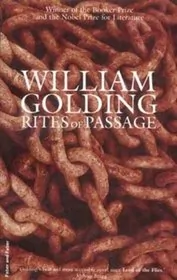
Rites of Passage
by William Golding
1980
Young aristocrat Edmund Talbot keeps a journal aboard a ship bound for Australia. What begins as clever social observation darkens into a cruel portrait of class, shame, and life in close quarters at sea.
Close Quarters
by William Golding
1987
Becalmed halfway to Australia, Talbot and his fellow passengers drift into flirtation, drink, jealousy, and fear. As the heat closes in, the old ship itself begins to feel unstable and alive.
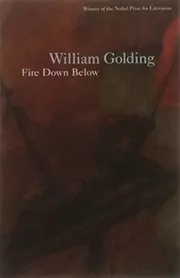
Fire Down Below
by William Golding
1989
On the last leg to Australia, Talbot's battered ship is barely holding together. Storm damage, rivalry, desire, and a hidden fire below deck turn the voyage into a slow-moving catastrophe.
To the Ends of the Earth books in chronological order
Series background & context
William Golding's To the Ends of the Earth trilogy follows Edmund Talbot, a young, well-connected Englishman sailing to Australia in the early nineteenth century. He starts out as a witty observer, keeping a journal for his godfather, and much of the pleasure of the series comes from hearing his sharp, confident voice. Talbot is clever, funny, snobbish, and often badly wrong, so the books let you watch him measure everyone else, then slowly learn how limited his own view can be.
The ship itself is one of the main characters.
Golding sets the trilogy on an ageing warship packed with officers, sailors, soldiers, emigrants, and genteel passengers. It is cramped, noisy, rank, and unstable. Nobody can walk away from an awkward scene or cool down after an argument. Class matters in every cabin and at every meal. Who is laughed at, who is protected, who has power, and who can be shamed all become urgent questions once the voyage stretches on for months.
Rites of Passage gives the trilogy its first hard jolt. Talbot's amused journal turns into a study of humiliation and cruelty when the awkward Reverend Colley becomes the focus of life on board. Golding is brilliant on the way manners can hide viciousness, and on how a closed community can make one person's embarrassment feel fatal. The tone is serious, but there is also a lot of dry comedy in Talbot's voice.
Then the journey changes shape. In Close Quarters, the ship is becalmed, the heat is oppressive, and the mood becomes dreamlike. Desire, jealousy, drink, and opium drift through the decks while Talbot is drawn into romance. In Fire Down Below, the old vessel lurches toward Australia with storm damage, a weakening hull, and a smouldering fire below deck. The trilogy never forgets the practical dangers of the sea, but it is just as interested in what confinement does to people.
Nobody on board stays untouched.
That is really the heart of these books. They are sea novels, historical novels, social comedies, and psychological studies all at once. Golding uses the voyage to look at class, religion, authority, masculinity, self-deception, and the thin line between civility and panic. Edmund Talbot changes across the trilogy, but not in a neat heroic arc. He grows up by seeing more clearly, and by being forced to notice suffering he would rather have treated as a curiosity.
If you want action, there are storms, damage, and constant maritime tension. If you want character work, there is even more of that. The trilogy was adapted for television in 2005 under the title To the Ends of the Earth, but the books themselves are where the full pressure of Golding's setting really lands. They are funny, claustrophobic, unsettling stories about a long voyage where the ocean is dangerous, but the people packed together above it can be dangerous too.







Edited by
Software engineer whose passion for tracking book recommendations from podcasts inspired the creation of MRB.
Lead investor at 3one4 Capital whose startup expertise and love for books helped shape MRB and its growth.
Comments
Did we miss something? Have feedback?
Help us improve this page by sharing your thoughts