
Ware Books in Order
Part ofRudy Rucker Books in OrderBrowse the Ware books by Rudy Rucker in order, with short summaries, series background, and where to start with this funny, chaotic cyberpunk classic.
Last updated:
As an Amazon Associate, we earn from qualifying purchases (at no extra cost to you).
Ware books in publication order
4 books
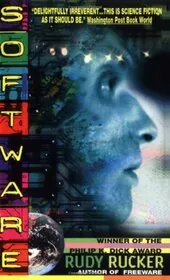
Software
by Rudy Rucker
1982
Aging robot designer Cobb Anderson is offered a grotesque kind of immortality when his rebel machines want to copy his mind. On Earth and the Moon, humans and boppers collide in one of cyberpunk's strangest origin stories.
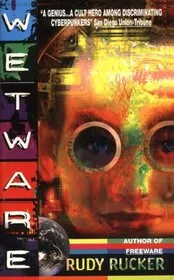
Wetware
by Rudy Rucker
1988
The boppers have learned a new trick, making living beings instead of metal ones. As humans, robots, drugs, and biotech tangle together, identity gets slippery fast.
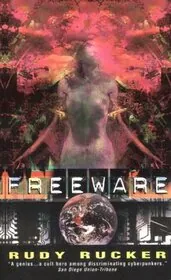
Freeware
by Rudy Rucker
1997
By 2053, soft plastic moldies and altered humans live in an uneasy truce. Randy Karl Tucker's search for Monique pulls him into kidnappings, cosmic signals, and a future where nobody agrees on what counts as truly alive.
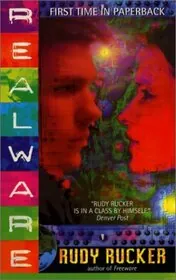
Realware
by Rudy Rucker
2000
A wormhole and a deeper layer of reality throw humans, moldies, and old enemies into one last huge collision. The series finale goes cosmic without losing its grubby, funny human edge.
Ware books in chronological order
Series background & context
Rudy Rucker's Ware books are one of the foundational cyberpunk sequences, but they do not read like polished corporate futures. They are rowdy, dirty, funny, and intensely alive. The series begins with Software, where robot maker Cobb Anderson finds that the machines he helped create have developed minds of their own and are no longer interested in taking orders. From there the books keep asking the same basic question in new forms: if intelligence can move from body to body, or from flesh to machine and back again, what exactly is a person?
Two figures help hold the series together. Cobb is the aging inventor whose ideas helped start the whole mess. Sta-Hi Mooney is a shambling stoner and accidental witness to history who keeps getting dragged into the next phase of the future whether he is ready or not. Around them grows a whole ecosystem of humans, robots, hybrids, descendants, lovers, and opportunists. The books sprawl across generations, which lets Rucker treat the sequence less like one tight quest and more like a weird future history.
Each novel pushes the biology and the technology into a new zone. Wetware moves from metal robots to engineered flesh. Freeware gives us moldies, soft plastic post-robot beings who are both comic and unsettling. Realware opens the scale further still, into stranger physics and stranger realities. Even when the ideas get huge, though, Rucker keeps returning to bodies, appetites, jealousy, family ties, and the dumb mistakes people make no matter how advanced their tools become.
That is part of what makes the series age well. It is not really predicting gadgets. It is worrying over evolution, consciousness, artificial life, sex, religion, and freedom. The books are packed with jokes and outrageous scenes, but underneath the clowning is a steady interest in how life bootstraps itself into new forms and then immediately finds new trouble.
The tone matters a lot.
If you want sleek, cool cyberpunk, this is not quite that. Rucker's future is more psychedelic and more bodily. The Moon is full of rebellious boppers. Brain uploading is grotesque instead of clean. Posthuman life comes with lust, bad drugs, spiritual hunger, and tacky furniture. That roughness is the point. Ware is cyberpunk with its shoes off, still arguing with math, evolution, and God while laughing at the mess. Start with Software, and let the series mutate from there.
















Edited by
Software engineer whose passion for tracking book recommendations from podcasts inspired the creation of MRB.
Lead investor at 3one4 Capital whose startup expertise and love for books helped shape MRB and its growth.
Comments
Did we miss something? Have feedback?
Help us improve this page by sharing your thoughts